
Quick answer
What to know first
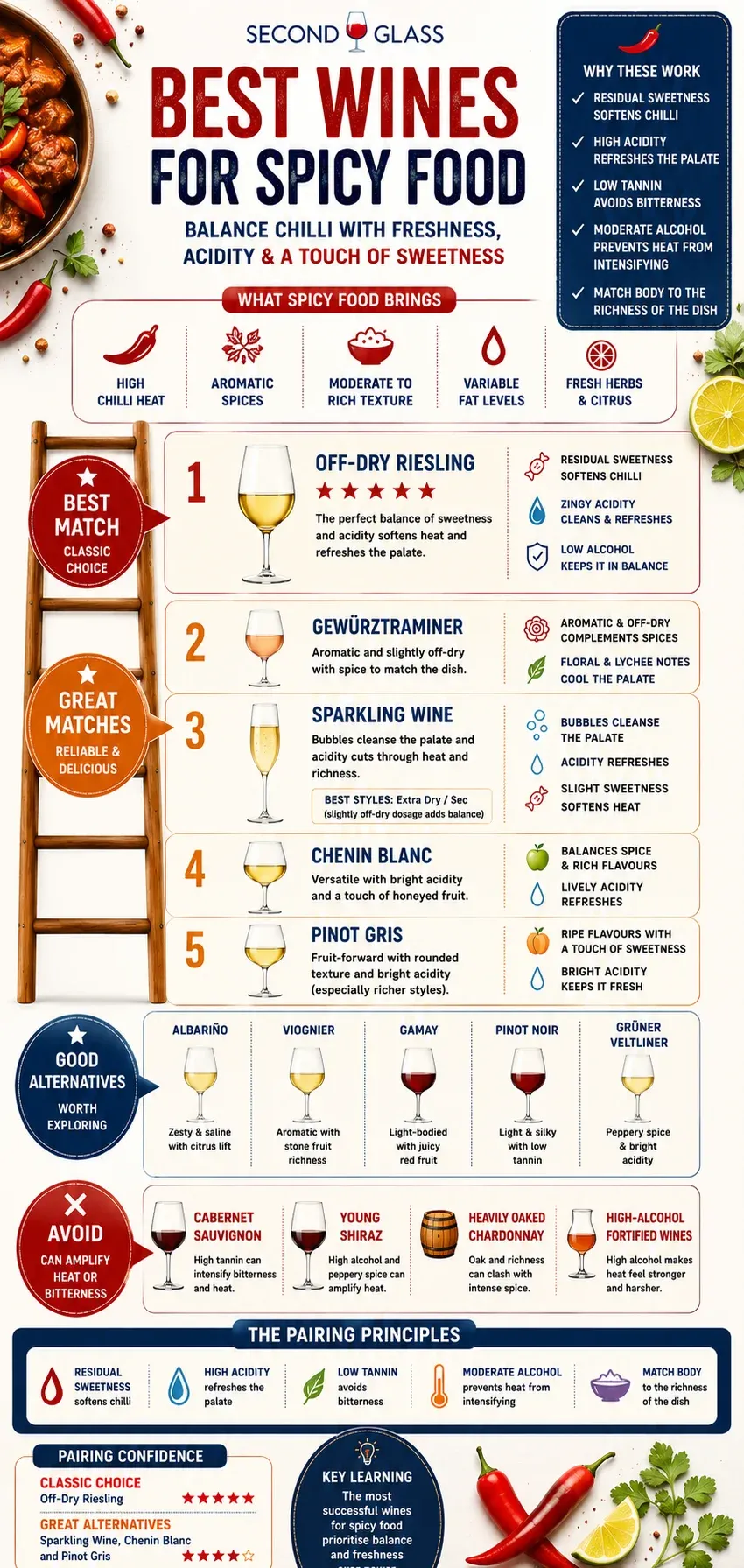
Off-dry Riesling is the best all-round wine for spicy food because its refreshing acidity and gentle sweetness help balance chilli heat while complementing aromatic flavours. Gewürztraminer and sparkling wine are excellent alternatives.
Introduction
Spicy food appears in countless cuisines across the UK and Europe, inspired by traditions from India, Thailand, Mexico, China, Korea and beyond. While the ingredients and cooking methods vary enormously, dishes featuring chilli, warming spices or pepper require careful wine selection. The wrong wine can make a meal seem hotter and more alcoholic, while the right bottle balances heat, refreshes the palate and allows both the food and wine to shine. Understanding how spice affects your palate is the key to consistently successful pairings.
What Spicy food pairing brings to the glass
Key Takeaways
- A little sweetness helps balance and soften the perception of chilli heat.
- High acidity refreshes the palate after spicy food.
- Lower alcohol wines generally pair better with chilli, though balance matters more than a strict percentage.
- Fruity, aromatic whites outperform heavily oaked wines.
- Sparkling wines excel with spicy fried foods, especially slightly sweeter styles.
- Soft reds can work with mildly spicy dishes.
- Match the intensity of the wine with the richness of the food.
Best overall wines for Spicy food pairing
Off-Dry Riesling
★★★★★
RegionsGermany, Alsace, Clare Valley
Bright acidity and gentle sweetness help balance chilli heat while citrus and stone fruit flavours complement aromatic spices.
Gewürztraminer
★★★★★
RegionsAlsace, Alto Adige, New Zealand
Intensely aromatic with floral and exotic fruit notes that pair naturally with ginger, coriander and fragrant spices.
Sparkling Wine
★★★★☆
RegionsChampagne, England, Cava
Refreshing acidity and lively bubbles cleanse the palate, while slightly sweeter styles can further soften spice.
Chenin Blanc
★★★★☆
RegionsLoire Valley, South Africa
Crisp acidity, ripe fruit and versatility make it suitable for creamy curries and moderately spicy dishes.
Pinot Gris
★★★★☆
RegionsAlsace, Northern Italy, Oregon
Richer, fuller-bodied styles with gentle sweetness complement creamy and coconut-based spicy dishes.
Why these wines work with Spicy food pairing
Dominant strategy
Balance chilli heat with aromatic wines that combine refreshing acidity, moderate alcohol and a touch of residual sweetness.
Supporting principles
- Match wine body to the richness of the dish rather than the spice alone.
- Avoid high tannins and excessive alcohol, which can amplify the perception of heat.
Understanding Spicy Food and Wine Pairing
Unlike a single cooking style, spicy food is defined by heat level, texture and aromatic complexity. Chilli creates a warming sensation that can be intensified by higher-alcohol wines, while ingredients like coconut milk, yoghurt or cream can make a dish feel gentler and more rounded by diluting and dispersing the perception of heat within the overall dish.
Acidity plays a key role in both food and wine. Dishes with lime, tomatoes or tangy sauces pair best with wines that have bright, refreshing acidity, which helps cut through richness and reset the palate between bites. Sweetness is equally important: even a touch of residual sugar—most famously in off-dry Riesling—helps soften chilli heat and balance spicy-sweet sauces common in Thai or Korean cuisine.
Tannins, by contrast, often clash with spice. In combination with chilli, they can taste more bitter and drying, making heavily tannic reds a poor match. Alcohol also needs consideration, as higher levels tend to amplify the perception of heat, so more moderate alcohol wines often feel more balanced with spicy dishes.
Match body to the weight of the dish rather than its heat: lighter wines suit fresh stir-fries and lighter curries, while fuller whites work better with rich, creamy sauces. Crisp wines are particularly refreshing with fried foods.
Floral, citrus and tropical fruit notes can complement aromatic, spice-driven cuisines, while varieties such as Riesling and Gewürztraminer have enough aromatic intensity to stand alongside strongly seasoned dishes.
Classic Pairings
White Wine
Off-dry Riesling remains the benchmark because it balances sweetness, acidity and vibrant fruit. Gewürztraminer also performs exceptionally well with aromatic Southeast Asian dishes, while Chenin Blanc and richer styles of Pinot Gris offer flexibility across many cuisines, particularly with fuller-bodied preparations.
Red Wine
Light, fruity reds such as Gamay, Pinot Noir or lightly chilled Grenache can work with mildly spicy dishes. Choose wines with low tannins and bright fruit rather than heavily structured styles.
Rosé
Dry rosé combines refreshing acidity with delicate red fruit flavours, making it a reliable option for grilled spicy foods, barbecue dishes and Mediterranean-inspired recipes.
Sparkling Wine
Traditional-method sparkling wine and quality Cava provide refreshing bubbles that cleanse the palate, particularly with fried spicy foods such as Korean fried chicken or tempura with chilli sauces. Slightly sweeter styles can enhance balance with hotter dishes.
Sweet Wine
Lightly sweet styles are often underrated. Wines with modest residual sugar complement hotter dishes without becoming cloying, provided the sweetness remains balanced by fresh acidity.
Alternative Pairings
Albariño offers citrus freshness and mineral character that pairs beautifully with seafood featuring chilli. Torrontés provides fragrant floral aromas similar to Gewürztraminer but with a lighter body.
Viognier works particularly well with creamy curries thanks to its rich texture and stone fruit flavours. Grüner Veltliner complements peppery dishes through its own subtle spice character and crisp acidity.
For adventurous drinkers, lightly chilled Frappato or Schiava offer soft tannins and bright fruit that cope surprisingly well with moderate spice.
Best grapes for Spicy food pairing
| Grape | Why it works | Flavour match |
|---|---|---|
| Riesling | Balances chilli with acidity and gentle sweetness. | Citrus, lime, stone fruit and floral aromas. |
| Gewürztraminer | Aromatic profile mirrors fragrant spices. | Lychee, rose petals and exotic spice. |
| Chenin Blanc | Versatile acidity suits a wide range of spicy dishes. | Apple, quince, honey and citrus. |
| Pinot Gris | Fuller texture complements rich curries. | Pear, peach and gentle spice. |
| Albariño | Fresh acidity works well with spicy seafood. | Lemon, peach and saline minerality. |
| Viognier | Rich texture suits coconut-based dishes. | Apricot, peach and blossom. |
| Gamay | Low tannins make it a safer red wine option. | Red berries and soft spice. |
Best Regions
Germany produces benchmark off-dry Rieslings that excel with spicy food. Alsace combines Riesling, Gewürztraminer and Pinot Gris, offering several excellent pairing options, often with a touch of richness or residual sugar.
The Loire Valley provides vibrant Chenin Blanc suitable for a wide variety of dishes. South Africa also produces expressive Chenin Blanc with ripe fruit and refreshing acidity.
Clare Valley in Australia creates intensely aromatic dry Rieslings that work particularly well when spice levels are moderate rather than very hot. England and Champagne both produce sparkling wines that refresh the palate beautifully.
Find the Right Wine for Your Spicy Dish
Start with the dish's source of heat, richness and cooking method, then explore wines with the freshness, fruit and structure to match.
If you're havingThai green curry
Explore
If you're havingSpicy Chinese stir-fries
Explore
If you're havingAromatic Indian curry
Explore
If you're havingTandoori or yoghurt-marinated chicken
Explore
If you're havingKorean fried chicken
Explore
If you're havingSpicy prawns
Explore
If you're havingSpicy BBQ
Explore
If you're havingTomato-based Mexican chilli dishes
Explore
Spicy Recipes Pairing In Details
Understanding Different Styles of Spicy Dishes
Spicy cuisine is incredibly diverse, and the way heat is delivered in a dish has a major impact on wine pairing. Some dishes rely on dry heat from chillies and spices, while others combine spice with richness, acidity or sweetness. Recognising these differences helps you choose a wine that complements rather than clashes.
Thai Green Curry and Aromatic Coconut Curries
Thai green curry sits at the intersection of heat, creaminess and high aromatics. The coconut milk provides richness, but the defining features are fresh herbal notes like lemongrass, lime leaf and Thai basil. Wines with aromatic lift and a touch of residual sweetness work best, such as off-dry Riesling, Gewürztraminer or aromatic Pinot Gris. These styles mirror the perfume of the dish while softening chilli heat and supporting the coconut base.
Indian Curries and Complex Spice Blends
“Indian curry” is a broad category, but many dishes share a balance of spice, earthiness and either tomato, yoghurt or cream-based sauces. Gewürztraminer is particularly effective here because its aromatic intensity and subtle sweetness can complement aromatic spice blends such as cardamom, clove and cumin. It works through perfume, texture and occasional residual sugar rather than direct flavour matching. Off-dry Riesling also works well, especially with hotter dishes, while fuller whites like Chenin Blanc or Pinot Gris suit richer, cream-based curries. The key is matching both intensity and spice complexity rather than treating all curries the same.
Spicy Chinese Stir-Fries and Dry Heat Dishes
Dry stir-fries and Sichuan-style dishes deliver intense chilli heat alongside garlic, ginger and numbing spice. These dishes benefit most reliably from off-dry, high-acid aromatic whites that refresh the palate and help moderate perceived heat. Off-dry Riesling is the standout choice, while Grüner Veltliner and Albariño can work well with moderately spicy stir-fries where chilli intensity is lower. The goal is freshness and balance rather than simply acidity alone.
Rich Coconut Curries and Creamy Sauces
Rich coconut curries require wines with slightly more body and fruit concentration. The creaminess of coconut milk softens the spice, allowing fuller whites such as Pinot Gris, Viognier or off-dry Chenin Blanc to shine. Viognier is particularly effective with rich, moderately spiced curries, where its texture and stone-fruit character complement the sauce, though very hot versions are often better suited to off-dry Riesling or Chenin Blanc. A touch of sweetness can also help balance the heat while complementing the richness.
Grilled Spicy Meats
Grilled spicy meats allow lighter reds or fuller rosés to perform well. The smoky, charred flavours from grilling pair nicely with wines like Pinot Noir or Gamay, which have low tannins and bright fruit. Rosé is also an excellent option, offering enough structure to match the meat while remaining refreshing.
Deep-Fried Spicy Dishes
Deep-fried dishes shine with sparkling wine. The bubbles and high acidity cut through the oil and refresh the palate between bites. Styles such as Champagne, Cava or English sparkling wine are particularly effective, especially when the dish combines crunch with spice.
Spicy Prawns and Seafood Dishes
Spicy seafood dishes, such as chilli prawns or garlic-chilli shellfish, benefit from wines that combine citrus brightness with a subtle saline edge. Albariño is especially effective, as its lemon, lime and sea-spray character mirrors the freshness of seafood and creates a refreshing counterpoint to chilli heat. Vermentino and unoaked Sauvignon Blanc also work well, enhancing the natural sweetness of the prawns without overpowering their delicate texture.
Tomato-Based Spicy Sauces
Tomato-based spicy sauces benefit from wines with bright acidity. Tomatoes naturally have high acidity, so pairing them with equally fresh wines like Sangiovese or Barbera helps maintain balance. These wines also complement the savoury depth of the sauce without clashing with the spice, making them particularly effective for moderately spicy dishes.
Yoghurt-Based and Cooling Dishes
Yoghurt-based dishes allow a broader range of whites. The cooling effect of yoghurt softens the heat, making it easier to pair with wines such as Sauvignon Blanc, Chenin Blanc or even lightly oaked Chardonnay. Sauvignon Blanc is especially effective with herb-driven dishes, while restrained Chardonnay works best with milder, creamier preparations. These wines highlight freshness and texture without being overwhelmed by spice.
Wines To Avoid
Highly tannic Cabernet Sauvignon often clashes with chilli, making both wine and food seem harsher. Young Syrah or Shiraz with firm tannins and elevated alcohol can also exaggerate heat.
Heavily oaked Chardonnay may dominate delicate spices while lacking the freshness needed to refresh the palate. Fortified wines with high alcohol are generally poor matches because alcohol intensifies chilli burn.
Common Mistakes
Many beginners assume bold food requires equally bold wine, but spicy dishes often reward lighter, fresher styles instead. Another common mistake is choosing dry wines with high alcohol, which can make even moderately spicy food feel significantly hotter.
Ignoring sweetness is another error. Even a subtle hint of residual sugar can dramatically improve balance. Finally, avoid judging pairings solely by colour; white wines frequently outperform reds with spicy cuisine.
Buying Guide
Budget (£5–£10 / $6–$13)
Excellent value exists at this level, particularly from Germany, South Africa and Spain. Expect fresh, fruit-forward wines with straightforward flavours and lively acidity. Many entry-level Rieslings and Chenin Blancs offer exceptional pairing value despite their modest prices. Spending carefully here often delivers better results than buying inexpensive heavily oaked wines.
Mid-Range (£10–£20 / $13–$26)
This is the sweet spot for most wine lovers. Wines gain greater concentration, more expressive aromatics and improved balance without becoming overly expensive. Regional character becomes clearer, especially in Alsace Riesling, Pinot Gris, premium Chenin Blanc and quality sparkling wines. For frequent spicy food pairings, this category offers the best balance between quality and price.
Premium (£20+ / $26+)
Premium wines provide greater complexity, longer finishes and exceptional balance. Top Rieslings can develop remarkable layers of citrus, stone fruit and mineral character while remaining beautifully fresh. Fine sparkling wines gain greater texture and elegance through extended ageing. Spending more is worthwhile for special occasions or particularly refined dishes, although excellent everyday pairings remain available at lower prices.
Start with Off-Dry Riesling
If you're new to pairing wine with spicy food, start with off-dry Riesling: its acidity, fruit and touch of sweetness make it one of the most forgiving choices. From there, explore aromatic whites such as Gewürztraminer or Pinot Gris, or sparkling wine for richer and fried dishes.
How To Experiment
Start by comparing an off-dry Riesling with a dry Riesling alongside the same spicy meal to experience how sweetness changes the pairing. Next, compare a sparkling wine with an aromatic still white to see how bubbles influence the experience.
Keep notes on which combinations you enjoy most, remembering that personal preference matters alongside traditional guidelines. As confidence grows, explore different grape varieties and regions while focusing on acidity, sweetness and alcohol rather than simply choosing by colour.
Common Misconceptions
Red wine never works with spicy food.
Light, low-tannin reds can pair successfully with moderately spicy dishes.
The hottest food needs the biggest wine.
High alcohol usually increases the perception of heat.
Sweet wine always tastes sugary.
Many off-dry wines remain balanced because of their vibrant acidity.
White wine is boring with spicy food.
Aromatic white wines often create the most exciting and harmonious pairings.
Spice always overwhelms wine.
Choosing wines with acidity, fruit and modest alcohol allows both to shine.
Questions about Spicy Food Pairing
What is the best wine for spicy food?
Off-dry Riesling is generally the best choice because it combines refreshing acidity with a touch of sweetness that helps balance chilli heat. It also complements a wide range of cuisines, from Thai curries to Indian dishes and spicy Chinese cooking.
What wine goes best with Indian curry?
Off-dry Riesling is the best all-round choice. Its high acidity refreshes the palate, while a little residual sweetness helps balance chilli heat. For rich coconut or creamy curries, try fuller Pinot Gris or Chenin Blanc; for aromatic curries, Gewürztraminer is particularly strong. Viognier can complement rich, mildly spiced curries, but its often higher alcohol makes it less reliable with genuinely hot dishes. With milder grilled, tomato-based or meat curries, low-tannin reds such as Gamay or a light, fruit-driven Pinot Noir can also work.
What wine goes best with Thai food?
Off-dry Riesling is the safest overall pairing, particularly with chilli, lime, lemongrass and sweet-sour flavours. Gewürztraminer is excellent with highly aromatic dishes, while Albariño suits lighter seafood-based Thai food. For coconut-rich Thai curries, choose Pinot Gris or Chenin Blanc. Light Pinot Noir can work with moderately spicy duck, pork or grilled dishes, but avoid powerful, tannic or high-alcohol reds with hotter Thai food.
Why does wine sometimes make spicy food hotter?
Alcohol intensifies the burning sensation caused by chilli. High-alcohol wines can therefore make even moderately spicy dishes seem significantly hotter, whereas lower-alcohol wines feel more refreshing.
Can I drink red wine with spicy food?
Yes. Choose light-bodied, fruity reds with soft tannins such as Gamay or Pinot Noir. Avoid heavily tannic or high-alcohol styles, which often create unpleasant bitterness and extra heat.
Is sparkling wine a good match?
Absolutely. Sparkling wine's acidity and bubbles help refresh the palate, making it especially effective with fried spicy foods or rich dishes featuring chilli. Slightly sweeter styles can be particularly helpful with hotter dishes.
Does sweeter wine always work better?
Not necessarily. A small amount of sweetness is usually enough. Excessively sweet wines may overpower savoury dishes unless the food itself is also sweet.
What wines should I avoid?
Avoid highly tannic reds, heavily oaked whites and wines with very high alcohol, as they can exaggerate spice and overwhelm delicate flavours.
Final Thoughts
Spicy food is one of the most rewarding categories for wine pairing once you understand the fundamentals. Rather than seeking powerful wines, look for freshness, vibrant fruit, moderate alcohol and, where appropriate, a touch of sweetness. Off-dry Riesling remains the benchmark, but aromatic whites, sparkling wines and selected light reds offer plenty of opportunities to explore. By matching the wine to both the spice level and the richness of the dish, you'll consistently create balanced and enjoyable pairings.