Quick answer
What to know first
Gamay is a light- to medium-bodied red grape best known from Beaujolais. It offers red fruit, floral notes, fresh acidity and soft tannins, making it an approachable, food-friendly wine.
How this wine usually feels
Key Takeaways
- Gamay is the signature grape of Beaujolais.
- It is known for bright red fruit, floral aromas and refreshing structure.
- Its style ranges from youthful and fruit-driven to savoury and age-worthy.
- Quality cru Beaujolais offers the clearest introduction to Gamay's depth and regional variation.
- The grape's moderate body and gentle tannins make it especially versatile with food.
What Is Gamay?
Gamay, or Gamay Noir à Jus Blanc, is a black-skinned grape variety most closely associated with Beaujolais, just south of Burgundy in eastern France.
The grape is valued for producing bright, fragrant red wines that emphasise freshness and drinkability rather than power. While Beaujolais Nouveau made Gamay internationally famous for youthful, fruit-forward wines, the variety is capable of producing considerably more complex and age-worthy expressions.
The ten crus of Beaujolais—including Morgon, Fleurie, Moulin-à-Vent and Côte de Brouilly—demonstrate the grape's range. These wines can show floral delicacy, savoury complexity and impressive longevity.
Today, Gamay's appeal lies in its combination of vivid fruit, refreshing acidity, moderate alcohol and food-friendly structure. Many examples are also enjoyable lightly chilled, particularly when served with casual or lighter dishes.
What Does Gamay Taste Like?
Fruit Flavours
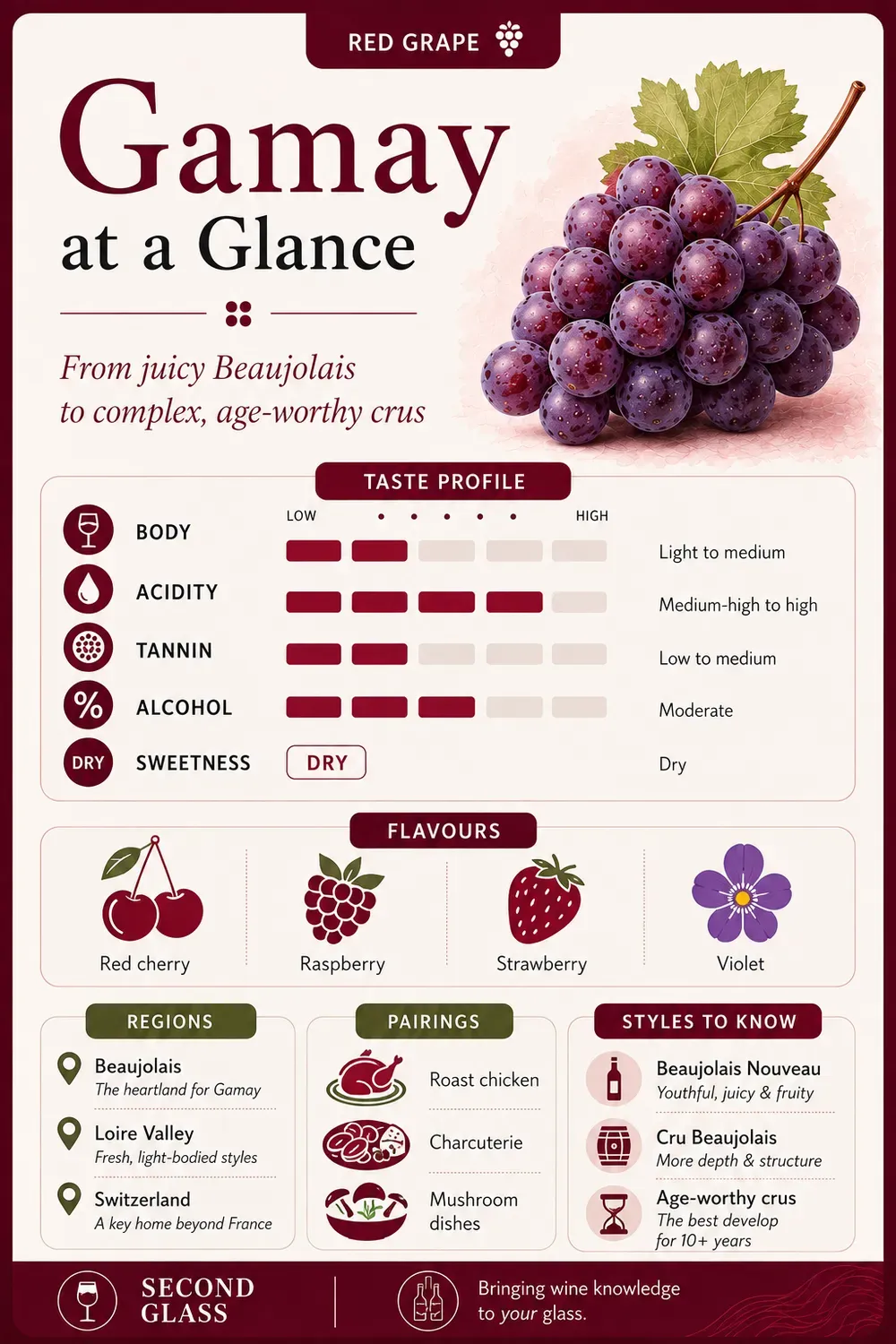
Red cherry, raspberry, strawberry, cranberry and red plum are common. In youthful carbonic styles, Gamay may also show notes reminiscent of banana, bubblegum or candied fruit.
Floral Notes
Violet and peony are frequently present, particularly in elegant examples from cru Beaujolais.
Herbal and Spice Notes
Liquorice, fresh herbs and subtle earthy notes often appear alongside the fruit, while some cooler-climate and cru examples can also show hints of white pepper.
Ageing Characteristics
With bottle age, quality Gamay can develop dried cherry, forest floor, leather and savoury spice characteristics.
Climate Influence
Cooler sites tend to produce brighter red fruit, greater freshness and more floral lift. Warmer sites often give riper cherry and plum notes with softer acidity.
Why Does It Taste Like This?
Gamay naturally retains good freshness and generally produces wines with relatively gentle tannins and moderate body.
Its soft tannic structure reflects both the grape's phenolic composition and the way it is commonly vinified. Compared with varieties such as Cabernet Sauvignon or Nebbiolo, Gamay generally shows less tannic grip while still delivering vibrant colour and expressive fruit.
Winemaking has a particularly significant influence. Carbonic and semi-carbonic fermentation methods, widely used in Beaujolais, emphasise vibrant fruit and can produce aromas of kirsch, banana and candied raspberry. More traditional fermentation techniques generally result in wines that are more savoury, structured and age-worthy.
Site conditions also shape expression. In Beaujolais, the combination of hillside vineyards, varied exposures and well-drained granitic and metamorphic soils contributes to differences in ripening, concentration and aromatic complexity. While growers often associate granite-based sites with floral and spicy expressions, the direct relationship between specific soil types and individual aromas remains debated.
Oak is usually used with restraint. Older barrels and large casks can add texture and complexity without obscuring Gamay's delicate fruit profile.
How Ageing Changes Gamay
Bottle Ageing
Simple Gamay is usually best enjoyed young. More serious examples can gain savoury, earthy and spicy complexity over time.
Ageing Potential
Basic Beaujolais is generally intended for early drinking.
Beaujolais-Villages often performs well over two to five years.
Many quality cru Beaujolais wines can age for ten to fifteen years, while a smaller number of exceptional examples from producers in appellations such as Morgon and Moulin-à-Vent may continue to develop positively for twenty years or more.
Body, Acidity and Tannin
Gamay is generally light to medium-bodied with medium-high to high acidity and low to moderate tannins.
The combination creates wines that feel fresh, approachable and energetic rather than powerful or heavily structured.
Where Is Gamay Grown?
Classic Regions
Beaujolais, France
The benchmark region, producing everything from youthful, fruit-driven wines to complex, age-worthy crus.
Loire Valley, France
Often made in a light, fresh style with bright red fruit and lively acidity, although some appellations and producers craft more concentrated and structured examples.
Switzerland
One of the most important homes for Gamay outside Beaujolais, particularly in Valais and Geneva. The grape is bottled as a varietal wine and also blended with Pinot Noir in wines such as Dôle, producing fresh, approachable reds.
Burgundy, France
Used in some regional wines and in blends such as Bourgogne Passetoutgrains.
New World Regions
Oregon, USA
Produces elegant, cool-climate expressions with cherry, spice and floral notes.
Canada
Ontario and British Columbia make fresh, vibrant styles with crunchy red fruit and lively acidity.
California, USA
Although less widely planted, California can produce successful examples ranging from bright, fruit-driven styles in cooler sites to riper expressions in warmer regions.
New Zealand
A niche category but increasingly appreciated in cooler regions.
Emerging Regions
Australia
Plantings remain limited but continue to grow in cooler wine regions.
Famous Wines Made From Gamay
- Beaujolais
- Beaujolais-Villages
- Beaujolais Nouveau
- Morgon
- Fleurie
- Moulin-à-Vent
- Brouilly
- Côte de Brouilly
- Chiroubles
- Juliénas
Sparkling Wines Made From Gamay
Sparkling Gamay is relatively uncommon and remains a niche, highly regional category. The grape is occasionally used in traditional-method sparkling wines and can also be found in some local sparkling rosé styles, but it is not a prominent sparkling variety.
Compared with still Gamay, sparkling expressions emphasise fresh berry fruit, brisk acidity and a lighter, more playful character.
What to eat with Gamay
Ideal pairing
- Roast chicken
- Charcuterie
- Pâté
- Mushroom dishes
- Grilled salmon
- Roast pork
- Lentils with herbs
Gamay's freshness and soft tannins allow it to complement savoury foods without overwhelming delicate flavours.
Everyday pairings
- Pizza
- Burgers
- Sausages
- Tomato-based pasta
- Picnic food
- Mild cheeses
Pairings to Approach Carefully
Very hot chilli-driven dishes can make simple Gamays seem lean or overly fruity.
Exceptionally rich cream sauces may overwhelm lighter examples, although creamy dishes featuring mushrooms or poultry often work beautifully because the wine's acidity refreshes the palate.
Similar grapes to try
| Grape | Similar | Difference |
|---|---|---|
| Pinot Noir | Light body, red fruit, and elegance. | Often more savoury and silky. |
| Frappato | Juicy red fruit and freshness. | Generally more Mediterranean and floral. |
| Cinsault | Soft tannins and bright fruit. | Often more herbal and sun-kissed. |
| Schiava | Light body and freshness. | Typically paler and more almond-like. |
| Poulsard | Delicacy and subtle earthiness. | Usually even lighter and more ethereal. |
| Grenache | Generous red fruit and soft tannins. | Fuller-bodied and generally higher in alcohol. |
If you are new to Gamay
If you are new to Gamay, start with a straightforward Beaujolais or Beaujolais-Villages to experience its classic fruit and freshness. Then compare a more aromatic cru such as Fleurie or Brouilly with a deeper, more structured example from Morgon or Moulin-à-Vent.
Serve lighter styles around 12–14°C. More structured cru Beaujolais can be served slightly warmer, closer to cool room temperature. Avoid serving either style ice-cold, as very low temperatures can mute its aromas and make the wine seem thinner.
Gamay is a useful choice when you want a red wine that can work across a broad meal. It is particularly natural with roast chicken, mushrooms, charcuterie, pizza and grilled salmon. Drinkers who enjoy Pinot Noir, Frappato or other lighter reds will often find it an easy grape to explore next.
Common Misconceptions
Gamay Is Always Simple
Gamay can be easy-drinking and youthful, but it is not limited to simple wines. Quality cru Beaujolais can show structure, savoury complexity and significant ageing potential.
Beaujolais Is Always Beaujolais Nouveau
Beaujolais Nouveau is only one style of Beaujolais. The region also produces Beaujolais-Villages and ten crus, many of which are more structured, complex and suitable for ageing.
Gamay Is a Sweet Wine
Most Gamay is dry. Its ripe red-fruit flavours can suggest sweetness, particularly in youthful wines, but this does not necessarily mean the wine contains much residual sugar.
Gamay Should Always Be Served Chilled
Gamay often benefits from being served slightly chilled, but the ideal temperature depends on the style. Lighter examples can be served around 12–14°C, while fuller crus may show better closer to cool room temperature. Excessive chilling can suppress aromas and make the wine seem thinner.
Gamay Is the Same as Pinot Noir
Both grapes can produce lighter-bodied red wines with red-fruit flavours, but they are different varieties. Gamay is often more overtly juicy and floral, while Pinot Noir can be more silky, savoury and earthy.
Carbonic Maceration Defines Every Gamay
Carbonic and semi-carbonic techniques are strongly associated with Beaujolais, but not every Gamay is made this way. Fermentation choices vary by producer and can result in wines ranging from bright and fruit-driven to structured and savoury.
Gamay Cannot Age
Basic Beaujolais is generally intended for early drinking, but many cru Beaujolais wines can age well for ten years or more. The exact potential depends on the appellation, producer, vintage and storage conditions.
Frequently Asked Questions
Is Gamay a good wine for beginners?
Yes. Its moderate body, fresh fruit and gentle tannins make it approachable for people who find fuller-bodied or more tannic reds difficult to enjoy.
Should Gamay be chilled?
Lighter examples usually benefit from being served around 12–14°C. Fuller cru Beaujolais may be better closer to cool room temperature.
Is Beaujolais made from Gamay?
Yes. Red Beaujolais is overwhelmingly associated with Gamay, the region's defining red grape.
What is the difference between Beaujolais and Beaujolais Nouveau?
Beaujolais is a broad regional category that includes several styles. Beaujolais Nouveau is a young wine released shortly after harvest, usually made to emphasise freshness and immediate fruitiness.
What is a Beaujolais cru?
A Beaujolais cru is one of ten named village appellations within Beaujolais. Crus such as Fleurie, Morgon and Moulin-à-Vent generally offer more distinctive character and structure than basic Beaujolais.
Is Gamay lighter than Pinot Noir?
Often, but not always. Many Gamays are lighter and more fruit-driven than Pinot Noir, while structured cru Beaujolais can have similar weight and complexity.
How long can Gamay be kept?
Basic Beaujolais is usually best within a few years of release. Beaujolais-Villages can often develop over two to five years, while quality cru Beaujolais may age for ten years or more.
What food goes best with Gamay?
Gamay works especially well with roast chicken, pork, charcuterie, mushrooms, sausages, pizza and grilled salmon. Its acidity and gentle tannins make it flexible at the table.
Is Gamay the same as Beaujolais?
No. Gamay is the grape variety, while Beaujolais is the French region and appellation system most closely associated with it. Beaujolais wines are generally made from Gamay.
Why does some Gamay taste like banana or bubblegum?
These aromas can result from carbonic or semi-carbonic fermentation, a winemaking approach commonly used in Beaujolais. They are stylistic characteristics rather than signs that the wine has been flavoured or sweetened.
Final Thoughts
Gamay is one of the wine world's most versatile red grapes. Fresh, fragrant and approachable when young, it is also capable of producing complex and remarkably age-worthy wines. Beginning with Beaujolais and then exploring the crus is one of the most rewarding ways to discover the grape's full range.
If you like Gamay, have a look at our guide on light reds: The Light Red Wine Guide: 7 Smooth Reds from Light to Richer Styles.