
Quick answer
What to know first
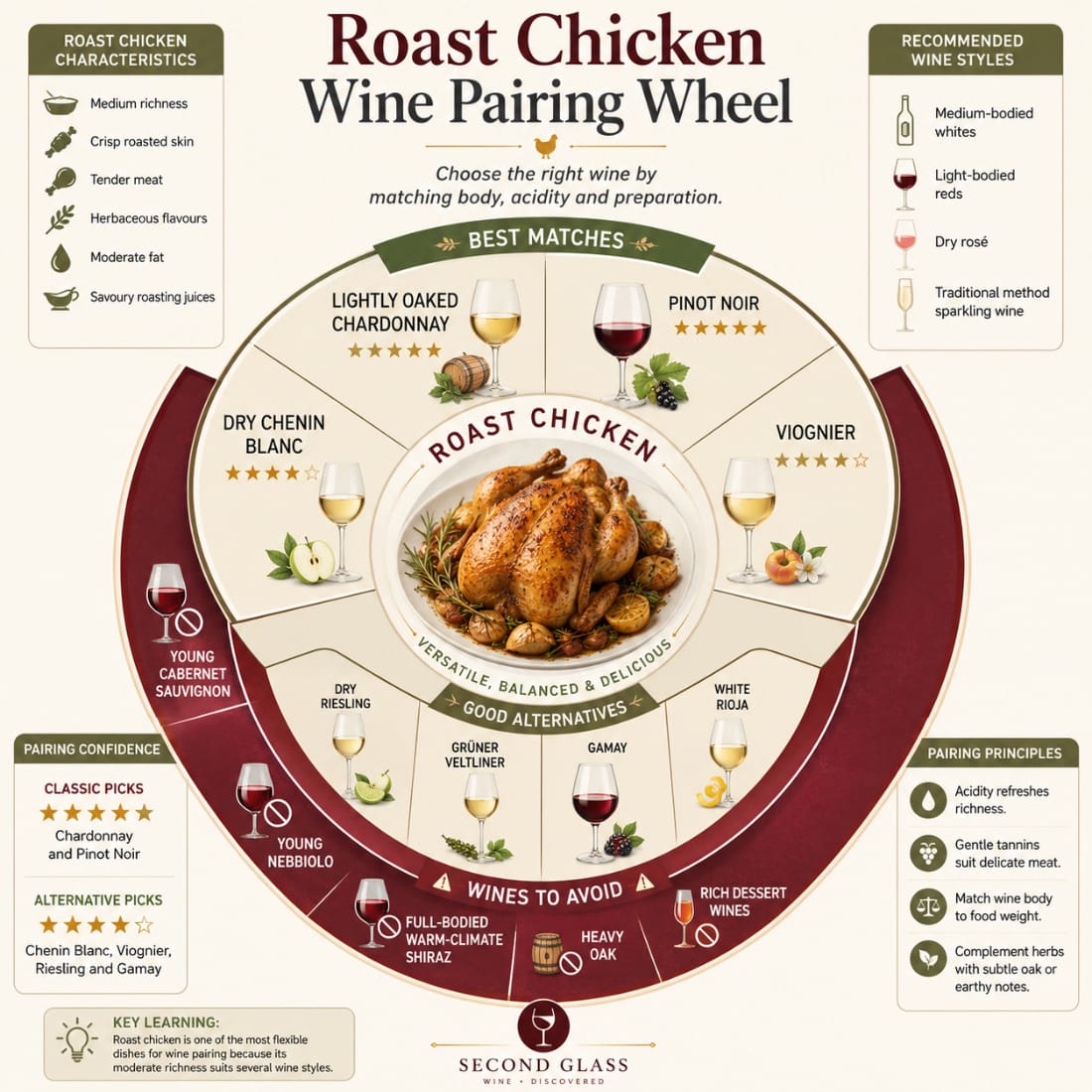
A lightly oaked Chardonnay is one of the most reliable wines for roast chicken. Its fresh acidity, moderate body and subtle oak complement crispy skin and juicy meat without overpowering the dish. Pinot Noir and dry Chenin Blanc are excellent alternatives.
Introduction
Roast chicken is one of the world's most versatile and widely enjoyed dishes, appearing on everything from traditional British Sunday lunch tables to relaxed family dinners across Europe and beyond. Although the chicken itself has relatively delicate flavour, roasting transforms the skin into a richly browned, savoury crust while keeping the meat succulent. The combination of crispy skin, tender meat and accompanying vegetables makes roast chicken remarkably flexible for wine pairing, allowing both whites and lighter reds to shine depending on how the bird is seasoned and served.
What Roast Chicken brings to the glass
Key Takeaways
- Roast chicken pairs well with both white and lighter red wines.
- Moderate acidity helps balance crispy skin and rich roasting juices.
- Heavy tannins can overpower the meat.
- Chardonnay remains one of the most reliable all-round choices.
- Pinot Noir is a safe and widely recommended red wine option.
- Herbs, sauces and stuffing can influence the ideal pairing.
- Matching wine intensity to the preparation produces the best results.
Best overall wines for Roast Chicken
Lightly Oaked Chardonnay
★★★★★
RegionsBurgundy, California, Adelaide Hills
A lightly oaked Chardonnay offers perhaps the most complete pairing. Crisp acidity refreshes the palate while gentle oak echoes roasted flavours and the buttery texture often found in roast chicken. Burgundy, California and cooler Australian regions produce excellent examples that balance richness with freshness.
Pinot Noir
★★★★★
RegionsBurgundy, Oregon, Central Otago
Pinot Noir is widely considered the classic red choice. Soft tannins never overwhelm the delicate meat, while red cherry, cranberry and subtle earthy notes complement roasted skin and herbs beautifully. Burgundy, Oregon and New Zealand all produce elegant examples.
Dry Chenin Blanc
★★★★☆
RegionsVouvray, Anjou, Swartland
Dry Chenin Blanc combines vibrant acidity with ripe orchard fruit and a touch of honeyed complexity. It works particularly well when roast chicken is served with root vegetables or creamy sauces.
Viognier
★★★★☆
RegionsCondrieu, Northern Rhône, Eden Valley
For herb-roasted chicken or birds stuffed with lemon and garlic, Viognier provides generous stone fruit aromas, floral notes and enough body to match the richness without becoming heavy.
Why these wines work with Roast Chicken
Dominant strategy
Match medium-bodied wines with fresh acidity to the richness of the roast while avoiding excessive tannin.
Supporting principles
- Moderate acidity refreshes the palate after each bite.
- Gentle tannins preserve the delicate flavour of the chicken.
Understanding the Dish
Roasting develops deep savoury flavours through caramelisation while preserving the naturally mild character of the chicken. The golden skin contributes richness and fat, whereas the breast meat remains lean and the darker leg meat offers more flavour and slightly higher fat content.
Roast chicken generally has moderate richness, moderate fat and relatively low acidity unless lemon or other citrus is added. Salt enhances savoury flavours while softening the perception of bitterness and tannin in wine, often making the wine's fruit character seem more pronounced. Herbs such as rosemary, thyme and sage introduce aromatic complexity, while garlic stuffing, butter beneath the skin and pan juices increase richness further, encouraging wines with enough body to keep pace.
Texture is equally important. Crisp skin benefits from fresh acidity, while tender meat prefers wines with restrained tannins. Rich gravies or cream sauces call for fuller-bodied wines, whereas lighter herb and lemon preparations reward fresher, more vibrant styles.
Why These Wines Work
Roast chicken is an excellent example of balance in food pairing because no single component dominates the dish.
Acidity acts like a squeeze of fresh lemon, cutting through the richness of the skin and cleansing the palate after each bite. Wines with moderate to high acidity therefore remain lively throughout the meal.
Tannin should remain relatively gentle. While roast chicken contains some fat, it lacks the richness needed to soften highly tannic reds, making powerful Cabernet Sauvignon or young Nebbiolo feel drying.
Body matters because the wine should match the weight of the food rather than overwhelm it. Medium-bodied wines consistently provide the most harmonious experience.
Moderate alcohol keeps herbal flavours fresh and avoids emphasising heat, particularly if black pepper or spicy stuffing is involved.
Complementary flavours also play an important role. Gentle oak reflects roasted notes, while subtle herbal and earthy aromas reinforce thyme, rosemary and sage. Fresh fruit offers welcome contrast to savoury flavours without competing with them.
Classic Pairings
White Wine
Lightly oaked Chardonnay is the benchmark pairing thanks to its balance of fruit, acidity and subtle oak. White Burgundy is particularly successful, while cooler New World examples offer excellent alternatives.
Red Wine
Pinot Noir delivers bright red fruit, refreshing acidity and soft tannins that complement rather than dominate roast chicken. Its earthy undertones also echo roasted vegetables and herbs.
Rosé
A dry Provence-style rosé works beautifully during warmer months. Fresh berry fruit and crisp acidity pair especially well with lighter roast chicken dishes served with salads or grilled vegetables.
Sparkling Wine
Traditional method sparkling wine, including Blanc de Blancs styles, brings lively acidity and fine bubbles that refresh the palate while complementing crispy skin and rich gravy.
Sweet Wine
Sweet wines are rarely the best choice unless the chicken includes fruit-based stuffing or a honey glaze. Even then, an off-dry style is generally preferable to a fully sweet dessert wine.
Alternative Pairings
Dry Riesling offers excellent freshness for lemon and herb roast chicken, while Grüner Veltliner brings peppery complexity that suits herb-heavy preparations. Gamay provides a vibrant, fruit-driven red alternative with low tannins and bright acidity.
For richer preparations featuring mushrooms or cream sauces, lightly oaked White Rioja can offer extra texture without becoming overwhelming. Dry Furmint is another interesting choice, combining vibrant acidity with subtle savoury notes that complement roasted poultry surprisingly well.
Best grapes for Roast Chicken
| Grape | Why it works | Flavour match |
|---|---|---|
| Chardonnay | Balanced acidity and gentle oak complement roasted flavours. | Apple, citrus, toast and butter. |
| Pinot Noir | Soft tannins and elegant fruit suit delicate poultry. | Cherry, cranberry and forest floor. |
| Chenin Blanc | Bright acidity refreshes richer roast chicken dishes. | Apple, quince and honey. |
| Viognier | Rich texture complements garlic butter and herbs. | Apricot, peach and flowers. |
| Riesling | High acidity enhances lemon-based preparations. | Citrus, lime and mineral notes. |
| Gamay | Juicy fruit and low tannins make an easy-drinking red pairing. | Raspberry and red cherry. |
| Grüner Veltliner | Peppery freshness complements herbs and vegetables. | Citrus, white pepper and herbs. |
Best Regions
White Burgundy remains one of the finest regions for roast chicken thanks to its elegant Chardonnay. Cooler areas of California and Australia also produce beautifully balanced styles.
For Pinot Noir, Burgundy offers exceptional elegance, while Oregon and New Zealand provide slightly fruitier interpretations. The Loire Valley excels with Chenin Blanc, whereas Austria is renowned for Grüner Veltliner. Northern Rhône produces expressive Viognier, and Germany excels with dry Riesling.
Traditional Pairings
Some of the world's classic food and wine traditions demonstrate why these combinations work so well.
French roast chicken from Burgundy has long been paired with local Chardonnay or Pinot Noir, reflecting the principle that wines often complement the foods of their home regions. In the Loire Valley, roast chicken with herbs frequently appears alongside Chenin Blanc, whose acidity balances rich pan juices while highlighting fresh herbs. Similar regional traditions exist across northern Italy and Austria, where local white wines accompany roasted poultry because their freshness enhances rather than overwhelms the dish.
Roast Chicken Recipes Pairing
Herb-Roasted Chicken
A simple herb-roasted chicken, seasoned with rosemary, thyme, and garlic, pairs beautifully with balanced wines that complement its savoury and aromatic profile. Chardonnay, particularly lightly oaked styles, enhances the roasted flavours while maintaining freshness. Pinot Noir is an excellent red alternative, offering soft tannins and earthy notes that echo the herbs.
Lemon-Roasted Chicken
Lemon-roasted chicken introduces bright acidity and citrus notes, which call for wines with equally vibrant freshness. Dry Riesling works exceptionally well by mirroring the citrus character, while off-dry styles can also be effective if there is any sweetness or glaze in the preparation. Sauvignon Blanc is another strong choice, with its zesty acidity and herbal undertones enhancing the dish’s brightness.
Garlic Butter Roast Chicken
Garlic butter preparations add richness and depth, making fuller-bodied white wines the ideal match. Viognier, with its lush texture and stone fruit flavours, complements the buttery elements. A fuller-bodied, moderately oaked Chardonnay also works well, providing both structure and a creamy mouthfeel that aligns with the dish.
Cream-Based Sauces
When roast chicken is served with cream-based sauces, the overall richness increases significantly. This calls for wines with greater body and texture to match. Fuller Chardonnay or even a rich Chenin Blanc can stand up to the creaminess while maintaining enough acidity to prevent the pairing from feeling heavy.
Tomato-Based Accompaniments
Tomato-based sauces introduce acidity and a slight sweetness, which benefit from wines with bright, refreshing acidity. Lighter reds such as Pinot Noir or Gamay work well, as do high-acid whites like Sauvignon Blanc. These wines help balance the tanginess of the tomatoes without overwhelming the dish.
Smoked or Barbecue-Style Roast Chicken
Smoked or barbecue-style roast chicken brings deeper, more intense flavours, often with a hint of sweetness or char. These preparations pair well with wines that have a bit more structure and spice. Cooler-climate Syrah, such as those from the Northern Rhône, offers peppery notes and moderate tannins that complement the smokiness. Fuller-bodied Pinot Noir can also work, especially when the barbecue flavours are more subtle.
Fried Chicken
Fried chicken introduces a crispy, golden coating and a richer, fattier profile compared to roast preparations. This calls for wines with high acidity and freshness to cut through the oil and cleanse the palate. Sparkling wines, particularly traditional method styles like Champagne or Crémant, are excellent choices due to their bubbles and bright acidity. Dry Riesling also works well, offering zesty citrus notes that lift the dish. For red wine lovers, a light-bodied, low-tannin option such as Gamay provides juicy fruit without overwhelming the delicate meat.
Pairings by Occasion
Everyday Meal
Unoaked or lightly oaked Chardonnay provides excellent value and versatility. Dry Chenin Blanc is another dependable option that suits most family meals.
Dinner Party
White Burgundy or premium Pinot Noir offer sophistication while remaining crowd-pleasing choices that complement a wide range of side dishes.
Special Occasion
Top-quality Chardonnay or elegant mature Pinot Noir add additional complexity without sacrificing balance, making them ideal for celebratory roasts.
Summer
Dry rosé, Grüner Veltliner or Riesling provide refreshing alternatives when roast chicken is served with salads or lighter seasonal vegetables.
Winter
Lightly oaked Chardonnay and fuller Pinot Noir complement richer gravies, stuffing and roasted root vegetables during colder months.
Wines To Avoid
Highly tannic Cabernet Sauvignon can dominate the delicate meat and leave the palate feeling dry. Young Nebbiolo often produces the same effect because its tannins overwhelm rather than complement the chicken.
Very full-bodied Shiraz with high alcohol may mask subtle herbal flavours, while heavily oaked white wines can overpower the bird's natural delicacy. Intensely sweet dessert wines also clash unless the recipe itself contains significant sweetness.
Common Mistakes
One common mistake is assuming only white wine works with chicken. Roast chicken is one of the few dishes that comfortably accommodates both white and lighter red wines.
Another error is selecting the biggest wine available. Delicate poultry rewards balance rather than power. Ignoring sauces is also a frequent oversight because gravy, cream or citrus can dramatically alter the ideal pairing. Finally, serving white wines too cold suppresses their aromas and texture, while overly warm reds lose freshness.
Buying Guide
Budget (under £12 / under $15)
Excellent roast chicken wines are widely available at modest prices. Expect fresh fruit, moderate complexity and reliable acidity from entry-level Chardonnay, Chenin Blanc and Pinot Noir. These wines are designed for early drinking and provide excellent value for casual meals. Focus on balance rather than oak or concentration.
Mid-Range (£12–£30 / $15–$40)
Mid-range wines typically show greater concentration, more refined texture and better integration between fruit and acidity. Chardonnay often gains subtle oak complexity, while Pinot Noir develops greater depth and savoury character. These bottles offer noticeably more complexity without becoming intimidating. They represent the sweet spot for most dinner parties and Sunday roasts.
Premium (£30+ / $40+)
Premium wines often deliver greater precision, longer finishes and more nuanced aromas, although higher prices may also reflect factors such as rarity, reputation and limited production rather than quality alone. Chardonnay from top vineyard sites can combine mineral freshness with beautifully integrated oak, while fine Pinot Noir often offers exceptional elegance and complexity. Many examples also have ageing potential, developing additional savoury notes over time. Spending more is most worthwhile when you're seeking greater finesse or celebrating a special occasion, rather than expecting a dramatically better pairing.
How To Experiment
Try tasting the same roast chicken with both Chardonnay and Pinot Noir to understand how white and red wines highlight different aspects of the dish. Next, compare an unoaked Chardonnay with a lightly oaked version to see how oak influences the pairing.
Experiment with herb variations, lemon, garlic or cream sauces, noticing how acidity and body become increasingly important. Developing these comparisons will quickly build confidence in choosing wines for poultry and other roasted dishes.
Common Misconceptions
Only white wine goes with chicken.
While white wines are often recommended because their acidity and freshness complement the mild flavour of chicken, they are far from the only option. Light-bodied reds such as Pinot Noir, Gamay, or even a young Grenache can work beautifully, especially when served slightly chilled. These wines have soft tannins and bright fruit that enhance the savoury notes of roasted chicken without overpowering it. The key is choosing reds with moderate structure and avoiding heavily tannic or overly bold styles.
Richer food always needs heavier wine.
It might seem logical to match richness with weight, but balance is more important than simply choosing a heavier wine. Rich dishes benefit from wines that can cut through fat and refresh the palate, which often means wines with good acidity rather than just higher body or alcohol. For example, a creamy chicken dish might pair better with a vibrant, acidic white like Chenin Blanc than with a heavy, oaky wine. The goal is to create contrast and harmony, not to match intensity blindly.
Oak always improves chicken pairings.
Oak can add appealing flavours such as vanilla, spice, and toast, which can complement roasted or buttery chicken preparations. However, too much oak can dominate the subtle flavours of the meat and mask its natural character. Lightly oaked or well-integrated oak styles tend to work best, providing complexity without overwhelming the dish. In many cases, unoaked wines can be just as effective, especially when the preparation is simple or herb-focused.
Expensive wine always tastes better with roast chicken.
Price does not guarantee a better pairing. While premium wines may offer greater complexity or refinement, they are not always the most suitable choice for a straightforward dish like roast chicken. Well-made mid-range wines often strike the ideal balance of fruit, acidity, and structure needed to complement the dish. Additionally, simpler wines can sometimes allow the food to shine more clearly, whereas very complex wines might compete with or overshadow the flavours on the plate.
FAQs
Can I drink red wine with roast chicken?
Yes. Pinot Noir is one of the finest red wine partners because its soft tannins and bright acidity complement the meat without overpowering it. Other lighter reds such as Gamay also work well, particularly with herb-roasted preparations.
Is Chardonnay always the best choice?
Not always, but it is one of the most consistently successful options. Lightly oaked Chardonnay combines freshness, texture and subtle oak that suit most roast chicken recipes, making it an excellent default choice.
Does stuffing change the pairing?
Yes. Herb stuffing supports aromatic whites and Pinot Noir, while sausage or richer stuffing may justify fuller-bodied Chardonnay or slightly richer reds with restrained tannins.
What wine works with roast chicken and gravy?
A lightly oaked Chardonnay or elegant Pinot Noir both perform exceptionally well. The wine should have enough body to match the gravy while maintaining freshness to prevent the meal from feeling heavy.
Can sparkling wine work?
Absolutely. Traditional method sparkling wines cleanse the palate beautifully, particularly when the chicken has crisp skin or richer accompaniments such as roast potatoes and buttered vegetables.
What if I prefer sweeter wines?
Choose an off-dry rather than a fully sweet wine. A gently off-dry Riesling can balance herb-roasted chicken or recipes featuring a touch of spice or honey, while remaining refreshing throughout the meal.
Which wine suits lemon roast chicken?
Dry Riesling, Grüner Veltliner and Sauvignon Blanc all complement citrus flavours thanks to their naturally high acidity and fresh fruit character. They reinforce the brightness of the dish rather than competing with it.
Should I match the vegetables too?
Yes. Root vegetables, mushrooms, green beans and seasonal herbs all influence the overall flavour profile. Considering the entire plate, rather than only the chicken, usually leads to a more successful pairing.
Start with Chardonnay
If you are choosing wine for roast chicken for the first time, start with a lightly oaked Chardonnay. It combines enough freshness to cut through the crispy skin with enough body to complement juicy meat and roasting juices. If you prefer red wine, Pinot Noir is a safe and versatile alternative because its soft tannins keep the pairing balanced. Once you become comfortable with these classics, explore Chenin Blanc, Grüner Veltliner or Gamay to discover how different styles change the overall dining experience.
Final Thoughts
Roast chicken is one of the easiest and most rewarding dishes to pair with wine because its balanced flavours welcome both whites and lighter reds. A lightly oaked Chardonnay remains one of the most dependable recommendations, while Pinot Noir offers an equally classic red alternative. By matching the wine's acidity, body and flavour intensity to the preparation, you can confidently create satisfying pairings for everything from a simple family roast to an elegant dinner party.