Quick answer
What to know first
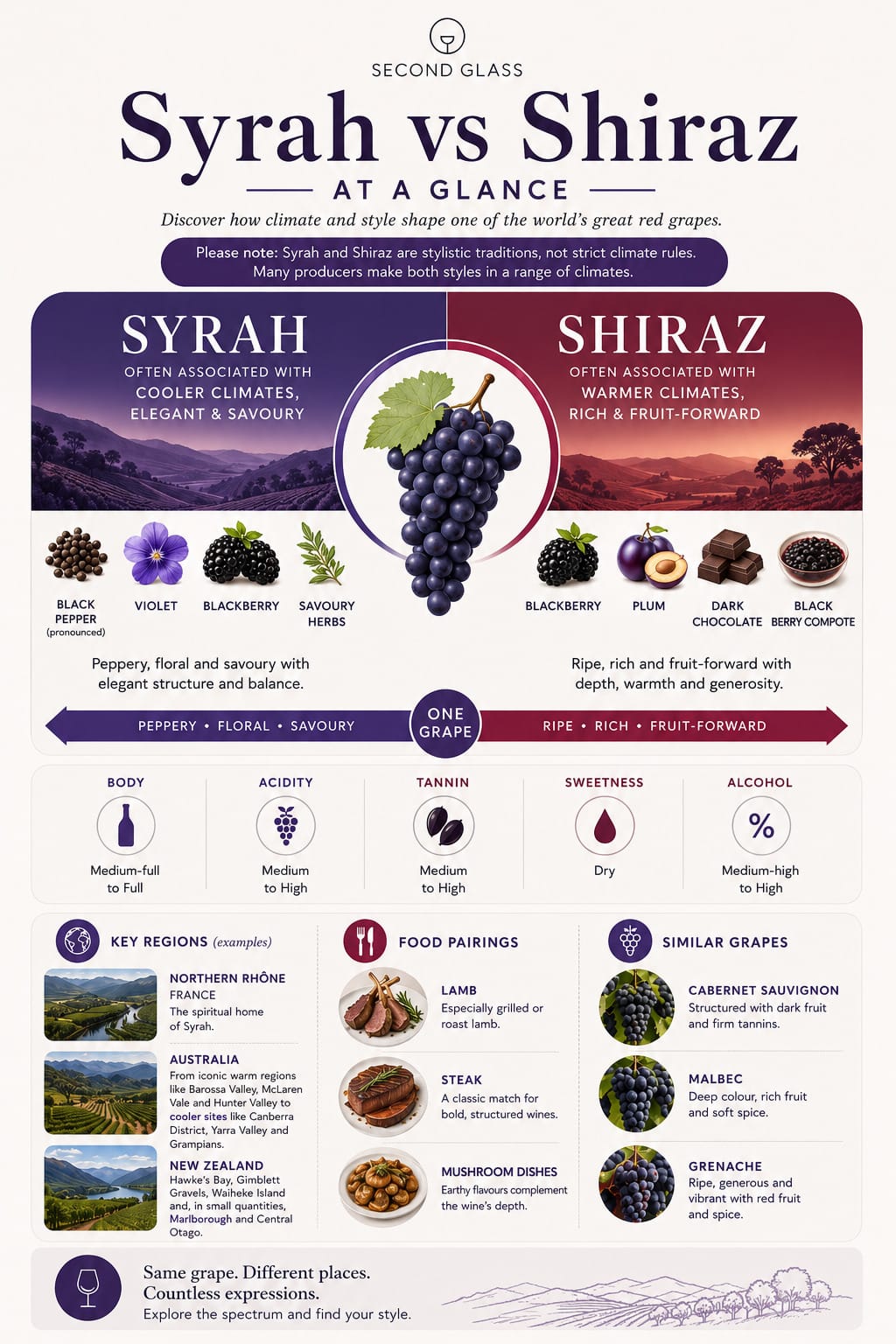
Syrah and Shiraz are two names for the same dark-skinned red grape. It typically produces dry, full-bodied wines with flavours of blackberry, plum, black pepper and spice. It is most famous in the Rhône Valley and across Australia, where styles range from elegant and savoury to rich and powerful.
How Syrah/Shiraz usually feels
Key Takeaways
- Syrah and Shiraz are the same grape but often represent different styles.
- Cooler climates frequently produce peppery, savoury wines.
- Warmer regions often create richer, fruit-forward expressions, although site and winemaking decisions can also produce more restrained styles.
- Many high-quality examples can age exceptionally well.
- Oak ageing often adds vanilla, toast and smoky notes while contributing texture and complexity.
- Syrah pairs particularly well with grilled and roasted meats.
- Some of the wine world's most highly regarded reds are made from this variety.
What Is Syrah/Shiraz?
Syrah is one of the world's great red grape varieties. Genetic research suggests it originated in southeastern France, where it became synonymous with the northern Rhône. Over centuries it spread internationally and found remarkable success in Australia, where the name Shiraz became widely adopted.
Today, Syrah/Shiraz is planted across Europe, Australia, North and South America, and parts of South Africa and New Zealand. It is prized for its ability to express both place and winemaking style while retaining its distinctive dark fruit and spice character.
What Does Syrah/Shiraz Taste Like?
Fruit Flavours
Typical flavours include:
- Blackberry
- Black cherry
- Plum
- Blueberry
- Blackcurrant
Warmer regions may also show notes of jam, fig and dried fruit.
Floral Notes
Many examples display:
- Violet
- Lavender
- Potpourri
These aromatic notes are particularly common in cooler-climate expressions, although they can also appear in wines from warmer sites.
Herbal and Spice Notes
Characteristic savoury elements include:
- Black pepper
- Liquorice
- Clove
- Smoked meat
- Olive
- Dried herbs
Ageing Characteristics
With bottle age, Syrah/Shiraz can develop:
- Leather
- Tobacco
- Truffle
- Forest floor
- Dried fruit
- Cedar
Climate Influence
Cooler climates generally produce fresher wines with black fruit, floral aromas and peppery spice, although some sites can also show red-fruit elements. Warmer climates often create fuller-bodied wines with riper fruit and softer tannins, although vineyard site, harvest timing and winemaking choices can also result in surprisingly restrained expressions.
Why Does It Taste Like This?
Syrah's naturally thick skins provide deep colour and significant tannin. The grape also contains aromatic compounds associated with pepper and spice.
Climate plays a major role. Cooler regions tend to preserve acidity and are often associated with floral and savoury characteristics, although these traits are also influenced by factors such as site, vine physiology and ripeness. Warm regions generally encourage ripeness and fruit intensity, though excessively hot conditions can sometimes reduce freshness and aromatic complexity.
Winemaking also influences expression. Extended skin contact can increase structure and colour intensity, while oak maturation may add vanilla, toast and smoky notes while contributing texture and complexity. Chocolate or mocha notes can sometimes emerge from the interaction of ripe fruit, fermentation and oak influence rather than from oak alone.
How Ageing Changes Syrah/Shiraz
Bottle Ageing
Quality examples can evolve beautifully, developing savoury complexity and earthy nuances.
Oak Ageing
Syrah frequently responds well to oak maturation. Oak may contribute flavours of toast, cedar, vanilla and sweet spice while enhancing texture and structure.
Lees Ageing
Lees ageing is not a defining feature of most Syrah/Shiraz wines, although some producers employ it to add texture and complexity.
Micro-Oxygenation
Some producers use controlled oxygen exposure to soften tannins and refine texture. However, it is not a defining feature of Syrah/Shiraz production and many wines are made without it.
Ageing Potential
Entry-level wines are usually best enjoyed young. Many premium examples can develop for decades, particularly those from outstanding producers and sites.
Is Syrah/Shiraz Dry or Sweet?
Syrah/Shiraz is almost always made in a dry style. Despite flavours reminiscent of ripe berries and jam, the wines contain little residual sugar. Some warmer-climate examples may seem sweeter because of their abundant fruit and elevated alcohol.
Body, Acidity and Tannin
Syrah generally sits in the medium-full to full-bodied category. Acidity usually ranges from medium to high depending on climate and ripeness, providing freshness and food friendliness. Tannins range from medium to high and contribute structure, texture and ageing potential.
Where Is Syrah/Shiraz Grown?
Classic Regions
Rhône Valley
The historical home of Syrah. Northern Rhône wines often display blackberry, violet, olive and black pepper notes with notable structure and longevity.
In the southern Rhône, Syrah commonly plays a supporting role in the famous GSM blend of Grenache, Syrah and Mourvèdre. Grenache typically provides ripe red fruit and alcohol, Syrah contributes colour, spice and structure, and Mourvèdre adds earthy, savoury complexity and tannin. Châteauneuf-du-Pape is one of the best-known appellations associated with these blends, although the exact proportions can vary widely and many wines include additional permitted grape varieties.
Trivia: The term "GSM" is widely used by wine drinkers and producers around the world, but in the Rhône itself, producers rarely refer to their wines as "GSM". They are generally identified by their appellation, such as Châteauneuf-du-Pape, Gigondas or Côtes du Rhône.
New World Regions
Australia
Australian Shiraz is often associated with rich plum, blackberry, chocolate and spice flavours. However, the country's diverse climates also produce many elegant and peppery examples, particularly in cooler regions.
South Africa
Styles frequently combine ripe fruit with savoury, smoky elements.
New Zealand
Generally produces fresher, aromatic wines with pepper and floral characteristics.
United States
Examples range from restrained, cool-climate styles to concentrated, fruit-forward expressions.
Emerging Regions
- Chile
- Argentina
- Canada
These regions increasingly produce impressive examples with distinctive regional identities.
Famous Wines Made From Syrah/Shiraz
Notable styles include:
- Northern Rhône Syrah
- Hermitage from the renowned slopes of Hermitage hill in the northern Rhône, where granite is particularly important in some celebrated sites but is joined by clay, limestone and alluvial soils across the appellation. These wines are widely regarded as among the world's greatest and longest-lived expressions of Syrah.
- Australian Shiraz
- Rhône-style blends incorporating Syrah alongside Grenache and Mourvèdre in the classic southern Rhône tradition
- Premium single-vineyard expressions from cool-climate regions
Sparkling Wines Made From Syrah/Shiraz
Sparkling Syrah and Shiraz exist but remain uncommon. Australia produces distinctive sparkling Shiraz wines that combine dark fruit flavours with lively bubbles and spice. Producers use a range of production methods, resulting in styles that can vary from youthful and fruit-driven to more complex and mature expressions.
What to eat with Syrah/Shiraz
Ideal pairings
- Lamb
- Beef steak
- Barbecue
- Venison
The grape's fruit concentration and tannin complement richly flavoured meats.
Everyday pairings
- Sausages
- Burgers
- Pizza
- Mushroom dishes
Pairings to approach carefully
- Delicate white fish
- Very sweet desserts
- Light salads
These foods can be overwhelmed by the wine's body and intensity.
Similar grapes to try
| Grape | Similar | Difference |
|---|---|---|
| Cabernet Sauvignon | Full body and dark fruit. | More tannic and herbal. |
| Malbec | Rich fruit and colour. | Usually softer and plummier. |
| Grenache | Southern Rhône connection. | Lighter tannins and more red fruit. |
| Mourvèdre | Savoury complexity. | More earthy and rustic. |
| Tempranillo | Structured and age-worthy. | Generally less peppery. |
| Petit Sirah | Deep colour and concentration. | More intensely tannic. |
Buying Guide
Budget (£8–£15)
Young, fruit-driven wines emphasising blackberry and plum flavours. These wines are typically made for early drinking and often showcase ripe fruit, soft tannins and straightforward appeal. They are excellent choices for casual meals, barbecues and those new to the variety.
Mid-Range (£15–£35)
Greater complexity with spice, savoury elements and better balance. Wines in this category may spend some time in oak and often display additional notes of black pepper, liquorice, smoke and herbs. They generally offer improved structure and can benefit from a few years of bottle ageing.
Premium (£35+)
Single-vineyard and age-worthy examples with layers of fruit, spice, floral notes and tertiary development. Premium Syrah/Shiraz often comes from carefully selected vineyard sites and may be matured in high-quality oak. These wines typically possess greater concentration, refined tannins and, in many cases, the ability to evolve over many years, developing complex flavours of leather, tobacco, truffle and dried fruit with age.
Common Misconceptions
Syrah and Shiraz are different grapes.
They are the same grape variety. The two names generally reflect different winemaking traditions and stylistic expectations rather than different grapes. "Syrah" is often associated with more savoury, peppery and restrained expressions, while "Shiraz" is commonly used for richer, fruit-forward styles.
Shiraz is always heavy and jammy.
Although some warm-climate examples are rich and concentrated, many Shiraz wines are medium-bodied, fresh and elegant. Cooler regions can produce wines with bright acidity, floral aromas and distinctive black pepper notes.
Syrah must be aged for years.
Many premium examples can develop beautifully over decades, but many Syrah and Shiraz wines are made to be enjoyed young. Fruit-driven styles often show their best qualities within the first few years after release.
Dark colour means sweet wine.
Syrah/Shiraz typically has a deep ruby or purple colour because of its thick skins and high concentration of pigments. Despite its intense appearance and ripe fruit flavours, the vast majority of examples are made in a dry style with very little residual sugar.
Syrah only pairs with red meat.
While it is excellent with steak, lamb and barbecue dishes, Syrah/Shiraz is also versatile at the table. Depending on the style, it can pair well with roasted vegetables, mushroom dishes, hard cheeses, game birds and even richly flavoured seafood preparations.
FAQs
Is Syrah the same as Shiraz?
Yes. Syrah and Shiraz are two names for the same grape variety. The different names often indicate stylistic traditions rather than different grapes.
Is Syrah always full-bodied?
Not always. Most examples are medium-full to full-bodied, but cooler climates can produce more restrained and elegant wines.
Why does Syrah taste peppery?
Certain aromatic compounds naturally present in the grape contribute distinctive black pepper notes, especially in cooler-climate examples.
Does Syrah age well?
Yes. Many high-quality examples can age exceptionally well, gradually developing savoury, earthy and tertiary complexity.
Is Syrah usually oaked?
Many producers use oak maturation, although the extent varies. Oak can add texture and flavours of vanilla, smoke and spice.
Is sparkling Shiraz a real style?
Yes. Sparkling Shiraz is a recognised but relatively niche Australian style that combines dark fruit flavours with effervescence.
Is Syrah suitable for beginners?
Absolutely. It offers generous fruit flavours and is available in a wide range of styles and price points.
If you are new to Syrah/Shiraz
If you're new to Syrah/Shiraz, begin with an approachable, fruit-driven Australian Shiraz before exploring cooler-climate examples from the northern Rhône or New Zealand, where pepper, floral aromas and savoury complexity become more pronounced.
Final Thoughts
Syrah/Shiraz is one of the wine world's most versatile red grapes. Whether you prefer the peppery elegance of the northern Rhône or the generous richness of Australian Shiraz, it offers complexity, food friendliness and a remarkable sense of place.