
Quick answer
What to know first
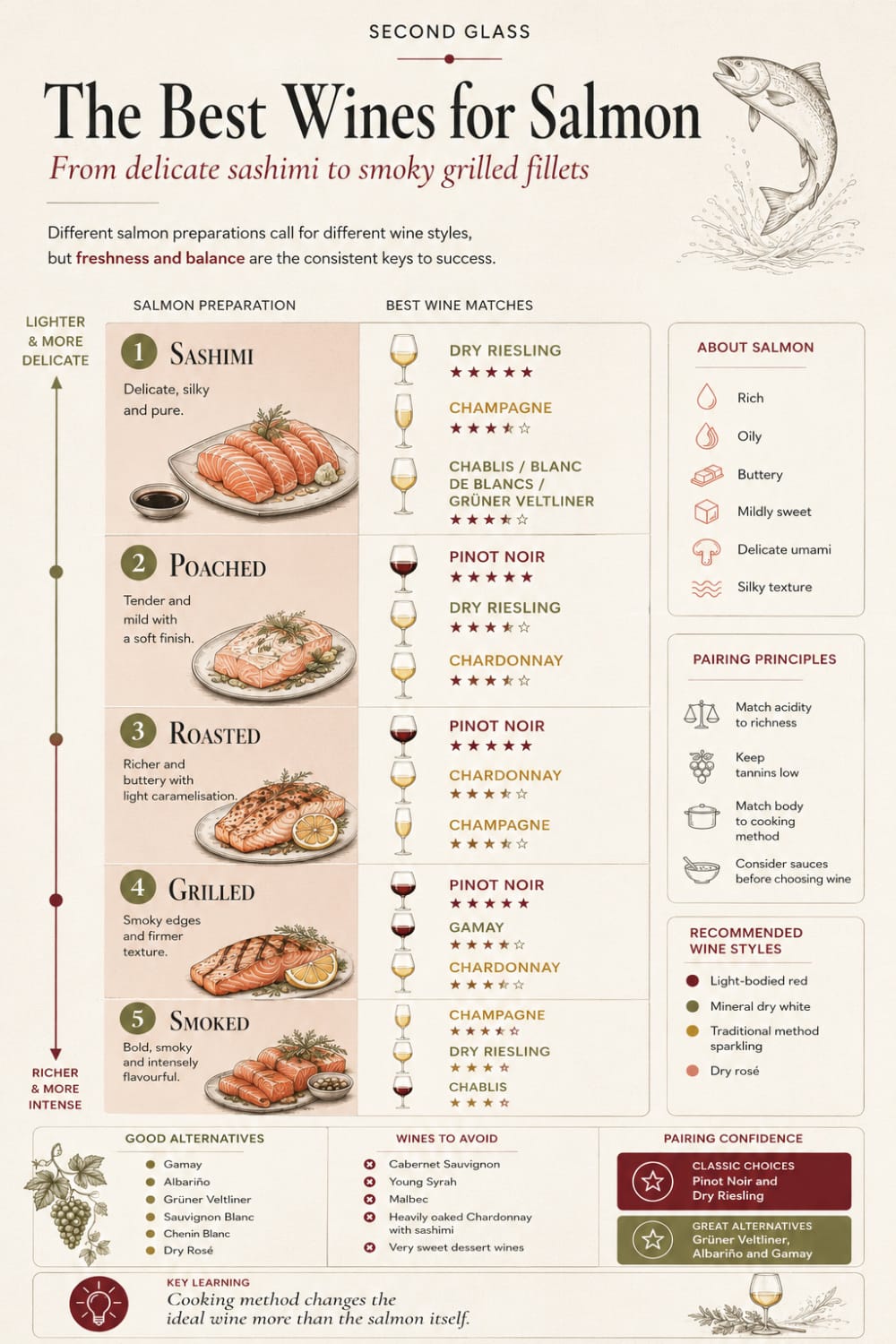
There isn’t a single “best” wine with salmon, but Pinot Noir is often considered the most versatile overall choice thanks to its bright acidity, silky tannins and delicate red fruit. For sashimi, choose dry Riesling or Champagne. For grilled salmon, Chardonnay and Gamay are excellent alternatives.
What Salmon brings to the glass
Introduction
Salmon is one of the most versatile fish to pair with wine. Whether served as delicate sashimi, gently poached, roasted with herbs or charred over a grill, its naturally rich texture allows it to work with both white and red wines. Unlike lean white fish, salmon contains plenty of healthy fat, giving it enough weight to stand alongside lighter reds while still pairing beautifully with crisp whites and sparkling wines.
Across the UK and Europe, salmon commonly appears in everything from sushi platters and smoked starters to roast fillets, creamy pasta dishes and barbecue feasts. Understanding how the cooking method changes the flavour is the key to choosing the right bottle.
Key Takeaways
- Salmon's richness allows it to pair with both white and lighter red wines.
- Cooking method matters more than the fish itself.
- Sashimi prefers crisp, mineral wines with high acidity.
- Grilled salmon can comfortably handle Pinot Noir.
- Cream sauces benefit from fuller-bodied whites.
- Avoid heavily tannic reds that overpower delicate fish.
- Acidity is often the most important characteristic in a successful pairing, alongside balance, body and tannin.
Best overall wines for Salmon
Pinot Noir
★★★★★
RegionsBurgundy, Oregon, New Zealand
Bright acidity, silky tannins and delicate red fruit complement salmon without overwhelming it.
Dry Riesling
★★★★★
RegionsMosel, Rheingau, Alsace
Crisp acidity and mineral freshness are ideal for sashimi and lightly cooked salmon.
Chardonnay
★★★★☆
RegionsChablis, Sonoma Coast, Yarra Valley
Unoaked or lightly oaked styles mirror salmon's rich texture while retaining freshness.
Champagne
★★★★☆
RegionsChampagne
Fine bubbles and high acidity cleanse the palate, making it particularly successful with smoked salmon and sashimi.
Why these wines work with Salmon
Dominant strategy
Balance salmon's richness with fresh acidity while matching wine body to the cooking method.
Supporting principles
- High acidity refreshes the palate and balances natural oils.
- Low tannins prevent metallic flavours while allowing delicate fish flavours to shine.
Understanding the Dish
Salmon is naturally richer than most fish because of its high oil content. This richness creates opportunities that simply do not exist with lean seafood such as cod or sole.
Cooking Method
Raw sashimi showcases pure freshness and delicate sweetness. Poaching preserves subtle flavours, while roasting concentrates them slightly. Grilling and barbecuing introduce caramelisation and smoky notes that increase flavour intensity.
Dominant Flavours
Fresh salmon offers a rich, slightly sweet flavour with a gentle marine character. Its smooth, almost creamy texture is often described as buttery. Grilling introduces roasted notes, while smoking adds savoury complexity.
Richness
The fish's natural oils make richness one of its defining characteristics. Richer wines with sufficient freshness work particularly well.
Fat
Fat doesn’t reduce a wine’s acidity, but it makes acidity feel more refreshing and balanced. This contrast allows wines with good freshness to cut through richness and cleanse the palate effectively.
Acidity
Salmon itself is not particularly acidic, making fresh wines especially valuable. Crisp acidity refreshes the palate and balances the fish's richness.
Salt
Salt levels vary considerably. Soy sauce, smoked preparations and cured salmon increase saltiness, favouring sparkling wines and mineral whites.
Sweetness
Salmon is only mildly sweet. Sweet glazes such as teriyaki or maple require fruitier wines with restrained oak and lower tannins.
Umami
Raw, smoked and grilled salmon all possess gentle umami, encouraging wines with savoury complexity rather than overt fruitiness.
Spice
Wasabi, chilli glazes or pepper rubs increase pairing complexity. Wines with moderate alcohol and fresh acidity generally perform best.
Texture
Silky sashimi requires elegance, while grilled salmon has a firmer texture that welcomes slightly fuller-bodied wines.
Sauces
Lemon butter, hollandaise, beurre blanc, soy sauce and creamy dill sauces each influence the ideal pairing. Rich butter sauces suit Chardonnay, while soy-based preparations favour Riesling or sparkling wine.
Garnishes
Fresh herbs, citrus, sesame, capers and dill all reinforce the need for freshness and aromatic precision in the accompanying wine.
Why These Wines Work
Successful salmon pairings rely on balance rather than contrast alone.
Acidity is often the most influential factor because it cuts through the fish's natural oils and refreshes the palate after every bite. Wines lacking freshness can quickly feel heavy.
Tannin should remain gentle. Soft tannins interact more harmoniously with the combination of fat and protein in salmon, while firm tannins can create an unpleasant metallic sensation with fish.
Body should match preparation. Delicate sashimi benefits from light-bodied wines, while grilled salmon comfortably handles medium-bodied styles.
Alcohol should stay moderate. Very alcoholic wines exaggerate richness and can overwhelm subtle flavours.
Complementary flavours also matter. Citrus, herbs, red berries, minerals and gentle smoky notes naturally echo flavours often found alongside salmon.
Contrasting flavours can also succeed. Sparkling wines provide freshness through acidity and bubbles, creating an energetic contrast to salmon's rich texture.
Classic Pairings
White
Dry Riesling, Chablis and Sauvignon Blanc all excel with fresh salmon thanks to their bright acidity and mineral character. Chardonnay becomes increasingly successful as richer sauces are introduced.
Red
Pinot Noir remains the benchmark red wine. Gamay and lighter-bodied, cooler-climate styles of Grenache can also work well with grilled salmon, especially when served slightly chilled.
Rosé
Dry Provence rosé offers delicate red fruit, citrus freshness and enough body to complement grilled or roasted salmon during warmer months.
Sparkling
Champagne and high-quality traditional method sparkling wines pair beautifully with smoked salmon, sashimi and elegant starters. Their acidity and bubbles refresh every mouthful.
Sweet
Sweet wines are rarely the first choice but can work with glazed salmon dishes containing honey, maple syrup or teriyaki sauce. Off-dry Riesling generally offers the best balance.
Alternative Pairings
Albariño provides saline freshness that works particularly well with simply grilled salmon served with lemon.
Grüner Veltliner combines citrus, herbs and peppery freshness, making it excellent with herb-crusted salmon.
Etna Bianco offers volcanic minerality and lively acidity that suit Mediterranean salmon dishes.
Fino Sherry is an adventurous pairing for smoked salmon, bringing nutty complexity and remarkable freshness.
Orange wine, while more of an enthusiast choice, can complement cedar-plank salmon when made in a restrained style with moderate tannins.
Best grapes for Salmon
| Grape | Why it works | Flavour match |
|---|---|---|
| Pinot Noir | Combines bright acidity with gentle tannins and moderate body. | Cherry, raspberry and subtle earthiness. |
| Riesling | High acidity preserves freshness with delicate salmon dishes. | Citrus, green apple and minerality. |
| Chardonnay | Adapts well to both delicate and creamy salmon preparations. | Citrus, orchard fruit and subtle creaminess. |
| Gamay | Soft tannins suit grilled salmon without dominating it. | Fresh red berries and floral notes. |
| Sauvignon Blanc | Herbaceous freshness complements lemon and herb preparations. | Citrus, herbs and gooseberry. |
| Grüner Veltliner | Peppery freshness works well with herb-crusted salmon. | Citrus, white pepper and herbs. |
| Chenin Blanc | Combines freshness with texture for roasted salmon. | Apple, quince and honeyed citrus. |
Best Regions
Burgundy remains one of the finest sources of Pinot Noir and Chardonnay for salmon pairings.
Germany produces exceptional dry Rieslings that elevate sashimi and lightly cured salmon.
Alsace combines aromatic precision with generous texture, particularly in Riesling and Pinot Gris.
Within Burgundy, Chablis delivers mineral Chardonnay with remarkable freshness for roasted salmon.
Oregon produces elegant Pinot Noir with bright fruit and restrained oak.
New Zealand excels in both Pinot Noir and Sauvignon Blanc, offering freshness that complements many salmon dishes.
Austria provides excellent Grüner Veltliner for herb-led preparations.
Traditional Pairings
French cuisine frequently serves salmon with Burgundy Chardonnay or Pinot Noir, reflecting centuries of regional food and wine traditions.
Japanese sashimi naturally pairs with crisp, mineral wines that preserve the purity of the fish rather than masking it.
Scandinavian gravadlax and smoked salmon often shine alongside sparkling wine thanks to the combination of salt, richness and freshness.
Mediterranean grilled salmon works beautifully with coastal white wines that combine citrus flavours with saline minerality.
Salmon Recipes Pairing
Raw Salmon and Sashimi
Raw salmon, particularly in sashimi or sushi preparations, is at its most delicate. The texture is silky and the flavour is clean, with subtle sweetness and gentle umami. Because there is no cooking to add weight or complexity, the wine must be equally refined.
The best pairings here are light, high-acid wines with minimal or no oak influence. Dry Riesling is an outstanding choice, offering crisp acidity and citrus-driven freshness that enhances the purity of the fish. Champagne also works beautifully, as its fine bubbles and bright acidity cleanse the palate between bites. Mineral-driven Chardonnay, especially from cooler regions like Chablis, provides structure without overwhelming the dish.
Poached Salmon
Poaching preserves the tenderness of salmon while adding a slight richness from the cooking liquid. The result is still delicate, but with a touch more body than raw preparations.
This style pairs well with wines that balance freshness with a hint of texture. Chardonnay is a natural fit, particularly lightly oaked or unoaked styles that mirror the fish’s softness. Chenin Blanc is another excellent option, offering both acidity and a subtle waxy texture that complements the dish. Sparkling wines also perform well, as their acidity and effervescence lift the richness without overpowering it.
Roasted Salmon
Roasting intensifies the flavour of salmon and adds a deeper, more savoury character. The flesh becomes firmer and richer, often with lightly caramelised edges.
With this added weight, the wine can also step up in body. Pinot Noir becomes an increasingly attractive option, as its bright acidity and soft tannins complement the richness while its red fruit flavours add contrast. Fuller-bodied white wines, such as more structured Chardonnay, can also work well, especially when the dish includes herbs or a light glaze.
Grilled Salmon
Grilling introduces smoky, charred and caramelised flavours that significantly change the profile of the dish. The texture becomes firmer, and the flavour more robust.
These characteristics allow for more expressive wines. Pinot Noir remains a top choice, particularly styles with a touch of earthiness that echo the grill’s smokiness. Gamay is another excellent option, offering juicy fruit and low tannins that keep the pairing fresh. Fuller-bodied Chardonnay, especially those with some oak influence, can also stand up to the intensity of grilled salmon.
Salmon with Cream Sauces and Spicy Glazes
When salmon is served with a cream-based sauce, the dish becomes richer and more indulgent. In this case, wines with greater texture and body are needed to match the weight. Fuller-bodied Chardonnay or Chenin Blanc work particularly well, as they provide both richness and balancing acidity.
For salmon prepared with spicy glazes or bold seasonings, the pairing strategy shifts. Aromatic wines with bright acidity and moderate alcohol are ideal, as they help manage heat and enhance the dish’s flavours. Off-dry Riesling or aromatic whites like Gewürztraminer can be especially effective, offering a touch of sweetness that softens spice while maintaining freshness.
Pairings by Occasion
Everyday
An unoaked Chardonnay or Sauvignon Blanc offers reliable value and broad appeal with most salmon dishes.
Dinner Party
Champagne or elegant Pinot Noir provides sophistication while remaining versatile across different preparations.
Special Occasion
Fine Burgundy or mature dry Riesling showcases how complex salmon pairings can become without overwhelming the food.
Summer
Dry rosé, Albariño and Sauvignon Blanc provide refreshing companions for barbecued or salad-based salmon dishes.
Winter
Roasted salmon with herbs, mushrooms or creamy sauces pairs beautifully with Pinot Noir or richer Chardonnay.
Wines To Avoid
Powerful Cabernet Sauvignon often overwhelms salmon with firm tannins and concentrated black fruit.
Young Syrah and Malbec usually introduce excessive tannin and spice.
Heavily oaked Chardonnay can dominate delicate sashimi and lightly cooked fish.
High-alcohol reds may emphasise richness instead of balancing it.
Very sweet dessert wines generally clash unless the dish itself contains substantial sweetness.
Common Mistakes
Many people assume fish should only be paired with white wine. Salmon proves that lighter reds can work exceptionally well.
Another common mistake is ignoring the sauce. The sauce often has more influence on the pairing than the fish itself.
Serving heavily oaked wines with sashimi masks the freshness that makes raw salmon so appealing.
Choosing wines with aggressive tannins often creates unpleasant metallic flavours.
Finally, serving wine too warm reduces freshness and balance, particularly with Pinot Noir and Chardonnay.
Buying Guide
Budget (£5–£15 / $6–$20)
Excellent salmon wines are available without spending heavily. Crisp Sauvignon Blanc, dry Riesling and unoaked Chardonnay often provide outstanding freshness at affordable prices. Younger Pinot Noir can also offer excellent value, particularly from New Zealand and parts of Germany. At this level, prioritise freshness and balance over complexity.
Mid-Range (£15–£30 / $20–$40)
This is where salmon pairings become especially rewarding. Wines show greater concentration, better balance and more refined acidity. Pinot Noir develops additional savoury complexity, while Chardonnay gains texture without excessive oak. Many of the best-value bottles for regular entertaining sit comfortably within this category.
Premium (£30+ / $40+)
Premium wines reveal subtle layers that elevate fine salmon dishes. Great Burgundy, mature Riesling and prestige sparkling wines deliver remarkable precision, length and elegance. Complexity becomes increasingly evident without sacrificing freshness. Spending more is most worthwhile for celebratory meals or when the salmon itself is of exceptional quality.
How To Experiment
Try serving the same salmon dish with both Pinot Noir and dry Riesling. Notice how one highlights texture while the other emphasises freshness.
Experiment with grilled and raw preparations using the same wine to understand how cooking changes the pairing.
Compare lightly oaked and unoaked Chardonnay to see how oak influences richness.
Keeping notes quickly builds confidence and helps identify your personal preferences.
Common Misconceptions
Fish should only be served with white wine.
Salmon is rich enough to pair beautifully with lighter reds like Pinot Noir.
The richest wine is always the best match.
Balance matters more than power. Freshness is usually the deciding factor.
Sparkling wine is only for celebrations.
Champagne is one of the finest food wines and an outstanding salmon partner.
Oak always improves Chardonnay with salmon.
Too much oak can overwhelm delicate preparations, particularly sashimi.
Sauces don't matter.
In many salmon dishes, the sauce influences the wine choice as much as the fish itself.
FAQs
Can I drink red wine with salmon?
Yes. Salmon is one of the few fish that consistently pairs well with lighter red wines because of its rich texture and natural oils. Pinot Noir is widely regarded as the classic choice thanks to its gentle tannins and vibrant acidity.
What's the best wine with salmon sashimi?
Dry Riesling is among the finest options because its crisp acidity and mineral character preserve the purity of the fish. Champagne is another excellent choice, particularly when the meal includes sushi or seafood starters.
Does smoked salmon need a different wine?
Usually, yes. Smoking increases savoury flavours and saltiness, making sparkling wines, dry Riesling and Chablis particularly successful. Their freshness balances the richer, more intense flavour profile.
Is Chardonnay always a good choice?
Not always. Unoaked or lightly oaked Chardonnay suits most salmon dishes, but heavily oaked examples can dominate delicate preparations. Rich cream sauces are where fuller-bodied Chardonnay performs best.
What wine goes with grilled salmon?
Pinot Noir is often the standout choice because it complements smoky, caramelised flavours while maintaining freshness. Gamay and dry rosé also perform well, especially during summer.
Can rosé work with salmon?
Absolutely. Dry rosé combines refreshing acidity with delicate berry fruit, making it versatile across grilled, roasted and lightly seasoned salmon dishes. It is especially appealing for outdoor dining.
What if my salmon has a sweet glaze?
Choose wines with bright fruit and high acidity rather than firm tannins. Dry or off-dry Riesling often balances teriyaki, honey or maple glazes exceptionally well.
Which wine is safest if I'm unsure?
Pinot Noir remains one of the most dependable all-round choices. It offers enough freshness for most salmon preparations while remaining delicate enough not to overpower the fish.
Start with Pinot Noir
If you're new to wine pairing, start with Pinot Noir. It consistently succeeds because it combines bright acidity, soft tannins and moderate body, matching salmon's richness without overwhelming its flavour. If you're serving raw sashimi, switch to a dry Riesling for extra freshness. As you gain confidence, compare different cooking methods with the same wine to see how preparation changes the pairing. Small experiments are often the fastest way to discover your own preferences.
Final Thoughts
Salmon is one of the most rewarding foods to pair with wine because its richness bridges the gap between white and red styles. Bright acidity is often the key to success, supported by balance in body and tannin, while cooking method and sauce determine the best direction. Whether you're enjoying delicate sashimi, elegant smoked salmon or a smoky grilled fillet, choosing a balanced wine with freshness and moderate body will consistently produce satisfying results. Pinot Noir remains a benchmark option, but Riesling, Chardonnay, Champagne and several other styles ensure there's an excellent pairing for every salmon dish and every occasion.