
Beaujolais at a glance
Beaujolais lies north of Lyon and south of the Mâconnais, across parts of the Rhône and Saône-et-Loire departments.
Climate
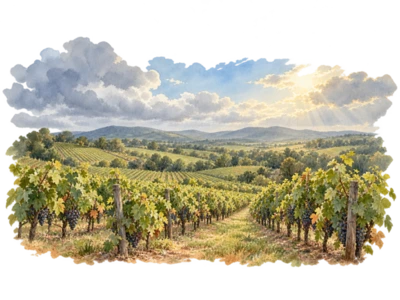
Temperate, with continental, oceanic and Mediterranean influences. Continental air can bring winter and spring frost; the Saône and oceanic air moderate temperature differences, while Mediterranean winds and the Haut-Beaujolais hills affect warmth and shelter. Conditions vary by site and year.
Soils
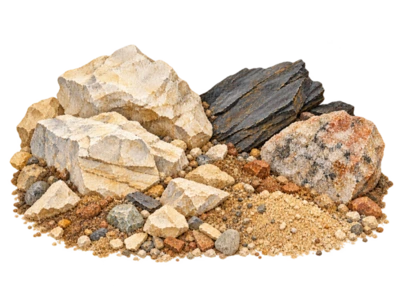
- Granite and other hard rocks, including schist and volcanic-origin rocks in parts of the northern cru area.
- Clay, limestone and other deposits elsewhere in the region.
Landscape
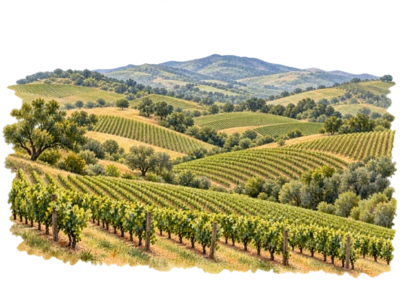
Vineyards occupy hillsides and gentler slopes, with varied elevation and exposure.
Signature wine styles
Beaujolais red
Fresh, fruit-led red with supple texture and fine tannins.
Gamay
Raspberry · Strawberry · Cherry · Pepper (style-dependent)
-
BodyLight to medium
-
AcidityMedium to high
-
TanninLow to moderate
-
SweetnessDry
-
AlcoholLow to medium
Beaujolais Nouveau
Young, tender red made to show vivid fruit soon after harvest.
Gamay
Red fruit · Floral notes (style-dependent)
-
BodyLight to medium
-
AcidityMedium to high
-
TanninVery low
-
SweetnessDry
-
AlcoholLow to medium
Fleurie
Fragrant cru red with floral notes and a supple feel.
Gamay
Violet · Rose · Red fruit · Peach (style-dependent)
-
BodyLight to medium
-
AcidityLow
-
TanninLow
-
SweetnessDry
-
AlcoholMedium
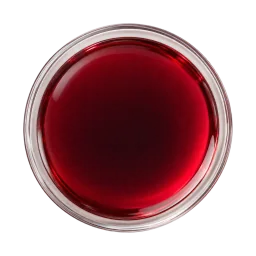
Morgon
Richer cru red with ripe fruit, structure and ageing potential.
Gamay
Sour cherry · Violet · Ripe stone fruit · Savoury notes (with age)
-
BodyMedium to full
-
AcidityMedium to high
-
TanninMedium
-
SweetnessDry
-
AlcoholMedium to high
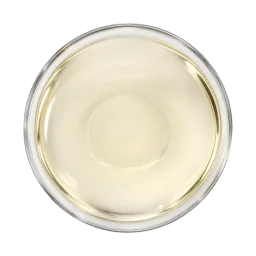
Beaujolais Blanc
Fresh, rounded white with citrus, white fruit and occasional floral notes.
Chardonnay
Citrus · White fruit · White flowers (style-dependent) · Vanilla (style-dependent; Present in some wines; barrel influence varies by producer.)
-
BodyMedium to full
-
AcidityMedium to high
-
SweetnessDry
-
AlcoholMedium
Introduction
Beaujolais is often introduced through Beaujolais Nouveau, but it also makes everyday regional reds, ten village crus and small-production whites. This guide explains the region’s grapes, landscape, appellations and food pairings, with a few useful starting points for exploring its wines.
Key Takeaways
- Beaujolais lies between southern Burgundy and Lyon, in eastern France.
- Gamay is the region’s defining red grape; Chardonnay is used for its white wines.
- The region has 12 appellations: Beaujolais, Beaujolais-Villages and ten crus.
- Beaujolais Nouveau is a young, fruit-led style released soon after harvest.
- Lightly chilling many Beaujolais reds can bring out their freshness.
Where Is Beaujolais?
Beaujolais is in eastern France, stretching south from the Mâconnais towards Lyon. Its vineyards occupy the western side of the Saône valley, across parts of the Rhône and Saône-et-Loire departments.
The landscape changes from south to north. The south has rolling hills and villages built from warm-toned stone; further north, vineyards climb steeper slopes around the cru villages.
What Is Beaujolais Nouveau—and When Is It Released?
Beaujolais is known internationally for Beaujolais Nouveau, released each November. Made soon after harvest, it is produced and bottled quickly for release while young. Many producers use carbonic or semi-carbonic maceration, which can help preserve vivid fruit and a soft, approachable texture. Nouveau is intended for early enjoyment.
Beaujolais Nouveau Day 2026 falls on Thursday 19 November. The release takes place on the third Thursday of November each year.
Beyond Beaujolais Nouveau, What is Beaujolais Know for ?
The region is also known for its ten crus: Brouilly, Côte de Brouilly, Régnié, Morgon, Chiroubles, Fleurie, Moulin-à-Vent, Chénas, Juliénas and Saint-Amour. They give drinkers a way to explore different expressions of Gamay, from lighter, aromatic wines to more concentrated examples.
Climate and Terroir
Beaujolais has a mainly temperate continental climate, with warm summers and cooler winters. Conditions vary by site and year; growing-season warmth can help Gamay ripen while cooler periods help retain freshness. Rainfall, heat and harvest timing also vary from year to year.
The soils are varied. Granite and other hard rocks are common in much of the northern cru area; clay, limestone and other deposits occur elsewhere. These are broad patterns, not a simple north-versus-south rule. Soil, slope, aspect, vine age and weather interact, so a soil type alone cannot predict a wine’s flavour.
Vineyards occupy hillsides as well as gentler slopes. Elevation and exposure influence how much sun and wind vines receive and how quickly grapes ripen. Steeper sites can be more difficult to farm, but they do not guarantee better wine.
Important grapes in Beaujolais
-
Gamay
- Style
- Red wines ranging from bright, juicy regional styles to more structured crus.
- Flavour profile
- Cherry, raspberry and strawberry, sometimes with violet, pepper or savoury notes.
- Structure
- Often light to medium-bodied, with lively acidity and low to moderate tannin; fuller examples can be firmer and more concentrated.
- Food pairings
- Lighter styles with charcuterie, roast chicken or vegetable dishes; more structured crus with pork, duck or mushroom-rich food.
-
Chardonnay
- Style
- Small-production Beaujolais Blanc and Beaujolais-Villages Blanc.
- Flavour profile
- Citrus and white fruit.
- Structure
- Fresh and rounded; some wines are fermented or aged in barrel.
- Food pairings
- Seafood, poultry and dishes with a creamy sauce.
Wine Styles of Beaujolais
Red
Red wine is the region’s principal style. Beyond the young, fruit-led Nouveau style, Beaujolais and Beaujolais-Villages reds range from juicy and fresh to more concentrated. The crus often offer more structure.
White
Beaujolais Blanc is made from Chardonnay. It is a small but distinctive part of regional production, typically offering fresh citrus and orchard-fruit flavours.
Rosé
Beaujolais rosé is made in smaller quantities than red wine. These wines are generally fresh and fruit-led, and work well as an aperitif or with lighter dishes.
Sparkling and sweet
Crémant de Bourgogne is a separate regional appellation that can use grapes from the area; sparkling and sweet wines are not defining styles of Beaujolais.
What Do Wines From Beaujolais Taste Like?
Fruit and floral notes
Many Beaujolais reds show cherry, raspberry, strawberry or redcurrant. Depending on the wine, you may also find violet or other floral aromas. Riper fruit, darker flavours or savoury notes can appear in some wines, particularly with site, vintage and bottle age.
Herbal and savoury notes
Pepper, earth, dried herbs or forest-floor notes may emerge in some examples, especially as they mature.
Structure and ageing
Many Beaujolais reds have fresh acidity, modest tannin and a light to medium body. That makes them refreshing and food-friendly, especially when served slightly cool. Some cru wines have firmer tannins and more concentration.
Beaujolais Nouveau and many simple regional wines are intended for early drinking. More structured cru wines can develop over several years, gaining savoury complexity. Ageing potential depends on the wine and vintage, so check merchant guidance if you are buying a bottle to cellar.
Vintage variation
Warmer years can produce riper fruit and a broader feel; cooler years may give fresher, lighter wines. These are general tendencies. The producer’s choices, vineyard site and harvest conditions also shape the result.
How to serve Beaujolais
Red
Beaujolais and Beaujolais-Villages red
13–14°C 55–57°F
Serve slightly cool to keep the fruit fresh.
Red
Beaujolais Nouveau
12°C 54°F
Serve young and lightly chilled.
Red
Structured Cru Beaujolais
15–17°C 59–63°F
This is general guidance for structured crus; named appellation pages give cooler ranges for several other crus.
White
Beaujolais Blanc
10–12°C 50–54°F
The dedicated Beaujolais white-wine guidance recommends 10–12°C so its fruit and texture can show.
Rosé
Beaujolais Rosé
5–8°C 41–46°F
Serve well chilled, as Beaujolais rosé shows best with a fresh, lively chill.
Rosé
Beaujolais Nouveau Rosé
5–8°C 41–46°F
Use the 5–8°C Beaujolais rosé guidance for this rosé Nouveau; the official guide does not give it a separate temperature.
The Beaujolais names worth recognising
-
Brouilly
Memory hook: The largest cru.
Known for: Generally generous, approachable reds.
Why it matters: A useful place to start exploring the ten crus.
-
Côte de Brouilly
Memory hook: The cru on Mont Brouilly.
Known for: Hillside wines that can be more structured.
Why it matters: It is a separate appellation from Brouilly.
-
Régnié
Memory hook: Fruit-forward and aromatic.
Known for: A lively introduction to the crus.
Why it matters: Its style offers a contrast with more structured crus.
-
Morgon
Memory hook: Ripe fruit and firm structure.
Known for: Wines that can develop savoury character with age.
Why it matters: It shows a more structured side of Gamay.
-
Chiroubles
Memory hook: The high-elevation cru.
Known for: Fresh, aromatic and relatively light-bodied wines.
Why it matters: Its elevation is a distinguishing feature.
-
Fleurie
Memory hook: Fragrant and supple.
Known for: Wines often described as elegant.
Why it matters: It provides a useful comparison with more structured crus.
-
Moulin-à-Vent
Memory hook: One of the more structured crus.
Known for: Wines with ageing potential.
Why it matters: It is a good place to explore cru wines with more structure.
-
Chénas
Memory hook: The smallest cru.
Known for: Floral wines with firmer structure.
Why it matters: Its small size distinguishes it within the cru group.
-
Juliénas
Memory hook: Ripe fruit and a robust feel.
Known for: Reds with a fuller impression.
Why it matters: It offers another expression of structured Gamay.
-
Saint-Amour
Memory hook: A varied cru.
Known for: Styles from fragrant and light to more structured.
Why it matters: It gives drinkers a broad stylistic range to explore.
What to eat with Beaujolais
Regional specialities
Try a fresh, fruit-led red with saucisson, roast pork or charcuterie. For coq au vin or chicken in cream sauce, choose a more structured Beaujolais or Beaujolais Blanc, depending on the sauce.
Everyday local pairings
- Lighter Beaujolais with sausages, burgers, roast chicken, pizza, mushroom pasta or charcuterie.
- A fruit-led red with roasted vegetables.
- Beaujolais Blanc with seafood, poultry or creamy sauces.
Pairings to approach carefully
Very heavily charred food can dominate a delicate, fruit-led wine. Very hot chilli can overwhelm its fresh fruit, while a very sweet sauce can make a dry red seem less balanced.
Similar wine regions to explore
| Shared thread | How it differs | |
|---|---|---|
| Burgundy | Both offer expressive, food-friendly wines and a strong sense of place. | Beaujolais is best known for Gamay; red Burgundy is made from Pinot Noir. |
| Loire Valley | Some Loire Cabernet Franc shares Beaujolais's freshness and moderate body. | Cabernet Franc often brings more herbal character and firmer tannin. |
| Willamette Valley | Cool-climate Pinot Noir can offer bright fruit and freshness. | Willamette Valley Pinot Noir is made from a different grape and has a different aromatic profile. |
| Etna | Etna reds can be fresh and site-sensitive, inviting comparison with cru Beaujolais. | Nerello Mascalese is typically more savoury and structured than juicy Gamay. |
| Baden | Baden Pinot Noir can offer freshness and finesse. | It is made from Spätburgunder rather than Gamay. |
Buying Guide
Budget: £10–15 / about $13–20
At this level, look for Beaujolais, Beaujolais-Villages or Nouveau if you want a young, fruit-led red. Expect fresh cherry and berry flavours, a light to medium body and modest tannin. Most wines in this range are intended for drinking young rather than keeping for years. This is a sensible price for an informal bottle to serve lightly chilled with charcuterie, sausages or roast chicken.
Mid-Range: £15–30 / about $20–40
This range opens up a wider choice of cru wines and more distinctive Beaujolais-Villages. Look for the cru name on the label and choose a style that suits the meal or occasion. You may find more concentrated fruit and greater complexity. This is a useful range for comparing two crus or serving wine with a richer meal.
Premium: £30–70+ / about $40–95+
At this level, look for wines with a clearly identified vineyard or site, or for a cru from a producer whose style you already enjoy. The extra spend may bring more concentration, detail or a stronger sense of a particular vineyard, rather than simply more weight. These bottles are worth considering for a special meal or a side-by-side tasting of sites or vintages.
How to start exploring Beaujolais
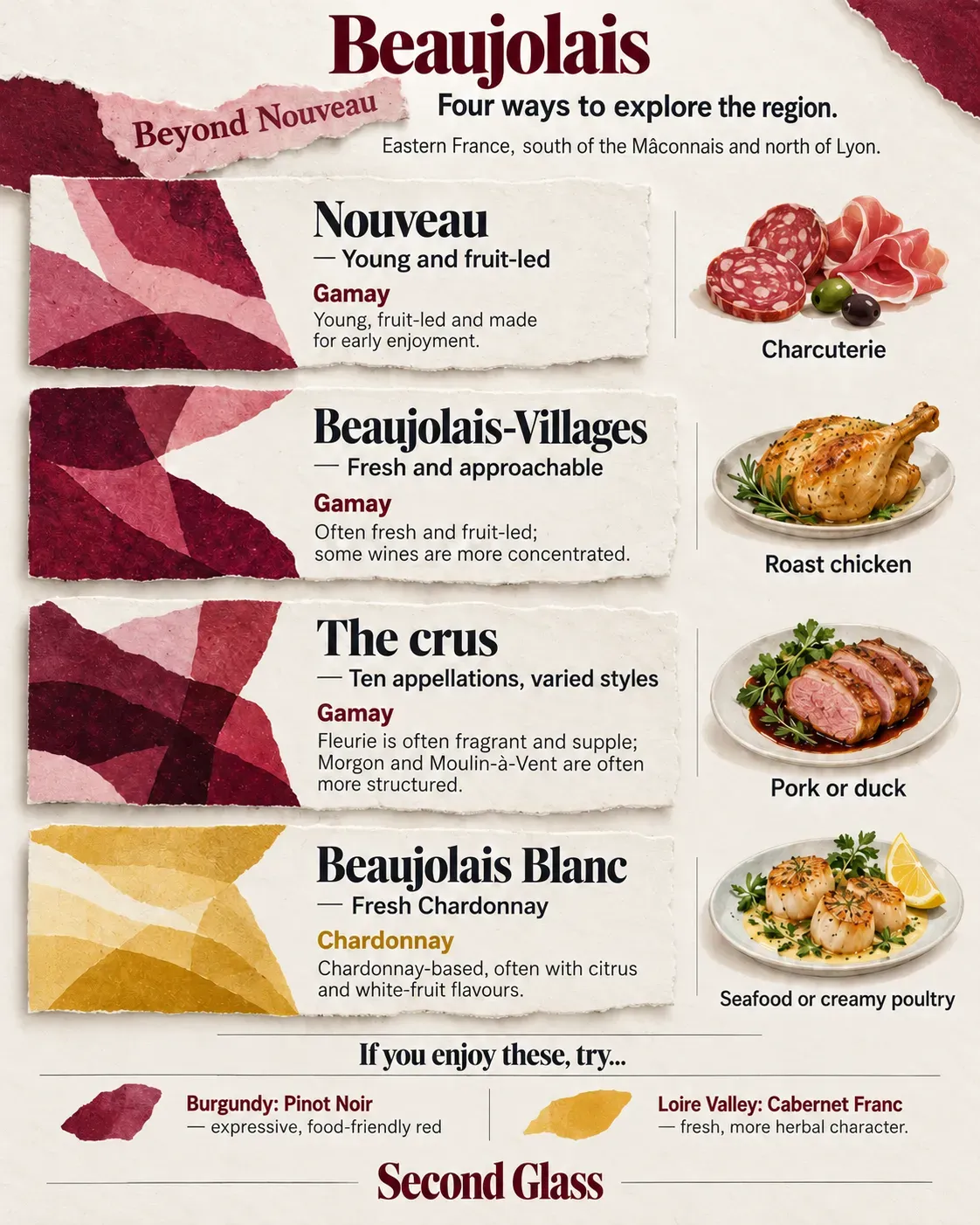
Begin with Beaujolais or Beaujolais-Villages, served slightly cool, alongside a simple meal. Try Beaujolais Nouveau to experience its young, fruit-led style. Compare a fragrant cru such as Fleurie with a more structured one such as Morgon or Moulin-à-Vent. For white wine, try Beaujolais Blanc.
How To Start Exploring Beaujolais
- Step 1 — Begin with Beaujolais or Beaujolais-Villages, served slightly cool, alongside a simple meal.
- Step 2 — Try a Beaujolais Nouveau to experience its young, fruit-led style.
- Step 3 — Compare a fragrant cru such as Fleurie with a more structured cru such as Morgon or Moulin-à-Vent.
- Step 4 — For a change of grape and colour, try Beaujolais Blanc.
Common Misconceptions
A cru name identifies a single vineyard
The ten crus are appellations named after villages or local areas, not individual vineyards. A cru wine may come from different sites within that appellation.
Beaujolais is part of the Burgundy appellation
Beaujolais sits south of Burgundy and has its own appellations and regional identity. The two regions are neighbours, but a Beaujolais label does not mean the wine is a Burgundy appellation wine.
Questions about Beaujolais
What is the difference between Beaujolais and Beaujolais Nouveau?
Beaujolais is both the region’s name and one of its appellations. Beaujolais Nouveau is a young Gamay released soon after harvest; the region also makes Beaujolais-Villages and ten cru wines.
Should you chill Beaujolais?
Serve Beaujolais and Beaujolais-Villages reds at 13–14°C and Nouveau around 12°C. The general guide gives 15–17°C for structured crus, while the Fleurie appellation page recommends 13–15°C; check the named cru. If a red tastes muted, let it warm slightly in the glass.
Can Beaujolais age?
Nouveau and many simple regional wines are intended for early drinking. More structured crus can develop over several years; check the wine’s vintage and merchant guidance if you plan to cellar it.
What food goes well with Beaujolais?
Fresh Beaujolais works well with charcuterie, sausages and roast chicken; more concentrated examples can suit duck or pork. Beaujolais Blanc is a useful option for seafood, poultry and creamy sauces.
What Beaujolais Cru should I try first?
Fleurie is a good starting point if you like fragrant, supple reds; choose Morgon or Moulin-à-Vent to explore a more structured style.
What is carbonic maceration?
Carbonic maceration is a winemaking technique in which intact grapes begin fermenting internally in an oxygen-free atmosphere of carbon dioxide. The grapes are then pressed and yeasts finish fermenting the juice. Traditional Beaujolais winemaking commonly uses semi-carbonic maceration: fermenting juice at the bottom of the vat supplies the carbon dioxide around the intact grapes above. Producers also use other methods.
Does Beaujolais taste like banana?
Some young Beaujolais, especially Nouveau, can show banana or bubblegum-like aromas associated with fermentation and carbonic or semi-carbonic winemaking. These notes vary by wine and are not present in every bottle. Many Beaujolais wines instead emphasise cherry, raspberry, floral or savoury notes; a banana aroma does not mean bananas were added.
Is Beaujolais dry or sweet?
Beaujolais reds, including Nouveau and the crus, are generally dry. Their juicy fruit aromas can suggest sweetness without making them sweet wines. Beaujolais Blanc and rosé are also typically dry; check the individual bottle if sweetness matters to you.
Is Beaujolais always red?
No. Red wines dominate, but the Beaujolais and Beaujolais-Villages appellations also produce Chardonnay-based whites and Gamay-based rosés. Nouveau can be red or rosé. The ten Beaujolais crus produce red wines.
Final Thoughts
Beaujolais is more than its November Nouveau celebration. Its Gamay wines range from bright, easy-drinking reds to more structured crus, with Chardonnay-based whites offering another route into the region. Start with a Beaujolais-Villages, then compare two crus to discover which style you enjoy most.