
Quick answer
What to know first
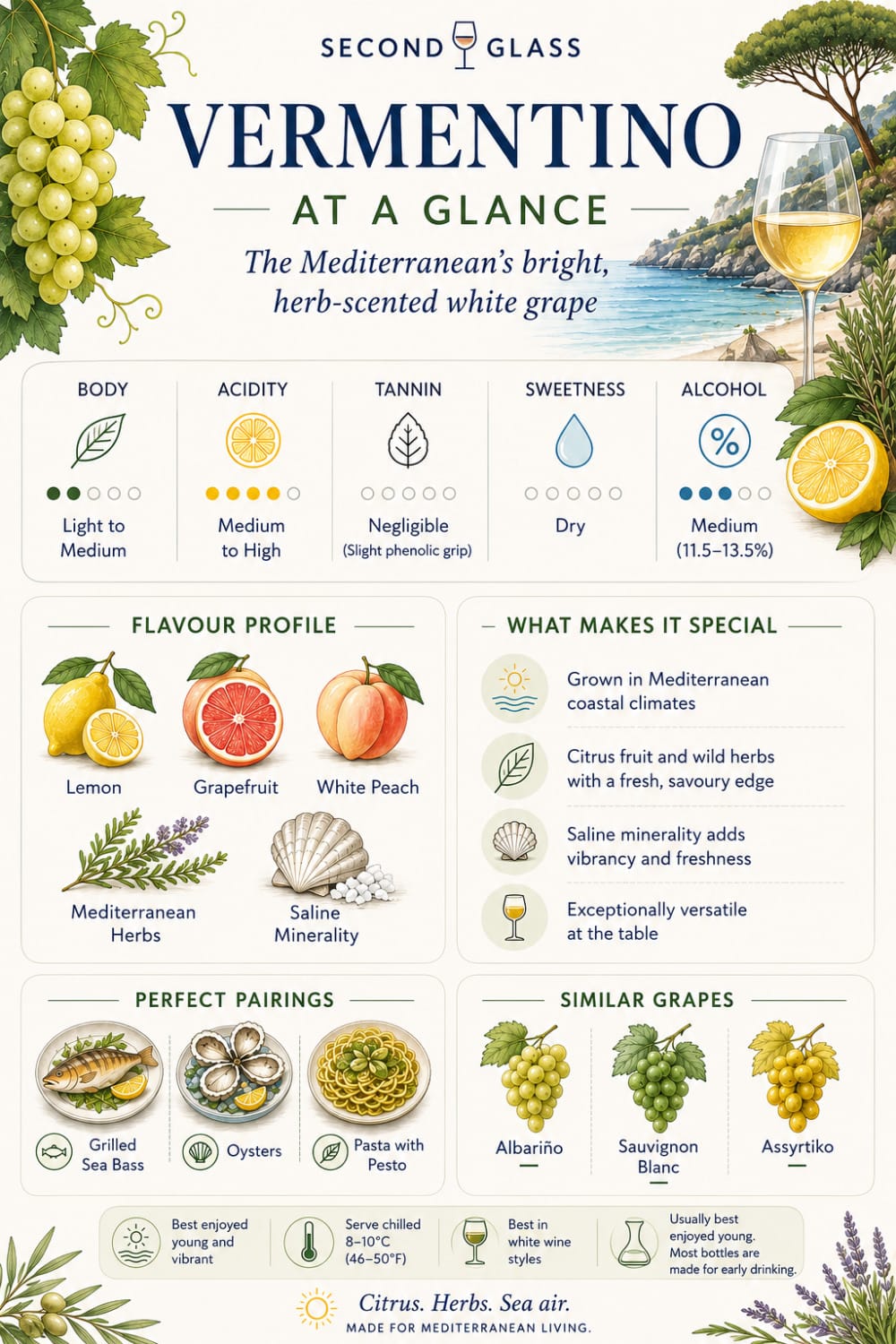
Vermentino is a dry white grape best known for producing fresh, aromatic wines with flavours of lemon, grapefruit, green apple and Mediterranean herbs. It is particularly associated with Sardinia, Liguria and coastal Tuscany.
How Vermentino usually feels
Key Takeaways
- Vermentino is an aromatic Mediterranean white grape.
- Most examples are dry and unoaked.
- It combines citrus fruit with herbal and saline notes.
- Sardinia is one of Vermentino's most important and highly regarded regions.
- Coastal climates help preserve freshness and aromatic intensity.
- It is one of Italy's best food wines for seafood and light Mediterranean dishes.
- Young examples are usually preferred, although premium bottlings can develop complexity with age.
What Is Vermentino?
Vermentino is a white grape variety grown throughout the western Mediterranean. Although its exact origins remain uncertain, it has become closely associated with Italy, particularly Sardinia, Liguria and coastal Tuscany. It is also widely planted in southern France, where it is commonly known as Rolle.
The grape thrives in warm coastal climates where abundant sunshine is tempered by cooling sea breezes. These conditions help the grape achieve ripeness while maintaining freshness and aromatic lift.
Today, Vermentino has become increasingly popular among wine drinkers seeking refreshing, characterful white wines that offer more complexity than simple citrus-driven styles.
What Does Vermentino Taste Like?
Fruit Flavours
Vermentino typically shows:
- Lemon
- Grapefruit
- Green apple
- Pear
- White peach
- Occasionally melon and tropical fruit in warmer sites
Floral Notes
Common floral aromas include:
- White blossom
- Honeysuckle
- Acacia flower
Herbal and Spice Notes
One of Vermentino's defining characteristics is its savoury edge:
- Mediterranean herbs
- Fennel
- Sage
- Fresh thyme
- Almond skin
- Occasionally ginger or white pepper
Ageing Characteristics
With age, Vermentino can develop:
- Honey
- Dried herbs
- Beeswax
- Nutty notes
- Greater textural richness
Climate Influence
Cool coastal regions emphasise:
- Citrus fruit
- Salinity
- Herbal freshness
Warmer regions tend to produce wines with:
- Riper peach and melon flavours
- Fuller body
- Softer acidity
Why Does It Taste Like This?
Vermentino's distinctive character is heavily influenced by its Mediterranean environment.
Warm sunny conditions encourage ripe fruit development, while cooling maritime breezes help preserve acidity and aromatic intensity. This balance creates wines that feel simultaneously generous and refreshing.
Vermentino generally reaches ripeness without accumulating excessively high sugar levels and retains sufficient acidity even in relatively warm climates. This contributes to its lively, energetic style.
Vermentino has moderately thick skins, which can contribute subtle bitterness and savoury notes reminiscent of almond or herbs. Many producers encourage this texture by allowing brief skin contact before fermentation.
Winemaking also plays an important role. Most examples are fermented in stainless steel to preserve freshness and aromatic purity. Some premium bottlings undergo extended lees ageing or partial oak maturation to add texture and complexity.
How Ageing Changes Vermentino
Bottle Ageing
Most Vermentino is intended for drinking within a few years of release. However, high-quality examples can evolve positively for several years.
Oak Ageing
Oak influence is generally limited. Some producers use older barrels or large oak vessels to add texture rather than impart obvious oak flavours.
Lees Ageing
Lees ageing is relatively common in premium expressions and contributes creamier textures and greater complexity.
Micro-Oxygenation
Micro-oxygenation is not typically associated with Vermentino production.
Ageing Potential
Most bottles are best enjoyed young, within one to four years. Premium examples from Sardinia and coastal Tuscany can evolve successfully for five to eight years.
Is Vermentino Dry or Sweet?
Vermentino is almost always made in a dry style.
Its vibrant fruit profile can sometimes create an impression of sweetness, particularly in warmer regions, but residual sugar levels are generally low. Sweet versions are extremely uncommon.
Body, Acidity and Tannin
Vermentino usually sits between light and medium-bodied.
Its acidity is medium to high, providing freshness without becoming austere. The grape contains only negligible amounts of tannin, although its skins often contribute a slight phenolic grip and subtle bitterness that add complexity and food-friendly structure.
Where Is Vermentino Grown?
Classic Regions
Sardinia
The island's warm climate and maritime influence produce expressive wines with citrus fruit, herbs and pronounced salinity.
Liguria
Steep coastal vineyards create lighter, mineral-driven examples with bright acidity and delicate aromas.
Coastal Tuscany
Tuscan Vermentino often shows greater richness and texture while maintaining freshness.
Emerging Regions
Corsica
Known locally as Vermentinu, Corsica is increasingly regarded by many wine professionals as producing some of the Mediterranean's most terroir-driven expressions of the grape. The island's combination of altitude, granitic soils, maritime influence and generally restrained winemaking often produces wines with striking saline minerality, wild Mediterranean herb notes and bright acidity, emphasising freshness and definition rather than richness. The finest examples can also develop additional complexity with bottle age.
Southern France
Under the name Rolle, Vermentino contributes aromatic freshness to both varietal wines and blends.
New World Regions
Australia
Small plantings produce bright, zesty examples with citrus and herbal flavours.
California
Warmer sites create richer expressions featuring peach and tropical fruit notes.
Famous Wines Made From Vermentino
- Vermentino di Sardegna DOC
- Vermentino di Gallura DOCG
- Colli di Luni DOC
- Toscana Vermentino IGT
- Côtes de Provence wines containing Rolle
These wines range from crisp and mineral to richer, textured expressions with notable ageing potential.
Sparkling Wines Made From Vermentino
Sparkling Vermentino exists but remains relatively uncommon.
Both traditional and tank-method examples can be found, particularly in Italy. These wines tend to emphasise citrus fruit, floral notes and refreshing acidity while maintaining the grape's distinctive herbal character.
What to eat with Vermentino
Ideal pairings
- Grilled sea bass
- Oysters
- Prawn linguine
- Risotto with herbs
- Grilled vegetables
- Fresh goat's cheese
Vermentino's acidity and savoury qualities complement seafood particularly well.
Everyday pairings
- Fish and chips
- Chicken salad
- Pasta with pesto
- Sushi
- Mediterranean mezze
Pairings to approach carefully
- Rich creamy desserts
- Very spicy curries
- Heavily sweet sauces
These foods tend to overwhelm Vermentino's delicate aromatics and freshness.
Similar grapes to try
| Grape | Similar | Difference |
|---|---|---|
| Albariño | Citrus fruit and saline freshness. | Usually higher acidity and greater concentration. |
| Sauvignon Blanc | Aromatic and herbal profile. | More pungent and grassy. |
| Grüner Veltliner | Herbal complexity. | More peppery and mineral. |
| Assyrtiko | Mineral and highly food-friendly. | More structured and sharply acidic. |
| Picpoul | Crisp style suited to seafood. | Leaner and more austere. |
| Falanghina | Mediterranean freshness and citrus character. | Softer and more floral. |
Buying Guide
Budget (£8–£15)
At this price point, expect fresh, easy-drinking Vermentino that focuses on bright fruit and refreshment. Most wines are fermented in stainless steel and intended for early consumption.
Typical characteristics include:
- Lemon, grapefruit and green apple flavours
- Light to medium body
- Crisp acidity
- Subtle herbal notes
- Minimal complexity and little or no oak influence
Excellent examples can be found from Sardinia, southern France and some larger Tuscan producers. These wines are ideal as aperitifs or for pairing with simple seafood dishes, salads and light pasta dishes.
Mid-Range (£15–£30)
This is often the sweet spot for Vermentino. Wines become noticeably more expressive and layered, with greater concentration and a stronger sense of place.
Typical characteristics include:
- More pronounced peach, pear and citrus fruit
- Distinctive Mediterranean herb and floral aromas
- Greater textural richness and mineral character
- More persistent finish
- Occasional lees ageing for added complexity
Many of the best-value bottles from Vermentino di Sardegna DOC, Colli di Luni DOC and coastal Tuscany fall into this category. These wines pair beautifully with grilled fish, shellfish, risotto and Mediterranean cuisine.
Premium (£30–£60+)
Premium Vermentino demonstrates just how serious the grape can be. These wines are usually produced from carefully selected vineyard sites, lower yields and meticulous winemaking.
Typical characteristics include:
- Concentrated citrus, stone fruit and saline flavours
- Complex herbal, floral and almond notes
- Richer texture balanced by vibrant acidity
- Exceptional length and mineral definition
- The ability to develop additional complexity with several years of bottle age
Top examples from Vermentino di Gallura DOCG and leading producers in Sardinia, Corsica and Tuscany can often age successfully for five to eight years, developing honeyed, savoury and nutty characteristics while retaining freshness. These wines are excellent choices for fine seafood dishes, lobster, grilled turbot and sophisticated Mediterranean cuisine.
Common Misconceptions
Vermentino is sweet because it tastes fruity.
This is perhaps the most common misconception. Vermentino's aromas of peach, ripe citrus and tropical fruit can create an impression of sweetness, particularly in warmer regions such as Sardinia or California. In reality, the vast majority of Vermentino wines are vinified completely dry, with little to no residual sugar. The grape's generous fruit profile simply masks its dryness more effectively than leaner white varieties.
Vermentino is a simple, easy-drinking summer wine.
While many entry-level examples are designed for immediate enjoyment, the finest expressions are far more sophisticated. Top wines from Vermentino di Gallura DOCG, Colli di Luni, Corsica and select Tuscan producers can display remarkable layers of citrus, wild herbs, white flowers, saline minerality and subtle almond notes. Extended lees ageing and careful vineyard management can also produce wines with impressive texture, depth and ageing potential.
All Vermentino tastes broadly the same.
Vermentino is highly responsive to site and climate. Ligurian examples are often light, mineral and delicately aromatic, reflecting the region's steep coastal vineyards and cooler conditions. Sardinian wines tend to be fuller and more intensely flavoured, with pronounced herbal and saline characteristics. Coastal Tuscany frequently produces richer, more textured expressions with ripe stone fruit and greater weight on the palate. Corsican Vermentinu is often especially mineral and focused, combining saline freshness with wild Mediterranean herb notes and remarkable energy. These regional differences can be as pronounced as those found in many better-known international varieties.
Vermentino should always be consumed young.
Most bottles are indeed intended for early drinking, which has contributed to the perception that the grape lacks ageing potential. However, premium examples can evolve beautifully over time. With several years in bottle, the bright citrus and floral notes gradually give way to more complex aromas of honey, dried herbs, beeswax and nuts, while the wine's texture becomes broader and more integrated. Although it is not generally a long-lived collector's wine, the best Vermentino can reward patient cellaring in ways that surprise many wine enthusiasts.
FAQs
Is Vermentino always dry?
Virtually always. Almost all Vermentino wines are produced in a dry style. Their ripe fruit flavours can create an impression of sweetness, but residual sugar is typically very low. Sweet and off-dry examples are extremely rare.
Is Vermentino similar to Sauvignon Blanc?
They share aromatic freshness and herbal notes. However, Vermentino is generally softer and more textured, with saline and almond-like nuances.
Should Vermentino be served chilled?
Yes. Serving it lightly chilled preserves freshness and emphasises its citrus and floral aromas. Excessive chilling can mute its complexity.
Can Vermentino age?
Most bottles are designed for early drinking. However, premium examples can gain honeyed and savoury complexity over five to eight years.
Is Vermentino an oaked wine?
Usually not. Most examples are fermented in stainless steel. Some premium producers use neutral oak to enhance texture.
Is Vermentino good with seafood?
It is one of the Mediterranean's great seafood wines. Its acidity, salinity and herbal character pair exceptionally well with fish and shellfish.
Is Vermentino made into sparkling wine?
Yes, although it remains uncommon. Sparkling versions tend to be fresh, citrus-driven and highly refreshing.
If you are new to Vermentino
Start with a Vermentino from Sardinia to experience the grape's classic combination of citrus fruit, herbal aromatics and saline freshness before exploring regional expressions from Liguria, Tuscany and Corsica.
Final Thoughts
Vermentino offers a wonderful combination of freshness, aromatic complexity and food-friendly versatility. Its blend of citrus fruit, Mediterranean herbs and saline minerality makes it one of the most distinctive white grapes of the western Mediterranean and an excellent choice for anyone seeking characterful, refreshing white wines.