
Quick answer
What to know first
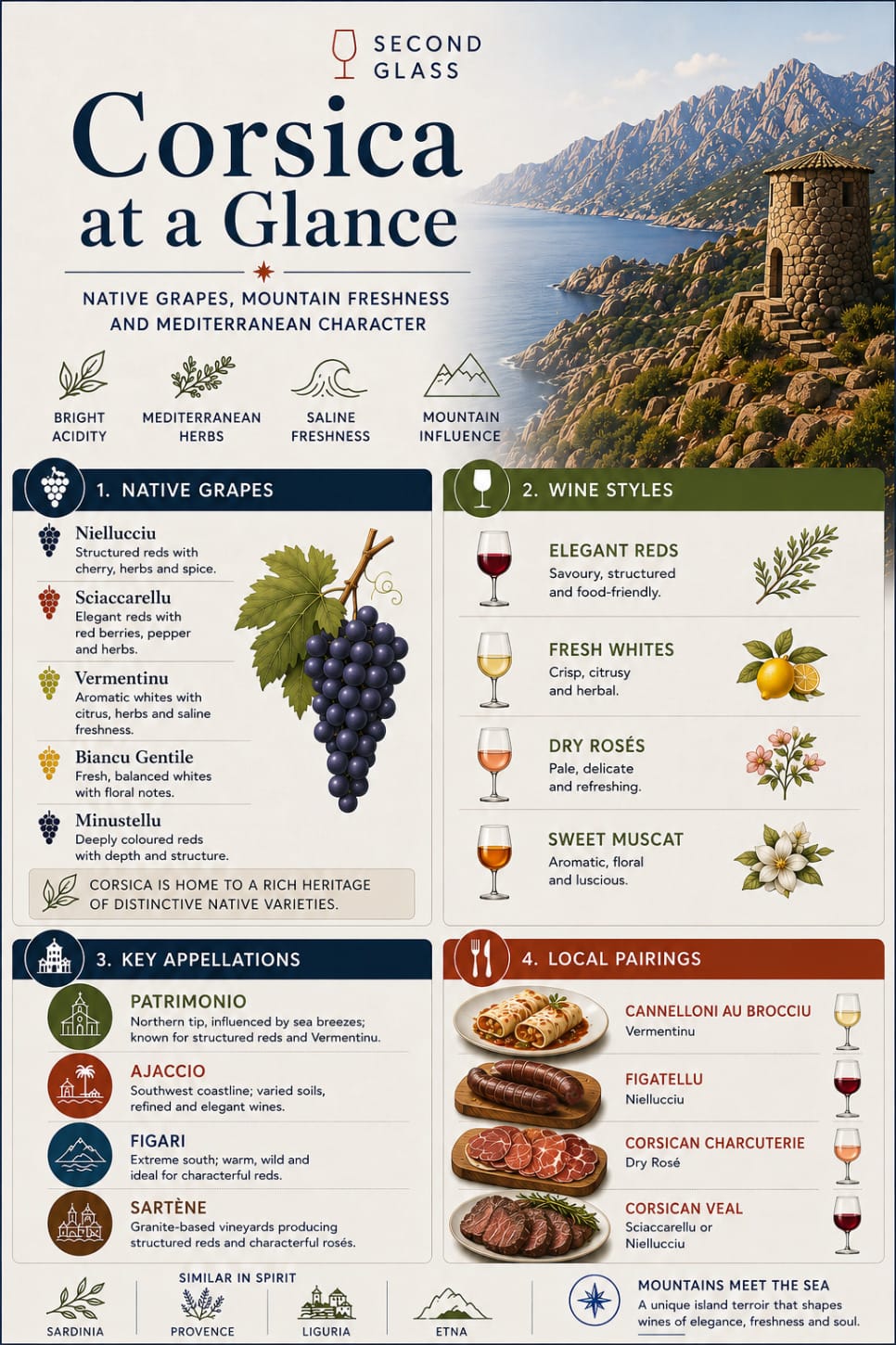
Corsica is a Mediterranean island producing fresh whites, elegant reds and fragrant rosés from native grapes, combining mountain freshness with sunny coastal ripeness.
Key Takeaways
- Corsica is France's only large-scale island wine region.
- Mediterranean sunshine is balanced by mountain influences.
- Native grapes give the region a distinctive identity.
- Rosé is important, but reds and whites are increasingly respected.
- The island's wines often show freshness despite the warm climate.
- Seafood and Mediterranean cuisine are natural matches.
- Exploring by appellation reveals remarkable diversity.
How Corsica usually feels
Where Is Corsica?
Corsica (Corse in French) lies in the Mediterranean Sea southeast of mainland France and just north of Sardinia. Although politically part of France, the island has its own distinctive culture, language and culinary traditions.
Mountains dominate much of the landscape, with vineyards concentrated along coastal plains, valleys and lower hillsides. Many vineyards enjoy cooling sea breezes alongside significant day-to-night temperature variation from nearby mountains.
Wine has been produced here for over two thousand years, and today Corsica is recognised as one of France's most distinctive wine regions, combining Mediterranean ripeness with notable freshness.
Why Is Corsica Famous?
Corsica has long been a crossroads of Mediterranean cultures, with influences from Greeks, Romans, Genoese rulers and France. Modern winemaking increasingly celebrates indigenous grape varieties that nearly disappeared during the twentieth century.
Ancient Greek sources referred to the island as "Kalliste", meaning "the most beautiful".
Wine enthusiasts seek Corsican wines because they offer something different from mainland France: aromatic native grapes, freshness, and styles that reflect both maritime and mountainous influences.
The island is particularly admired for elegant reds, textured whites and dry rosés that pair naturally with Mediterranean food.
Climate and Terroir
Climate
Corsica has a Mediterranean climate with long sunny summers, mild winters and plentiful sunshine. Sea breezes help moderate temperatures, while higher elevations provide valuable cooling during the growing season.
Soils
The island has exceptional geological diversity, including:
- Granite
- Schist
- Limestone
- Sandstone
- Clay
- Alluvial soils
This varied geology contributes to significant stylistic differences between appellations.
Elevation and Topography
Many vineyards sit between sea level and around 400 metres, while others climb considerably higher into foothills. Mountain valleys channel cooling winds that help preserve acidity.
How Terroir Shapes Wine Style
The combination of abundant sunshine, maritime influence and elevation produces wines with ripe fruit balanced by freshness. Different soil types influence drainage, vine vigour and water availability, which in turn can affect concentration, structure and aromatic expression, although these relationships are indirect rather than strictly causal.
Key Grapes of Corsica
Important grapes in Corsica
| Grape | Style | Flavour profile | Structure | Food pairings |
|---|---|---|---|---|
| Niellucciu | Medium to full-bodied red. | Cherry, raspberry, herbs and subtle spice. | Firm but refined tannins with lively acidity. | Roast lamb. |
| Sciaccarellu | Elegant red and rosé. | Red berries, pepper, herbs and orange peel. | Silky tannins with medium body. | Roast chicken. |
| Vermentino | Fresh dry white. | Citrus, pear, white peach and saline notes. | Bright acidity with moderate texture. | Grilled sea bass. |
| Biancu Gentile | Aromatic dry white. | White flowers, orchard fruit and herbs. | Rounded texture balanced by freshness. | Soft cheeses. |
| Muscat à Petits Grains | Naturally sweet wine. | Orange blossom, apricot and honey. | Sweet with balancing acidity. | Blue cheese. |
| Aleaticu | Light to medium-bodied red. | Red berries, rose petals and spice. | Soft tannins and moderate acidity. | Game dishes. |
| Minustellu | Structured red. | Dark berries, herbs and earthy spice. | Firm tannins with good acidity. | Roast meats. |
| Carcaghjolu Biancu | Fresh aromatic white. | Citrus, pear and herbs. | Light-bodied with refreshing acidity. | Seafood. |
| Carcaghjolu Neru | Light to medium-bodied red. | Red berries, herbs and gentle spice. | Soft tannins with moderate acidity. | Charcuterie. |
Wine Styles of Corsica
Red
Typically medium-bodied with vibrant acidity, herbal complexity and refined tannins rather than heavy concentration.
White
Fresh, aromatic and often showing citrus fruit, herbs and a subtle saline impression.
Rosé
Dry, elegant and food-friendly, showing delicate red fruit and refreshing acidity.
Sparkling
Sparkling wine exists but represents only a small proportion of production. Sparkling Muscat are particularly popular.
Sweet
Naturally sweet Muscat wines remain an important traditional speciality.
What Do Wines From Corsica Taste Like?
Fruit Characteristics
Cherry, raspberry, strawberry, citrus, peach, pear and apricot.
Floral Characteristics
Wildflowers, orange blossom and violet.
Herbal and Savoury Characteristics
Thyme, rosemary, fennel, Mediterranean herbs, pepper and subtle mineral impressions.
Structural Characteristics
Generally medium-bodied with refreshing acidity and well-integrated tannins. Alcohol levels are often moderate for a warm-climate region, with many wines falling in the 13–14.5% ABV range.
Ageing Characteristics
Most rosés and many whites are best enjoyed young. Better reds and some higher-quality whites can develop additional savoury complexity over 5–15 years.
Vintage Variation
Warm, dry vintages produce richer wines, while cooler years emphasise freshness and aromatic lift. Coastal and mountain vineyards may perform differently in the same season.
The Corsica names worth recognising
Patrimonio
Memory hook: Corsica's benchmark appellation.
Known for: Niellucciu and Vermentino.
Why it matters: Patrimonio produces many of the island's most age-worthy wines.
Ajaccio
Memory hook: Home of Sciaccarellu.
Known for: Elegant reds and rosés.
Why it matters: Ajaccio is the reference point for Sciaccarellu.
Calvi
Memory hook: North-west coastal vineyards.
Known for: Balanced reds, whites and rosés.
Why it matters: Calvi combines maritime freshness with Mediterranean ripeness.
Sartène
Memory hook: Southern Corsica.
Known for: Structured native-grape reds.
Why it matters: Sartène produces concentrated yet balanced wines.
Figari
Memory hook: Warm southern vineyards.
Known for: Ripe reds and expressive whites.
Why it matters: Figari is one of Corsica's oldest vineyard areas.
Muscat du Cap Corse
Memory hook: Northern peninsula.
Known for: Naturally sweet Muscat wines.
Why it matters: Muscat du Cap Corse preserves one of Corsica's classic dessert wine traditions.
What to eat with Corsica
Regional specialities
Corsican wines pair naturally with the island's rustic cuisine, including veal, wild boar, grilled seafood, octopus, brocciu cheese, chestnut-based dishes and cured charcuterie. The wines' freshness and herbal character complement the island's olive oil, aromatic herbs and simply prepared ingredients.
Everyday local pairings
- Grilled sea bass or red mullet with Vermentino
- Veal with herbs with Niellucciu
- Corsican charcuterie with dry rosé
- Cannelloni au Brocciu with Vermentino or Biancu Gentile
- Figatellu, seasonal Corsican sausage, with Niellucciu
- Chestnut flour dishes with Sciaccarellu or sweet Muscat, depending on the preparation
- Wood-fired pizza with Sciaccarellu or Corsican rosé
These combinations work because Corsican wines combine freshness with savoury herbal flavours that complement the island's local meats, cheeses and Mediterranean cooking.
Pairings to approach carefully
Very spicy chilli-based dishes can overwhelm the wines' subtle herbal complexity.
Rich, sugary desserts generally overpower dry Corsican wines unless paired with sweet Muscat.
Similar wine regions to explore
| Region | Similar | Difference |
|---|---|---|
| Sardinia (Italy) | Mediterranean island wines with indigenous grapes. | Generally produces fuller-bodied wines. |
| Provence | Fresh rosés and Mediterranean climate. | Less emphasis on native varieties. |
| Tuscany | Sangiovese connection through Niellucciu. | Corsica is more maritime and aromatic. |
| Liguria | Vermentino-based whites with coastal freshness. | Smaller production and different red varieties. |
| Etna | Mountain freshness despite Mediterranean warmth. | Volcanic rather than granitic and schist soils. |
| Priorat (Spain) | Rugged landscapes and distinctive terroir. | Typically richer, more powerful red wines. |
Buying Wines From the Region
Budget (£10–15)
At this level, Corsican wines tend to come from the broader Corse appellation or larger producers blending fruit from multiple sites. Expect fresh, easy-drinking styles designed for early consumption rather than ageing.
Vermentino in this range typically shows bright citrus, green apple and light herbal notes, with a clean, refreshing finish that works well with simple seafood dishes. Rosés are often pale, dry and crisp, offering strawberry and redcurrant flavours with a subtle saline impression.
Red wines are usually lighter in structure, often blending Niellucciu and Sciaccarellu. They emphasise red fruit, gentle spice and soft tannins, making them ideal for casual meals. While complexity is limited, these wines provide an accessible introduction to Corsica’s style and excellent everyday value.
Mid-Range (£15–30)
This is where Corsica truly begins to shine. Wines at this level are more likely to come from specific appellations such as Patrimonio, Ajaccio or Calvi, and often reflect more careful vineyard selection and lower yields.
Vermentino becomes more expressive and layered, showing ripe citrus, stone fruit, herbs and a distinct saline or mineral impression. Texture improves, with greater weight on the palate balanced by lively acidity.
Reds gain depth and structure, particularly those based on Niellucciu from areas like Patrimonio. Expect more defined tannins, darker fruit, savoury herbal notes and better ageing potential. Sciaccarellu-based wines from Ajaccio show increased aromatic complexity, with pepper, dried flowers and refined elegance.
Rosés at this level are more precise and gastronomic, often with greater concentration and length, making them suitable for pairing with a wider range of dishes beyond simple aperitif drinking.
Premium (£30–70+)
At the top end, Corsican wines come from leading estates with prime vineyard sites, often farmed organically or biodynamically, and produced with a strong focus on expressing terroir.
Vermentino reaches its most sophisticated form here, combining ripe fruit with layered texture and long, complex finishes. In exceptional cases, some examples can age for a decade or more, developing honeyed, nutty and savoury characteristics.
Niellucciu-based reds from top producers in Patrimonio show impressive structure and ageing potential, with concentrated fruit, firm yet refined tannins and evolving notes of leather, spice and dried herbs over time. These wines can rival high-quality Sangiovese-based wines in complexity.
Sciaccarellu at this level becomes particularly distinctive, offering perfumed aromatics, silky texture and remarkable finesse rather than power. These wines appeal to those who appreciate elegance and subtlety.
Production is often limited, and wines may be harder to find outside specialist retailers, but they offer the most complete expression of Corsica’s unique combination of Mediterranean warmth and mountain freshness.
Common Misconceptions
Corsican wines are all heavy and alcoholic
While Corsica has a warm Mediterranean climate, many wines are surprisingly fresh and balanced thanks to sea breezes and mountain influences.
Corsica only produces rosé
Rosé is important, but the island also produces high-quality reds and whites that are increasingly gaining recognition.
Corsican wines are just like Italian wines
Although there are Italian influences, Corsican wines have developed their own distinct identity shaped by local terroir and winemaking traditions.
Corsican wines are difficult to find and expensive
While some premium bottles can be pricey, many Corsican wines offer excellent value and are becoming more widely available.
FAQs
What is Corsica's most famous wine?
Corsica is best known for wines made from Niellucciu, Sciaccarellu and Vermentino. Together these native and long-established grapes create the island's distinctive reds, whites and rosés.
Is Corsican wine French or Italian?
Corsican wine is French because the island is part of France. However, many grape varieties and cultural traditions reflect centuries of Italian, particularly Genoese, influence.
Are Corsican wines good for ageing?
Some are. Premium reds from Patrimonio and leading white Vermentino wines can age gracefully for many years, while most rosés are intended for early drinking.
What foods pair best with Corsican wine?
Seafood, grilled fish, lamb, pork, charcuterie, Mediterranean vegetables and local cheeses all pair exceptionally well because the wines combine freshness with savoury herbal notes.
Is Corsica good value?
Yes. Many wines offer excellent quality relative to more famous French regions, especially in the £15–30 range where appellation wines become widely available.
Which grape should beginners try first?
Vermentino is usually the easiest introduction. Its bright citrus fruit, freshness and versatility make it approachable while clearly expressing Corsica's Mediterranean character.
If you are new to Corsica
Start with an affordable Vermentino and a dry Corsican rosé before moving to Niellucciu and Sciaccarellu from individual appellations. Comparing wines from Patrimonio and Ajaccio is an excellent way to understand how terroir and grape variety shape the island's diverse styles.
Final Thoughts
Corsica occupies a unique place in the wine world. Its combination of native grapes, mountain landscapes and Mediterranean climate creates wines that feel unmistakably French yet entirely individual. Whether you prefer crisp whites, elegant reds or refreshing rosés, Corsica rewards curious wine drinkers looking beyond the familiar.