Quick answer
What to know first
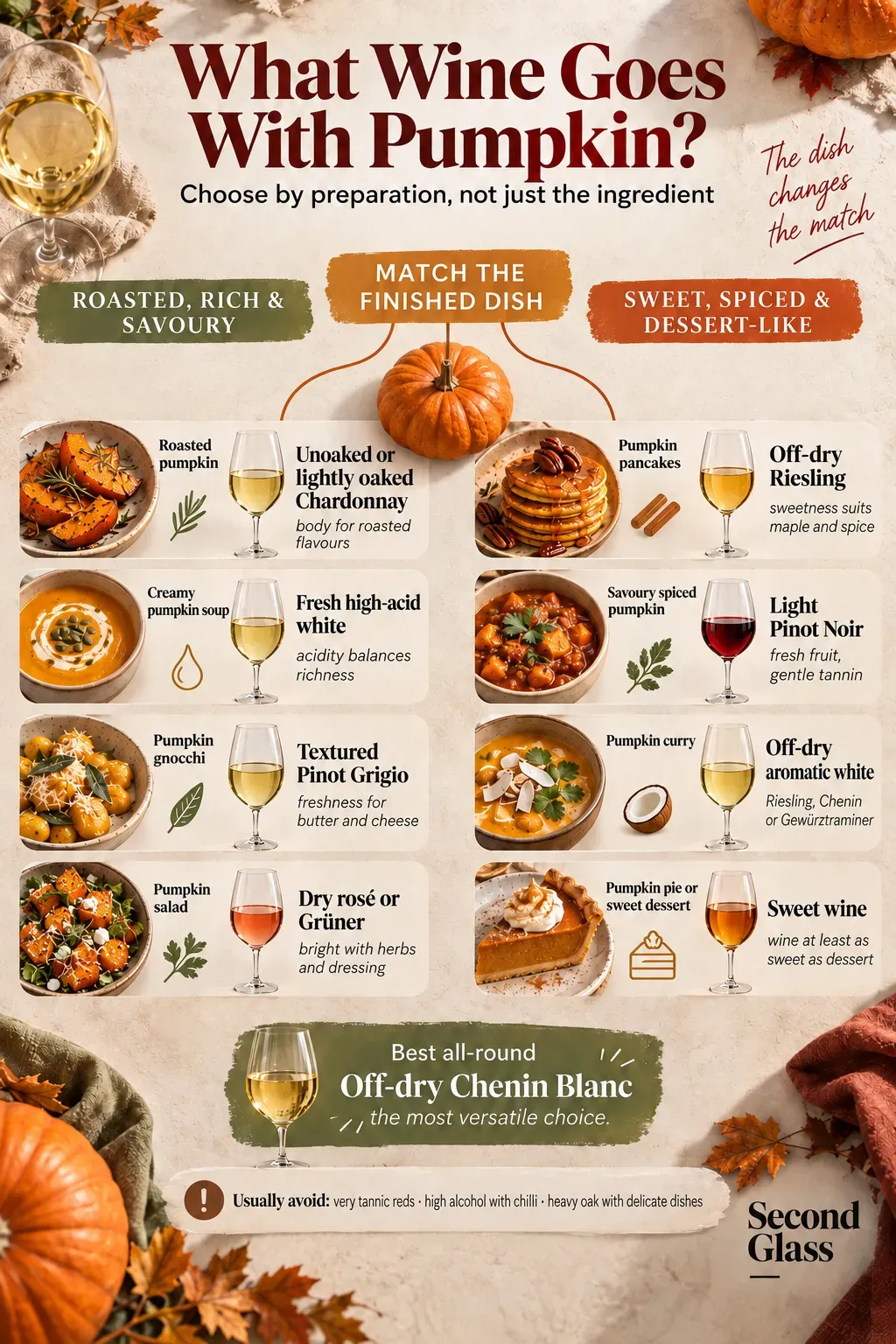
Off-dry Chenin Blanc is our best all-round recommendation for pumpkin. For specific dishes, try Chardonnay with roasted pumpkin, off-dry Riesling with pumpkin pancakes, textured Pinot Grigio with gnocchi and Pinot Noir with savoury spiced pumpkin.
Introduction
Pumpkin is naturally sweet, earthy and creamy, but the best wine pairing depends on how it is prepared. Roasting creates caramelised, nutty flavours, while soup brings a soft, creamy texture. Pumpkin pancakes may include maple syrup and cinnamon, pumpkin gnocchi often comes with sage, butter and Parmesan, and savoury spiced pumpkin can take on earthy, herbal or smoky flavours.
The wine should therefore match the finished recipe rather than pumpkin alone. Cooking method, sauce, garnish, sweetness, spice and richness can all change the best pairing.
Key Takeaways
- Off-dry Chenin Blanc is our best all-round recommendation for pumpkin.
- Match the wine to the finished recipe, not pumpkin alone.
- Use acidity with cream, butter, cheese and coconut milk.
- Choose some wine sweetness for maple, sweet glazes or chilli.
- Prefer fresh, low-tannin reds for savoury roasted pumpkin.
What Pumpkin brings to the glass
How to pair Wine with Pumpkin
Pumpkin has moderate natural sweetness, low acidity and a soft, starchy texture. Roasting concentrates its sweetness and adds caramelised, nutty and sometimes smoky flavours, while boiling, steaming or puréeing produces a cleaner, softer preparation.
Sweetness and spice
Pumpkin’s natural sweetness becomes more pronounced with roasting and sweet garnishes such as maple syrup, honey or dried fruit. If the food is sweeter than the wine, the wine can taste thin, sour or harsh, so choose some residual sweetness for maple, sweet glazes and clearly sweet desserts.
Cinnamon, nutmeg, allspice and clove bring warmth, while chilli adds heat. High alcohol and firm tannin can feel more aggressive alongside chilli, so fresher wines with moderate alcohol are usually safer for spicy preparations.
Richness and acidity
Cream, butter, cheese and coconut milk increase richness and make acidity more important. Acidity refreshes the palate and stops soft pumpkin dishes from feeling heavy.
Salt can soften the perception of acidity and bitterness. Strong umami from ingredients such as Parmesan, stock or miso can make wine seem less fruity and expose bitterness, acidity or alcohol. For strongly umami-rich pumpkin dishes, choose fresh, fruity wines with low tannin.
Weight and body
A smooth soup or purée can make a crisp wine feel especially refreshing, while roasted wedges, fritters, gratin and pumpkin gnocchi need enough body to match their weight. Delicate preparations may suit lighter wines, whereas butter, cream, cheese and browned flavours call for more texture.
Tannin and alcohol
Moderate tannin can work with browned ingredients, mushrooms, lentils and cheese, but firm tannin may clash with pumpkin’s sweetness and produce a bitter finish. Lighter, fresh reds are therefore more reliable than powerful, heavily extracted wines.
Herbs such as sage, rosemary and thyme can bridge pumpkin with earthy or lightly savoury wines. Citrus and floral aromas lift the dish, while orchard and stone fruit can echo its sweetness.
Best overall wines for Pumpkin
Off-dry Chenin Blanc
★★★★★
RegionsVouvray, South Africa
Our best all-round recommendation because its acidity balances richness while its gentle sweetness complements pumpkin. Vouvray demi-sec is the clearest labelled option; many South African examples are dry, so the sweetness description should be checked.
Dry or off-dry Riesling
★★★★★
RegionsAlsace, Germany, Australia
High acidity refreshes creamy dishes and aromatic freshness complements pumpkin, herbs and spice. Off-dry German Riesling is especially useful with pumpkin pancakes, maple, warm spices or chilli.
Pinot Noir
★★★★☆
RegionsBurgundy, Germany, New Zealand
Light, fresh Pinot Noir provides red fruit and gentle tannin for savoury roasted pumpkin, mushrooms, lentils, walnuts, herbs or soft cheese.
RegionsBurgundy, Loire Valley, Australia
Body matches roasted, buttery and creamy preparations, while acidity keeps the pairing fresh. Light oak can echo browned and nutty flavours.
Textured Pinot Grigio
★★★★☆
RegionsNorthern Italy, Veneto
Fresh acidity and restrained fruit suit pumpkin gnocchi with sage, brown butter, Parmesan, lemon or toasted nuts. More concentrated or textured examples are preferable for rich sauces.
Why these wines work with Pumpkin
Dominant strategy
Match the wine to the finished pumpkin recipe rather than pumpkin alone.
Supporting principles
- Use acidity to refresh rich preparations containing cream, butter, cheese or coconut milk
- Use gentle sweetness when pumpkin, maple, honey, chilli or dessert toppings are noticeably sweet
- Use moderate body for roasted or creamy dishes
- Prefer fresh, fruity and low-tannin wines with strongly umami-rich preparations
- Use gentle tannin and earthy fruit for savoury roasted pumpkin
Wine Pairings for Pumpkin Recipes
Roasted pumpkin
Roasting intensifies sweetness and adds caramelised, nutty flavour. Unoaked or lightly oaked Chardonnay works well with olive oil, butter, garlic, rosemary or thyme, while a fresher, less oaked style is better if the pumpkin is served with lemon or a sharp dressing.
For savoury roasted pumpkin with mushrooms, lentils, walnuts or herbs, light Pinot Noir or Gamay can work. Keep the preparation savoury rather than dessert-like.
Pumpkin pancakes
Pumpkin pancakes with maple syrup, cinnamon, nutmeg or pecans need freshness and some sweetness. Off-dry Riesling is the strongest match, keeping the pairing lively while complementing the toppings.
If the pancakes are savoury and served with yoghurt, herbs or bacon, choose dry Riesling instead.
Pumpkin gnocchi
Pumpkin gnocchi has a soft, starchy texture and gentle sweetness. Pinot Grigio works well with sage, brown butter, Parmesan, lemon or toasted nuts, particularly when it has enough concentration and texture for the sauce.
Northern Italian Pinot Grigio is a natural style to explore, although the recipe matters more than the country on the label. Sparkling wine or Chardonnay can also suit richer versions.
Pumpkin soup
Creamy pumpkin soup benefits from acidity and moderate body. Chenin Blanc, dry or off-dry Riesling, Chardonnay and textured Rhône whites can all work, while ginger or chilli may favour a slightly sweet Riesling or Chenin.
For a simple broth-based soup, Grüner Veltliner or Pinot Grigio may be better. Brown butter, croutons, toasted seeds, miso or Parmesan make a more textured white especially useful.
Savoury autumn-spiced pumpkin
Pinot Noir can work with roasted pumpkin seasoned with pepper, sage, rosemary, cinnamon, mushrooms, lentils or toasted nuts. Choose a light, fresh red with moderate alcohol, bright acidity and gentle tannin.
If the dish is heavily sweetened, use a wine with some sweetness instead of red wine.
Pumpkin curry
Choose a wine with freshness, aromatic intensity and sometimes residual sugar. Off-dry Riesling, Chenin Blanc and Gewürztraminer are excellent with coconut milk and moderate chilli.
Avoid high alcohol, which can make the dish taste hotter.
Pumpkin salad
A salad with roasted pumpkin, leaves, grains, nuts or cheese can take a wide range of wines. Dry rosé, Grüner Veltliner, Pinot Grigio or lighter Pinot Noir can all work.
Lemon and vinegar favour acidity, while maple or honey favours a slightly sweeter wine. Dry rosé is especially useful with feta, herbs and fresh dressings.
Pumpkin pie and desserts
Pumpkin pie needs a sweet wine with bright acidity, such as late-harvest Riesling, moelleux Vouvray or another clearly sweet Chenin Blanc. The wine should be at least as sweet as the dessert so that it does not taste thin or sour.
Choose the wine by pumpkin preparation
Pumpkin changes significantly with roasting, sweetness, cream, spice, herbs and cheese, so the preparation should guide the wine choice.
If you're havingRoasted pumpkin with butter, olive oil or herbs
Explore
If you're havingPumpkin pancakes with maple, cinnamon or pecans
Explore
If you're havingPumpkin gnocchi with sage, brown butter or Parmesan
Explore
If you're havingSavoury roasted pumpkin with mushrooms, lentils or herbs
Explore
If you're havingPumpkin curry with coconut milk or chilli
Explore
If you're havingPumpkin pie or clearly sweet pumpkin dessert
Explore
Other Wines to Try
- Grüner Veltliner: Its lively acidity, citrus, green fruit and subtle pepper suit herbs, ginger, green vegetables and fresh cheese.
- Gewürztraminer: Its floral, lychee-like character works with aromatic spices, ginger, coconut milk and mild chilli; choose a dry or slightly off-dry example.
- Gamay: Bright red fruit, freshness and low to moderate tannin make it a good alternative to Pinot Noir with roasted pumpkin, mushrooms or walnuts.
- Sangiovese: A lighter, fresher style can suit savoury pumpkin pasta, tomato-based sauces and Parmesan.
- Dry Lambrusco: Acidity, light tannin and gentle sparkle work with pumpkin gnocchi, fried pumpkin, cured meat or rich cheese.
- Dry rosé: Fresh dry rosé suits pumpkin salads, grilled pumpkin and dishes with feta, herbs or lemon.
- Brut sparkling wine: Its acidity and bubbles refresh the palate with pumpkin fritters, tempura, croquettes and creamy dips.
- Viognier or textured Rhône white: Fuller texture and aromatic richness suit creamy pumpkin dishes and warmly spiced preparations.
Wines to Avoid and Common Mistakes
Very tannic reds can clash with pumpkin’s sweetness and soft texture, particularly when the dish is creamy or lightly seasoned. High alcohol can intensify chilli and make sweet pumpkin taste flat.
Heavily oaked whites may feel broad and dry beside pumpkin unless the dish contains enough butter, cream or browned ingredients to match them. Completely dry wine can taste sharp with maple, sweet glazes or pumpkin desserts.
Do not treat Kabinett as an automatic indication of off-dry sweetness: Kabinett trocken is dry. Very delicate wines may also disappear beside rich soup, curry, gratin or gnocchi, while powerful wines can overwhelm a delicate preparation.
Best grapes for Pumpkin
| Grape | Why it works | Flavour match |
|---|---|---|
| Chenin Blanc | High acidity and a wide range of sweetness levels make it highly adaptable to pumpkin. | Orchard fruit complements pumpkin while acidity balances richness. |
| Riesling | Pronounced acidity suits creamy dishes, while dry and off-dry styles cover savoury, spicy and sweet preparations. | Citrus, apple and floral flavours lift pumpkin and warm spices. |
| Chardonnay | Body and acidity suit roasted, buttery and creamy pumpkin preparations. | Unoaked styles keep the dish fresh; light oak can echo roasted and nutty flavours. |
| Pinot Noir | Bright acidity, light-to-medium body and soft tannins suit savoury roasted or spiced pumpkin. | Cherry, raspberry and earthy notes complement herbs, mushrooms, lentils and toasted nuts. |
| Gamay | Light body, fresh acidity and low tannin make it a lively alternative for savoury pumpkin dishes. | Juicy red fruit and gentle savoury character keep the pairing fresh and approachable. |
Buying Guide
What to Look For
Look for Vouvray demi-sec when you want an identifiable off-dry Chenin Blanc, and Vouvray moelleux or another clearly sweet Chenin Blanc for dessert. Feinherb is a useful clue for off-dry German Riesling, but Kabinett alone does not guarantee sweetness.
For richer pumpkin gnocchi, choose a textured northern Italian Pinot Grigio. For savoury roasted pumpkin, look for light Pinot Noir or Gamay.
Budget (£8–£14 / $10–$18)
Look for fresh Pinot Grigio, Riesling, Chenin Blanc, Gamay or simple sparkling wine. Expect clean fruit, useful acidity and limited complexity rather than extended ageing potential. Spending towards the top of the range is worthwhile when the dish contains cream, spice, butter or cheese.
Mid-Range (£14–£30 / $18–$38)
This is the most rewarding range for pumpkin pairings, with more concentrated fruit, better texture and clearer regional character. You can find serious dry or off-dry Chenin Blanc, Riesling, Chardonnay, elegant Pinot Noir and richer Pinot Grigio. These wines may develop for several years, although most are enjoyable immediately.
Premium (£30+ / $38+)
Premium bottles can offer greater precision, length, complexity and ageing potential, particularly from respected sites or mature vintages. They are most worthwhile with elaborate dishes such as pumpkin gnocchi with brown butter, mushroom risotto or carefully roasted pumpkin. For simple pancakes or soup, the extra cost may add interest but is unlikely to transform the pairing.
Match the wine to the pumpkin recipe
Choose an off-dry Chenin Blanc first because it matches pumpkin’s sweetness, richness and many common seasonings. For the featured preparations, choose Chardonnay with roasted pumpkin, off-dry Riesling with pumpkin pancakes, Pinot Grigio with pumpkin gnocchi and Pinot Noir with savoury spiced pumpkin. Make sure the wine is at least as sweet as any glaze, maple syrup or dessert. Use higher acidity when the dish contains cream, butter, Parmesan or coconut milk. Let the finished recipe, not pumpkin in isolation, decide the final bottle.
How To Experiment
- Prepare pumpkin in two ways: one roasted with herbs and one as gnocchi with butter, sage or Parmesan.
- Open a lightly oaked Chardonnay, a textured Pinot Grigio and a light Pinot Noir.
- Taste the Chardonnay with the roasted pumpkin, looking for matching body and nutty flavours.
- Taste the Pinot Grigio with the gnocchi, looking for freshness and relief from butter or cheese.
- If the roasted pumpkin is savoury and earthy, try the Pinot Noir and assess whether its fruit and gentle tannin complement the dish.
- Serve pumpkin pancakes with maple and cinnamon alongside an off-dry Riesling.
- Choose the pairing that makes both the food and wine taste more balanced.
Common Misconceptions
Pumpkin always needs a sweet wine
Not necessarily. Sweetness is useful when the dish is sweet, spicy or glazed, but dry Riesling, Chardonnay, Pinot Grigio and Pinot Noir can all work with savoury pumpkin.
Red wine cannot work with pumpkin
Lighter reds such as Pinot Noir and Gamay can be excellent with roasted pumpkin, mushrooms, herbs and savoury autumn spices.
The pumpkin determines the pairing
The sauce, cooking method, spice level and garnish often matter more than the pumpkin itself.
Creamy pumpkin dishes need full-bodied white wine
They need sufficient body, but acidity is just as important. A crisp Riesling or Pinot Grigio may balance butter and cheese better than a broad, low-acid white.
Pinot Grigio is always too light
Some Pinot Grigio is light and simple, but a more concentrated or textured example can work very well with pumpkin gnocchi, brown butter, Parmesan and sage.
Questions about pumpkin wine pairing
What is the best wine with pumpkin?
Our best all-round recommendation is off-dry Chenin Blanc. Its acidity balances cream and butter, while its gentle sweetness complements pumpkin. Vouvray demi-sec is a clear style to look for.
What wine goes with roasted pumpkin?
Unoaked or lightly oaked Chardonnay works particularly well with roasted pumpkin, butter, olive oil and herbs. Pinot Noir can also work when the preparation is savoury and earthy.
What wine goes with pumpkin pancakes?
Choose an off-dry German Riesling, or one described as feinherb, for pancakes with maple syrup and warm spices. Kabinett does not automatically mean off-dry, so check the label or merchant description.
What wine goes with pumpkin gnocchi?
Textured Pinot Grigio works especially well with sage, brown butter, Parmesan, lemon or toasted nuts. Sparkling wine or Chardonnay can suit richer versions.
Does Pinot Noir go with spiced pumpkin?
Yes, when the pumpkin is savoury rather than dessert-like. Light Pinot Noir can complement roasted pumpkin with herbs, pepper, mushrooms, lentils or toasted nuts.
What wine goes with pumpkin soup?
Dry or off-dry Riesling, Chenin Blanc, Chardonnay and textured Rhône whites are excellent. Choose more acidity for cream-based soup and some sweetness for chilli, ginger, maple or warm spices.
What wine goes with pumpkin curry?
Off-dry Riesling, Chenin Blanc and Gewürztraminer work well with coconut milk and moderate chilli. Avoid high alcohol, which may make the dish taste hotter.
What wine goes with pumpkin pie?
Choose a sweet wine with bright acidity, such as late-harvest Riesling, moelleux Vouvray or another clearly sweet Chenin Blanc. The wine should be sweeter than the pie.
Final Thoughts
Match the wine to the finished pumpkin recipe: use acidity for richness, gentle sweetness for sweet or spicy preparations, and moderate tannin for savoury roasted dishes.