
Quick answer
What to know first
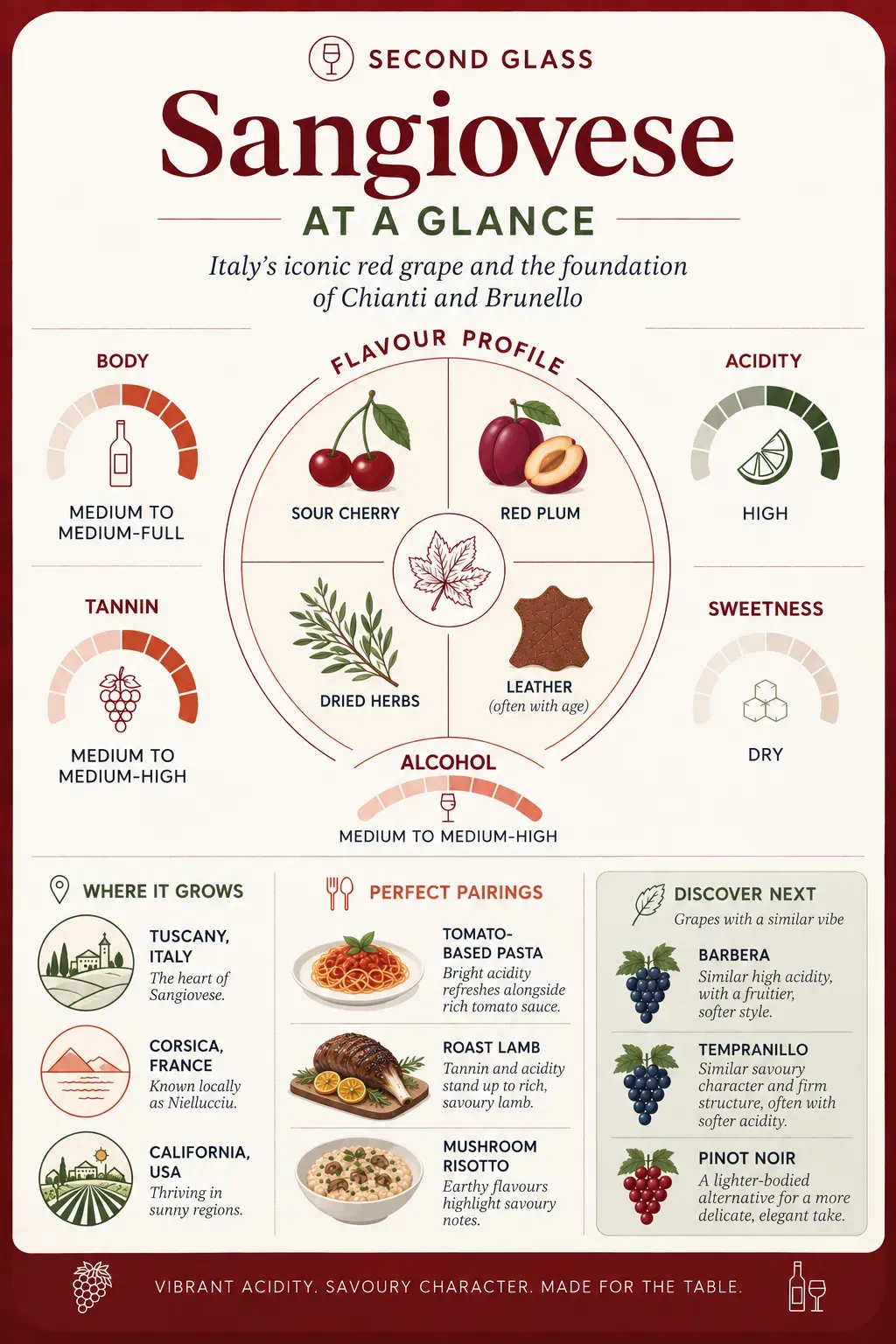
Sangiovese is generally regarded as Italy's most widely planted red grape and is the foundation of wines such as Chianti and Brunello di Montalcino. It typically produces dry, medium-bodied wines with flavours of sour cherry, plum, dried herbs and spice.
How Sangiovese usually feels
Key Takeaways
- Sangiovese is generally considered Italy's most planted red grape variety.
- It is the principal grape behind Chianti and Brunello di Montalcino.
- High acidity makes it exceptionally food-friendly.
- Typical flavours include cherry, plum, herbs and savoury spice.
- It produces a wide range of styles, from youthful everyday wines to age-worthy premium bottles.
- Climate and altitude significantly influence its flavour profile.
- Oak ageing can add complexity and longevity.
- In Corsica, Sangiovese is known as Niellucciu and is particularly important in the Patrimonio appellation.
What Is Sangiovese?
Sangiovese is an ancient Italian grape variety believed to have originated in central Italy, possibly dating back to Etruscan times. Today it is the defining grape of Tuscany and one of Italy's most important contributions to the world of wine.
Its name is often translated as "blood of Jupiter", although the exact origin remains uncertain. Sangiovese is highly adaptable and has numerous local clones and expressions, ranging from approachable everyday wines to some of Italy's most prestigious age-worthy reds.
The grape's ability to express place makes it particularly valued by winemakers. A Sangiovese grown in cooler hillside vineyards may taste markedly different from one grown in warmer climates, yet both remain recognisably Sangiovese.
Beyond mainland Italy, the grape also has an important presence in Corsica, where it is known as Niellucciu. It is the principal red grape of the Patrimonio AOP, producing savoury, structured wines that often display bright cherry fruit, herbs and Mediterranean character.
What Does Sangiovese Taste Like?
Fruit Flavours
- Sour cherry
- Red cherry
- Red plum
- Cranberry
- Occasionally dried fruit notes in warmer climates or with age
Floral Notes
- Violet
- Dried rose petals
Herbal and Spice Notes
- Dried oregano
- Thyme
- Tea leaf
- Tobacco
- Clove
- Earthy spice
Ageing Characteristics
With age, Sangiovese often develops:
- Leather
- Forest floor
- Dried fruit
- Tobacco
- Cedar
- Balsamic notes
Climate Influence
Cooler sites emphasise bright cherry fruit, herbs and high acidity. Warmer regions often produce riper plum flavours and fuller body, while acidity may appear less pronounced depending on factors such as altitude and harvest timing.
Why Does It Taste Like This?
Sangiovese's flavour profile is driven by several factors.
Climate: The grape ripens relatively slowly and often develops its best balance of flavour and freshness in sites that combine warm days with cooler nights, although factors such as altitude, soil, clone and vineyard management also play important roles.
Acidity: Naturally high acidity creates freshness and gives the wines their food-friendly nature.
Skin Thickness: Sangiovese's skins and phenolic expression vary considerably depending on clone and growing conditions, contributing to tannins that can range from medium to medium-high.
Tannins: The tannins are usually fine but noticeable, giving the wines grip and ageing potential.
Winemaking: Producers can emphasise freshness through stainless steel fermentation or increase complexity through oak ageing.
Ageing: Both bottle and oak ageing contribute savoury notes such as leather, tobacco and spice while softening the wine's structure.
How Ageing Changes Sangiovese
Bottle Ageing
Bottle age can transform youthful cherry flavours into notes of dried fruit, leather, earth and tobacco.
Oak Ageing
Many producers choose to mature Sangiovese in oak. This can contribute flavours of vanilla, cedar, sweet spice and a smoother texture.
Lees Ageing
Lees ageing plays only a minor role in most Sangiovese production and generally has limited influence on flavour.
Micro-Oxygenation
Some producers use controlled oxygen exposure to soften tannins and increase texture, particularly in modern styles.
Ageing Potential
Entry-level wines are best enjoyed young. Premium examples, especially Brunello di Montalcino, can evolve positively for many years.
Is Sangiovese Dry or Sweet?
Sangiovese is overwhelmingly produced as a dry red wine.
Its vibrant acidity and ripe fruit can sometimes create an impression of sweetness, but the wines generally contain very little residual sugar. Exceptions are uncommon and typically involve stylistic experimentation rather than traditional production methods.
Body, Acidity and Tannin
Sangiovese usually sits in the middle of the body spectrum. It is neither as delicate as Pinot Noir nor as full-bodied as Cabernet Sauvignon.
Its naturally high acidity provides freshness and structure, while tannins typically range from medium to medium-high depending on style and region. This balance is one reason why Sangiovese pairs exceptionally well with food.
Where Is Sangiovese Grown?
Classic Regions
Tuscany, Italy
The spiritual home of Sangiovese.
Climate: Mediterranean with significant altitude variation.
Style: Medium-bodied, savoury and structured.
Flavours: Sour cherry, plum, herbs and spice.
Emilia-Romagna, Italy
Produces approachable and fruit-driven styles.
Climate: Warmer and flatter.
Style: Softer and more immediately accessible.
Flavours: Red berries and fresh herbs.
Corsica, France (Niellucciu)
In Corsica, Sangiovese is known as Niellucciu and is especially important in the Patrimonio appellation in the north of the island.
Climate: Mediterranean with strong maritime influence.
Style: Savoury, structured and often slightly rustic.
Flavours: Sour cherry, wild herbs, dried flowers and earthy spice.
New World Regions
California, USA
Climate: Warm Mediterranean.
Style: Fuller-bodied and fruit-forward.
Flavours: Black cherry, plum and spice.
Australia
Climate: Generally warm with regional variation.
Style: Ripe fruit balanced by savoury notes.
Flavours: Red cherry, raspberry and dried herbs.
Emerging Regions
Argentina
Higher-altitude sites are producing increasingly refined expressions with fresh acidity.
South Africa
Experimental plantings are creating savoury, structured examples that suit local Mediterranean climates.
Famous Wines Made From Sangiovese
- Chianti
- Chianti Classico
- Brunello di Montalcino
- Rosso di Montalcino
- Vino Nobile di Montepulciano
- Morellino di Scansano
- Patrimonio (Corsica, made primarily from Niellucciu)
- Super Tuscan blends featuring Sangiovese
These wines demonstrate the grape's versatility, ranging from youthful and fruit-driven to complex and age-worthy.
Sparkling Wines Made From Sangiovese
Sparkling Sangiovese exists but remains uncommon.
Some producers make sparkling rosé versions, while others produce red or blanc de noirs styles using traditional or tank methods. These wines typically display strawberry, cherry and floral aromas alongside refreshing acidity. However, sparkling production represents only a small part of Sangiovese's overall identity.
What to eat with Sangiovese
Ideal pairings
- Tomato-based pasta dishes
- Pizza
- Lasagne
- Roast lamb
- Grilled pork
- Mushroom risotto
The grape's high acidity complements tomato sauces particularly well and balances rich savoury dishes.
Everyday pairings
- Burgers
- Charcuterie
- Roast chicken
- Hard cheeses
- Sausage dishes
Pairings to approach carefully
- Very spicy curries
- Sweet desserts
- Delicate white fish
Excessive spice can emphasise acidity and tannin, while sweet dishes make dry wines taste harsher.
Similar grapes to try
| Grape | Similar | Difference |
|---|---|---|
| Montepulciano | Medium body and food-friendly character. | Generally darker and softer. |
| Nebbiolo | Italian origin and excellent ageing potential. | Much higher tannin and more floral aromatics. |
| Pinot Noir | Bright acidity and red-fruit profile. | Usually lighter and less savoury. |
| Tempranillo | Savoury notes and suitability for oak ageing. | Lower acidity and fuller body. |
| Barbera | Italian heritage and vibrant acidity. | Lower tannins and juicier fruit. |
| Grenache | Red-fruit flavours and versatility. | Higher alcohol and softer structure. |
Buying Guide
Budget (£8–£15)
At this price point, expect fresh cherry and red plum flavours, bright acidity and easy-drinking styles designed for early enjoyment. Most wines in this category are unoaked or see minimal oak influence, allowing the grape's vibrant fruit and savoury herbal notes to shine through. These bottles are excellent choices for weeknight meals, pizza and pasta dishes.
Mid-Range (£15–£30)
Wines in this range generally offer more concentration, greater complexity and better vineyard sourcing. Expect deeper flavours of ripe cherry, dried herbs, tobacco and spice, often accompanied by some oak influence that adds texture and subtle notes of vanilla or cedar. Many Chianti Classico, Rosso di Montalcino and Patrimonio wines from Corsica fall into this category and can often benefit from a few years of bottle ageing.
Premium (£30+)
Premium Sangiovese wines are typically sourced from top vineyard sites and produced with meticulous attention to detail. These wines are structured, age-worthy and capable of developing layers of savoury complexity over many years. Expect concentrated flavours of cherry, dried fruit, leather, tobacco, balsamic notes and earthy spice, supported by firm tannins and vibrant acidity. Brunello di Montalcino and top Super Tuscan wines frequently sit in this price bracket, with the finest examples often exceeding £100 per bottle.
Common Misconceptions
Sangiovese is always light.
This is one of the most common misconceptions about the grape. While some youthful, everyday examples can be relatively light and easy-drinking, many Sangiovese wines are medium to full-bodied with considerable structure and concentration. Premium expressions such as Brunello di Montalcino can be highly structured, concentrated and capable of ageing for decades.
Chianti is a grape.
Chianti is not a grape variety but a wine region and style from Tuscany. Most Chianti wines are made primarily from Sangiovese, although regulations may allow small amounts of other grape varieties in the blend. Understanding this distinction helps explain why different Chianti wines can vary in flavour and structure.
All Sangiovese tastes the same.
Sangiovese is highly expressive of its growing environment. Factors such as altitude, soil type, climate and winemaking techniques can dramatically influence the final wine. A cool-climate Tuscan example may show bright cherry fruit and herbal notes, while a warmer-climate version from California or Australia may display riper fruit and a fuller body.
High acidity means sour wine.
High acidity does not necessarily make a wine unpleasantly sour. In Sangiovese, acidity provides freshness, balance and energy, helping the wine feel vibrant rather than heavy. It also makes the grape exceptionally food-friendly, particularly with tomato-based dishes and rich savoury foods.
Only expensive bottles are worthwhile.
Although some of the world's finest Sangiovese wines command premium prices, there are many affordable examples that offer excellent quality and typicity. Entry-level Chianti and regional Italian Sangiovese wines often deliver bright fruit, refreshing acidity and authentic character at very accessible prices.
FAQs
Is Sangiovese the same as Chianti?
No. Sangiovese is the grape, while Chianti is a wine region and style in Tuscany. Most Chianti wines are made primarily from Sangiovese, but not every Sangiovese comes from Chianti.
Is Sangiovese a good beginner wine?
Yes. Sangiovese offers approachable fruit flavours and moderate to firm tannins while introducing drinkers to more savoury and complex styles of red wine.
Does Sangiovese age well?
Premium examples can age exceptionally well. Over time they develop tertiary aromas such as leather, tobacco and forest floor while maintaining freshness.
Is Sangiovese always aged in oak?
No. Many wines are produced without significant oak influence. Some producers choose oak maturation to add texture and complexity, while others minimise oak to emphasise fruit purity and site expression.
Why does Sangiovese pair so well with Italian food?
Its naturally high acidity works particularly well with tomato-based dishes because it prevents the wine from tasting flat alongside acidic foods and helps refresh the palate with rich savoury flavours.
Is Sangiovese similar to Pinot Noir?
Both grapes share bright acidity and red-fruit flavours. However, Sangiovese generally has firmer tannins and more savoury characteristics.
Can Sangiovese be used for sparkling wine?
Yes, although it is uncommon. Sparkling examples are often rosé, but red and blanc de noirs styles also exist, typically emphasising fresh berry fruit and lively acidity.
If you are new to Sangiovese
Start with an approachable Chianti to experience Sangiovese's classic cherry fruit, bright acidity and savoury character before progressing to more structured styles such as Chianti Classico, Patrimonio and Brunello di Montalcino.
Final Thoughts
Sangiovese is one of the world's most distinctive and versatile red grapes. Its combination of bright acidity, savoury complexity and regional diversity makes it rewarding for both beginners and experienced wine drinkers. Whether enjoyed in an everyday Chianti, a Corsican Niellucciu from Patrimonio or a mature Brunello, Sangiovese offers an authentic expression of Mediterranean wine culture.