Quick answer
What to know first
The best wine with steak is a full-bodied Cabernet Sauvignon. Its firm tannins interact with the steak’s proteins, helping soften the wine’s structure while its blackcurrant flavours complement the meat. Malbec and Syrah are excellent alternatives.
Introduction
Few food and wine pairings are as iconic as steak and red wine. Whether it's a grilled ribeye, a pan-seared sirloin or an elegant fillet served with peppercorn sauce, steak offers richness, savoury depth and satisfying texture that reward carefully chosen wines.
Across the UK and Europe, steak is prepared in many styles, from simply grilled with chips to elaborate restaurant dishes featuring rich sauces such as Béarnaise, red wine jus or mushroom cream. Different cuts and cooking methods influence the ideal pairing, but the fundamental principle remains the same: match the wine's structure to the meat's richness.
The good news for beginners is that steak is one of the easiest dishes to pair successfully. Understanding how fat, protein and cooking method interact with acidity, tannins and body makes choosing wine surprisingly straightforward.
Key Takeaways
- Fatty steaks pair well with wines that have firm tannins.
- Lean cuts benefit from smoother, more elegant reds.
- Grilled flavours work beautifully with smoky, peppery wines.
- Rich sauces can influence the best pairing more than the meat itself.
- Cabernet Sauvignon is one of the safest all-round choices.
- White wine can work with certain steak preparations, especially with sauces.
- Match the wine's body to the richness of the cut.
What Steak brings to the glass
Best overall wines for Steak
Cabernet Sauvignon
★★★★★
RegionsBordeaux Left Bank, Napa Valley, Coonawarra
Firm tannins, blackcurrant fruit and full body complement grilled beef and rich cuts exceptionally well.
Malbec
★★★★★
RegionsMendoza, Cahors, San Juan
Ripe dark fruit, moderate tannins and generous texture suit a wide variety of steaks.
Syrah/Shiraz
★★★★★
RegionsNorthern Rhône, Barossa Valley, Heathcote
Peppery spice and smoky flavours naturally complement grilled and barbecued beef.
Merlot
★★★★☆
RegionsBordeaux Right Bank, Washington State, Tuscany
Softer tannins and generous fruit make it particularly suitable for leaner cuts such as fillet.
Why these wines work with Steak
Dominant strategy
Match structured, full-bodied wines with the protein-rich, savoury character of steak while balancing richness through acidity and tannin.
Supporting principles
- Tannins interact primarily with proteins while fat softens the perception of astringency.
- Match the wine's body and flavour intensity to the richness of the cut and any accompanying sauce.
Understanding the Dish
Steak seems simple, but its flavour profile varies considerably depending on the cut and preparation.
Cooking Method
Grilling and pan-searing create caramelised crusts through the Maillard reaction, producing roasted, savoury and slightly smoky flavours. Barbecued steaks develop additional smoke that pairs well with wines showing oak influence or peppery spice.
Dominant Flavours
Beef delivers deep savoury flavours, often enhanced by butter, herbs and seasoning. Charred edges can introduce slight bitterness, but the dominant flavours are typically roasted and caramelised.
Richness
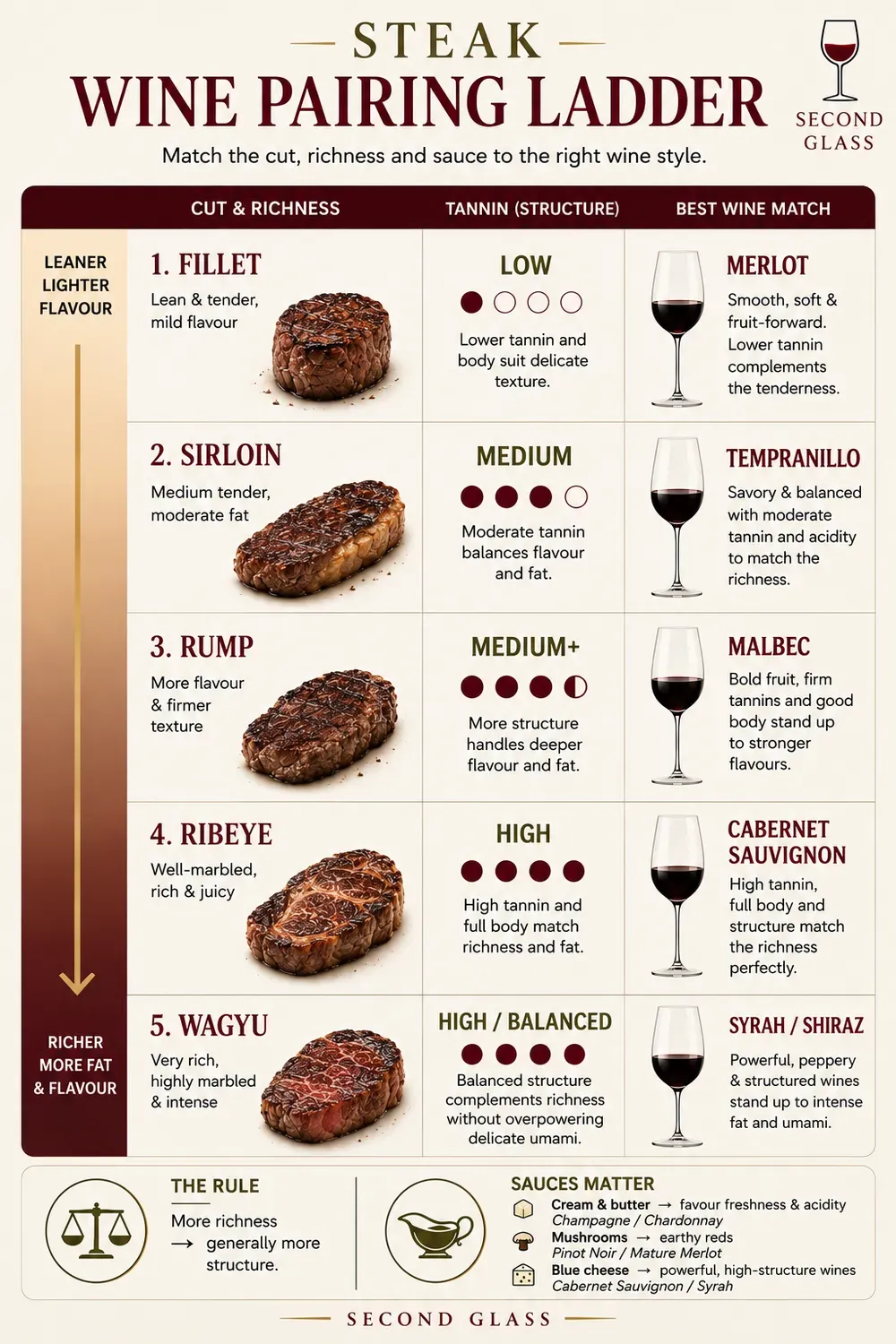
Ribeye is typically very rich due to its marbling, although this can vary depending on breed and grading, while fillet is comparatively delicate. Richer steaks require wines with greater structure.
Fat
Fat is a key reason classic steak pairings work. Tannins interact primarily with proteins in the meat, while fat helps coat the palate, reducing the perception of astringency and making wines feel smoother.
Acidity
Steak itself contains little acidity, but sauces, tomatoes or chimichurri can introduce freshness. Wines with bright acidity prevent the pairing from becoming heavy.
Salt
Salt enhances both meat and wine. Well-seasoned steak often makes fruit flavours in red wine seem more vibrant.
Sweetness
Steak contains virtually no sweetness unless paired with sweet glazes or barbecue sauces.
Umami
Beef is naturally rich in umami, particularly dry-aged steak. Mature red wines often complement these savoury characteristics beautifully.
Spice
Black pepper, chilli butter or peppercorn sauces favour wines with ripe fruit rather than excessive alcohol.
Texture
Tender cuts call for elegant wines, while chewier cuts appreciate firmer tannins.
Sauces
Peppercorn sauce suits Syrah’s peppery profile, though cream-rich versions can also pair exceptionally well with Cabernet Sauvignon or mature Bordeaux blends. Béarnaise often pairs especially well with oaked Chardonnay, white Burgundy or mature Champagne, though balanced reds can also work when the steak remains dominant. Mushroom sauce pairs wonderfully with Pinot Noir or Merlot. Blue cheese sauce benefits from powerful Cabernet Sauvignon or even a rich Port for adventurous drinkers.
Garnishes
Roasted vegetables, chips and mushrooms rarely complicate pairings, while fresh herbs and chimichurri introduce acidity that brightens fuller-bodied wines.
Why These Wines Work
Steak demonstrates several classic wine pairing principles.
Acidity refreshes the palate after each bite, preventing rich beef from feeling heavy. Even powerful reds need enough freshness to keep the meal balanced.
Tannins are perhaps the most important factor. They interact primarily with proteins in the meat, softening their astringency, while fat enhances the perception of smoothness.
Body should match the intensity of the meat. A delicate Pinot Noir may disappear beside a heavily marbled ribeye, whereas a powerful Cabernet feels perfectly balanced.
Alcohol contributes warmth and body, but excessive alcohol can dominate lean cuts. Moderately ripe wines often offer better balance.
Complementary flavours also matter. Smoky oak echoes grilled crusts, pepper notes reflect seasoning and dark fruit contrasts the savoury richness of beef.
Traditional regional combinations have evolved for good reason. Bordeaux with beef, Argentine Malbec with steak and Rhône Syrah with grilled meats all demonstrate harmony between local food and wine.
Classic Pairings
White
Full-bodied oaked Chardonnay works particularly well with fillet served in creamy sauces or with Béarnaise.
Red
Cabernet Sauvignon remains the benchmark, while Malbec, Syrah, Merlot and Bordeaux blends consistently deliver excellent results.
Rosé
A fuller-bodied rosé can accompany rare steak salads or lighter summer preparations, though it lacks the structure for richer cuts.
Sparkling
Champagne complements steak tartare and can also work with cooked fillet when paired with butter-based sauces.
Sweet
Sweet wines are rarely appropriate, although Vintage Port can accompany steak with blue cheese sauce as part of an indulgent meal. Other fortified styles such as certain Madeiras can also work in specific contexts.
Alternative Pairings
Tempranillo offers savoury tobacco and leather notes that complement grilled beef beautifully.
Sangiovese works well when steak is served with tomato-based sauces or Italian accompaniments thanks to its naturally high acidity.
Carmenère provides herbal freshness alongside ripe fruit, making it an excellent choice with chimichurri.
Zinfandel suits barbecued steaks featuring smoky, sweet glazes where its ripe fruit balances caramelisation.
Nebbiolo, although highly tannic, becomes remarkably elegant alongside richly marbled beef.
Best grapes for Steak
| Grape | Why it works | Flavour match |
|---|---|---|
| Cabernet Sauvignon | High tannins and concentrated fruit balance rich beef. | Blackcurrant, cedar and cassis. |
| Malbec | Plush fruit and moderate tannins complement grilled steak. | Plum, blackberry and cocoa. |
| Syrah | Pepper and smoky notes mirror charred flavours. | Blackberry, black pepper and smoked meat. |
| Merlot | Smooth tannins suit leaner steaks. | Plum, black cherry and chocolate. |
| Tempranillo | Savoury complexity complements grilled beef. | Cherry, leather and tobacco. |
| Nebbiolo | High tannin and acidity excel with richly marbled steak. | Rose, tar and red cherry. |
| Sangiovese | Bright acidity works well with tomato and herb accompaniments. | Sour cherry, herbs and earthy spice. |
Best Regions
Bordeaux produces structured Cabernet-led blends ideal for classic steak dinners.
Mendoza remains one of the world's finest sources of Malbec, offering ripe fruit and balanced tannins.
Napa Valley produces rich Cabernet Sauvignon capable of handling heavily marbled cuts.
Northern Rhône excels with elegant Syrah that complements grilled beef.
Barossa Valley offers bold Shiraz packed with spice and ripe fruit.
Tuscany provides excellent Sangiovese for steak served in Italian styles.
Rioja delivers mature Tempranillo with savoury complexity.
Traditional Pairings
Argentina has made steak and Malbec famous worldwide, thanks to the country's barbecue culture and high-quality beef.
In France, Bordeaux has long been paired with roasted beef and grilled steaks, particularly during formal meals.
Tuscany traditionally serves Bistecca alla Fiorentina with local Sangiovese-based wines.
Northern Rhône Syrah naturally complements grilled meats prepared over open flames.
Steak Recipes Pairing
Rare Fillet
A rare fillet is prized for its tenderness and subtle flavour, so it benefits from wines that enhance rather than dominate. Elegant Cabernet Sauvignon, Merlot, Pinot Noir, or mature Bordeaux blends are ideal choices. These wines offer refined tannins and balanced acidity, complementing the delicate texture of the meat without overwhelming it.
Ribeye
A heavily marbled ribeye is rich, juicy, and full of flavour, making it a perfect match for bold, structured wines. Cabernet Sauvignon, Syrah, or Malbec work particularly well here, as their substantial tannins cut through the fat and enhance the steak’s richness, creating a balanced and satisfying pairing.
Sirloin
Sirloin offers a balance between tenderness and flavour, making it a versatile cut for wine pairing. Medium- to full-bodied reds such as Merlot, Cabernet Franc, or Sangiovese work well, providing enough structure to complement the meat without overpowering its natural character.
Rump
Rump steak is leaner and firmer than many other cuts, with a robust, beefy flavour that benefits from wines with good acidity and moderate tannins. Cabernet Franc, Sangiovese, or a youthful Bordeaux blend are excellent choices, as they provide freshness and structure without overwhelming the meat’s natural character. A well-balanced Malbec can also work nicely here, especially one with good acidity and restrained oak, offering enough fruit and structure without overpowering the cut.
T-Bone
The T-bone combines two textures in one cut: the tender fillet and the more robust strip steak. This duality calls for wines with both elegance and structure. Cabernet Sauvignon or Bordeaux blends are excellent choices, offering the depth to match the strip side and the finesse to complement the fillet.
Porterhouse
Similar to the T-bone but with a larger portion of fillet, the porterhouse benefits from wines that balance richness and refinement. Full-bodied reds like Cabernet Sauvignon or well-structured Malbecs provide the necessary intensity while still allowing the tenderness of the fillet to shine.
Peppercorn Sauce
Peppercorn sauce introduces spice and depth to the dish, calling for wines that can mirror or complement its intensity. Syrah is a natural fit due to its peppery profile, which echoes the sauce’s flavours. Richer, cream-based versions of the sauce can also pair beautifully with Cabernet-based wines, which provide structure and depth.
Mushroom Sauce
Mushroom sauce adds an earthy, savoury dimension to steak, softening the overall flavour profile. This makes it an excellent match for Pinot Noir or Merlot, both of which offer subtle fruit and earthy undertones that harmonise with the mushrooms without overpowering them.
Blue Cheese Sauce
Blue cheese sauce is bold, salty, and intensely flavoured, requiring wines with enough concentration and structure to stand up to it. Full-bodied reds with firm tannins, such as Cabernet Sauvignon or robust blends, can balance the richness and intensity of the cheese.
Barbecued Steak
Barbecued steak, especially when paired with a smoky glaze, calls for wines that can match its bold, charred flavours. Shiraz or Zinfandel are excellent choices, as their ripe fruit, spice, and sometimes smoky notes complement the barbecue elements and enhance the overall experience.
Pairings by Occasion
Everyday
Malbec provides outstanding value and consistently complements most steak dinners.
Dinner Party
A well-made Bordeaux blend offers sophistication and broad appeal.
Special Occasion
Top Cabernet Sauvignon delivers exceptional complexity for premium cuts.
Summer
Rosé or lighter Syrah work well with grilled steaks served outdoors.
Winter
Rich Cabernet Sauvignon and Shiraz shine alongside hearty accompaniments and slow evenings.
Wines To Avoid
Very light-bodied whites generally disappear beside steak.
Light-bodied reds lacking sufficient structure may taste thin against rich beef.
Sweet wines often clash unless blue cheese forms part of the dish.
Overly oaked wines can overwhelm lean cuts.
Very high-alcohol wines may dominate simple preparations.
Common Mistakes
Choosing wine solely by colour rather than considering body and tannins.
Ignoring the sauce, which often influences the pairing more than the steak itself.
Serving powerful Cabernet with delicate fillet without considering balance.
Overlooking temperature—slightly cool reds often taste fresher and more balanced.
Assuming only expensive wines work with steak.
Buying Guide
Budget (under £10 / under $13)
Budget wines can provide excellent steak pairings when you focus on reliable regions rather than prestige names. Expect youthful, fruit-forward styles with moderate complexity and straightforward flavours of blackberry, plum or blackcurrant. These wines are usually intended for immediate drinking and pair particularly well with everyday grilled steaks. Spending modestly is often enough for casual meals, especially if the steak is simply prepared.
Mid-Range (£10 to £25 / $13 to $32)
Mid-range bottles offer noticeably greater depth, better balance and more refined tannins. Wines at this level often show subtle oak influence, layered fruit and more distinctive regional character. They pair confidently with a wider range of steak cuts and sauces, making them ideal for dinner parties or weekend meals. This price point often represents the best balance between quality and value for most wine drinkers.
Premium (£25+ / $32+)
Premium wines typically deliver greater concentration, complexity and ageing potential. Expect finely integrated tannins, nuanced aromas and a longer finish that complements high-quality cuts such as dry-aged ribeye or fillet. These bottles are often produced from exceptional vineyard sites and can develop additional savoury characteristics with age. Spending more becomes worthwhile when the steak itself is of exceptional quality or when the meal marks a special occasion.
Common Misconceptions
Only Cabernet Sauvignon works with steak.
Malbec, Syrah, Merlot, Tempranillo and several other grapes perform brilliantly.
Bigger wines are always better.
Lean cuts often benefit from more elegant wines.
White wine never belongs with steak.
Rich Chardonnay can work surprisingly well with creamy steak dishes.
Expensive wine guarantees a better pairing.
Balance matters more than price.
Every steak should be paired the same way.
The cut, sauce and cooking method all influence the ideal choice.
Questions about Steak Pairing
Can I drink red wine with every type of steak?
Yes, in most cases. Red wine naturally complements beef thanks to its tannins and body, but the best style depends on the cut, cooking method and sauce. Lean fillet benefits from softer reds, while richly marbled ribeye can handle more powerful wines.
Is Malbec better than Cabernet Sauvignon with steak?
Neither is universally better. Cabernet Sauvignon offers firmer tannins and greater structure, making it ideal for rich cuts, while Malbec provides softer fruit and a more approachable style that suits many everyday steak dinners.
Does steak always need a full-bodied wine?
No. Although richer cuts often benefit from full-bodied wines, lean steaks can pair beautifully with medium-bodied reds such as Merlot or Pinot Noir. Matching the wine's weight to the meat usually produces the most balanced result.
Can white wine work with steak?
Yes. Full-bodied, oaked Chardonnay can pair well with fillet served in creamy sauces or with Béarnaise. The sauce often influences the pairing as much as the beef itself.
What is the best wine for ribeye steak?
Cabernet Sauvignon is usually the top choice because its firm tannins are softened by the ribeye's abundant marbling. Syrah and Malbec are also excellent alternatives.
Which wine suits fillet steak?
Merlot, Pinot Noir, elegant Cabernet Sauvignon and mature Bordeaux blends complement fillet's tender texture without overwhelming its subtle flavour.
What if I prefer lighter red wines?
Choose Pinot Noir for leaner steaks or mushroom-based preparations. While it may be too delicate for heavily marbled ribeye, it can create a wonderfully balanced pairing with lighter cuts.
Should the sauce determine the wine?
Often, yes. Rich sauces such as peppercorn, mushroom or blue cheese can have as much influence on the ideal pairing as the steak itself, so always consider the whole dish rather than the meat alone.
Start with Cabernet Sauvignon
If you are new to wine pairing, start with Cabernet Sauvignon. It consistently succeeds because its tannins, acidity and full body naturally complement the protein and fat found in most steak cuts. From there, compare it with Malbec or Syrah to discover whether you prefer softer fruit or peppery spice.
As your confidence grows, begin experimenting more deliberately. Try tasting the same steak with different wines such as Cabernet Sauvignon, Malbec and Syrah to understand how tannins, fruit and spice influence the meal. You can also explore how different cuts, from lean fillet to richly marbled ribeye, affect your preference.
Comparing cooking methods is equally useful. Grilled steak often develops smoky flavours that pair differently from pan-seared versions. Finally, don't forget the sauce. Tasting the same wine with peppercorn, mushroom and Béarnaise sauces reveals just how much accompaniments shape the pairing.
Final Thoughts
Steak remains one of the world's most rewarding foods to pair with wine because its richness, protein and savoury flavours naturally complement structured reds. Cabernet Sauvignon deserves its classic reputation, but Malbec, Syrah, Merlot and several other grapes offer equally enjoyable alternatives depending on the cut, sauce and cooking method. By matching body, tannins and flavour intensity to the steak on your plate, you can confidently create successful pairings for everything from a simple weekday sirloin to a celebratory dry-aged ribeye.