
Quick answer
What to know first
Merlot is a dark-skinned red grape that often produces smooth, fruit-driven wines with flavours of plum, black cherry and chocolate. It is famous in Bordeaux and widely grown across the world, from California to Chile.
Introduction
Merlot is one of the world's most versatile red grapes. It can produce generous, easy-drinking wines for casual meals, as well as complex, long-lived bottles from prestigious Bordeaux estates.
Its reputation is often built around softness and ripe fruit, but that is only part of the story. Merlot's style can change significantly according to climate, soil, winemaking and ageing. Cooler regions may produce fresher, more herbal wines, while warmer sites often create richer expressions with darker fruit and chocolate notes.
This guide explains what Merlot tastes like, how its structure works, where it is grown, which styles to look for and what to eat with it.
Taste Profile
How Merlot usually feels
Key Takeaways
- Merlot is among the world's most widely planted red grapes.
- It is generally softer and less tannic than Cabernet Sauvignon, although serious examples can have firm, structured tannins.
- Typical flavours include plum, black cherry and chocolate.
- Bordeaux is Merlot's historic home.
- Climate has a major influence on its style and flavour.
- Merlot pairs especially well with roast meats and mushroom dishes.
- Premium examples can age gracefully for many years.
- Most Merlot is dry, even when its ripe fruit flavours suggest sweetness.
- Merlot styles can range from fresh and restrained to ripe and fruit-forward or structured and age-worthy.
What Is Merlot?
Merlot is a dark-skinned red grape variety that originated in Bordeaux in south-west France. It is one of the principal grapes used in Bordeaux blends and is particularly important on the Right Bank, where it often forms the majority of the blend.
Merlot ripens earlier than Cabernet Sauvignon and generally produces wines with generous fruit and softer tannins, although tannin levels can vary considerably with site, ripeness, yields and winemaking. This approachable character has helped it become one of the world's most successful international varieties.
Today, Merlot is grown in nearly every major wine-producing country. Styles range from elegant and savoury examples in Bordeaux to rich, fruit-forward expressions from warmer regions such as California and Chile.
What Does Merlot Taste Like?
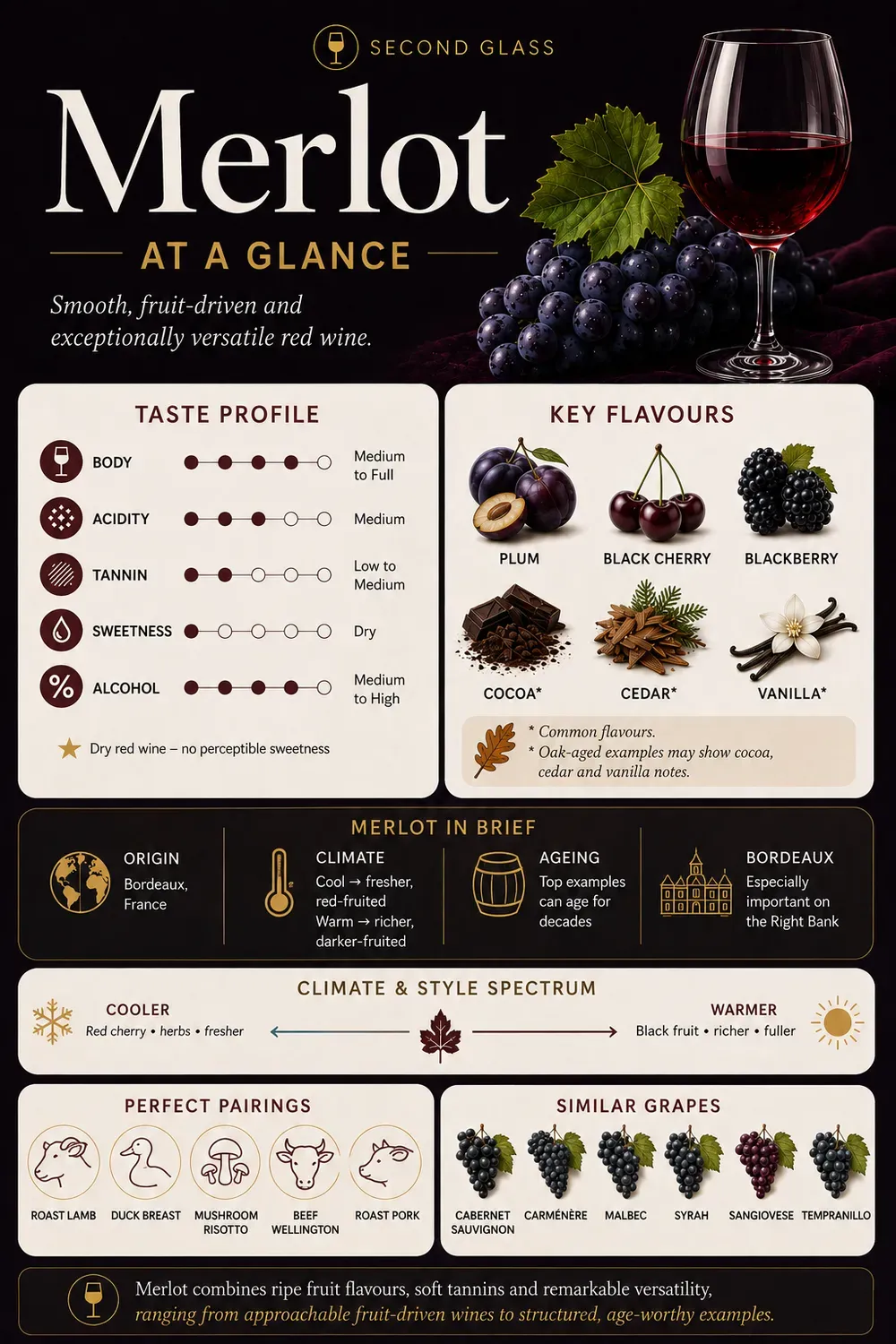
Merlot is usually dry, medium- to full-bodied and rounded in texture. Its flavour profile changes with climate, winemaking and age, but the grape is best known for generous fruit, moderate freshness and a smooth finish.
Fruit Flavours
Merlot commonly shows:
- Plum
- Black cherry
- Blackberry
- Red cherry in cooler climates
- Fig and darker fruit in warmer regions
Floral Notes
Subtle floral notes can include:
- Violet
- Rose petal
Herbal and Spice Notes
Depending on region and age, Merlot may display:
- Cedar
- Tobacco
- Liquorice
- Bay leaf
- Cocoa
- Baking spices
Ageing Characteristics
With age, Merlot often develops:
- Leather
- Forest floor
- Truffle
- Dried fruit
- Cigar box
Body, Acidity, Tannin and Sweetness
Body
Merlot generally ranges from medium-bodied to full-bodied. Cooler-climate examples may feel lighter and more energetic, while warmer-climate wines often feel broader and richer.
Acidity
Merlot typically has moderate acidity. This provides freshness without making the wine feel sharp or austere.
Tannin
Merlot is often described as having medium tannin, generally softer and rounder than Cabernet Sauvignon. Depending on climate, yields, extraction, oak ageing and region, its tannins may range from low-to-medium in easy-drinking styles to firm and substantial in serious young wines, particularly Merlot-dominant Bordeaux.
This variation is important: Merlot is not inherently a low-tannin grape. Its approachable reputation comes from the combination of ripe fruit, a rounded texture and tannins that are often less aggressive than those of Cabernet Sauvignon, rather than from an absence of structure.
Sweetness
Most Merlot is dry. Its ripe fruit flavours and smooth texture can create an impression of sweetness, even when little or no sugar remains in the finished wine.
Some inexpensive examples may contain slight residual sugar, but dry styles overwhelmingly dominate.
Alcohol
Merlot commonly has medium to high alcohol. Warmer climates and later harvesting can produce fuller-bodied wines with higher alcohol levels, while cooler regions tend to create fresher, more restrained examples.
What Shapes Merlot's Style?
Climate
Merlot responds strongly to temperature. Cooler regions preserve acidity and create fresher fruit flavours, while warmer climates encourage riper fruit, softer textures and fuller body.
Soil and Site
Soil drainage, water availability, elevation and exposure all influence ripening. In Bordeaux, clay-rich soils are especially important for Merlot, helping retain water and support the grape in dry conditions.
Ripeness
Earlier harvesting can preserve freshness and red-fruit character. Later harvesting generally produces darker fruit, higher alcohol and a richer texture.
Skin Thickness
Compared with some red grapes, Merlot has relatively thin skins. Along with ripeness and winemaking choices, this can contribute to softer tannins and a smoother mouthfeel, although it does not prevent Merlot from producing structured wines.
Winemaking
Winemakers can preserve fresh fruit character through stainless-steel fermentation and limited oak use, or build complexity and structure through extended maceration, oak maturation and blending.
Blending
Merlot is often blended with Cabernet Sauvignon, Cabernet Franc, Petit Verdot or other varieties. Blending can add structure, acidity, aromatic complexity or ageing potential.
How Ageing Changes Merlot
Young Merlot
Young Merlot usually emphasises plum, black cherry, blackberry and other fresh fruit flavours. The texture is often rounded, although structured examples may need time to soften and integrate.
Oak Ageing
Oak ageing can contribute:
- Vanilla
- Cedar
- Toasted notes
- Baking spice
- Tobacco
Cocoa and chocolate notes may also emerge through the interaction of fruit, oak and bottle development.
Bottle Ageing
With time, primary fruit flavours become less dominant. Merlot may develop earthy, savoury and tertiary aromas such as:
- Leather
- Forest floor
- Truffle
- Dried fruit
- Cigar box
Ageing Potential
Everyday Merlot is usually best enjoyed young. Premium examples from Bordeaux and selected producers elsewhere can age successfully for many years or even decades.
Growing Regions
This section answers a simple question: where is Merlot grown, and what does each region contribute?
Bordeaux, France
Bordeaux is Merlot's historic home. Maritime conditions can produce wines with plum, black fruit, cedar and earthy complexity.
Pomerol and Saint-Émilion
These famous Right Bank appellations create some of the world's finest Merlot-dominant wines. The best examples combine richness, structure and elegance and can age for decades.
California, USA
California Merlot is typically generous and fruit-forward, showing ripe plum, blackberry, chocolate and a rounded texture.
Washington State, USA
Washington produces structured Merlot with dark fruit, freshness and good ageing potential.
Chile
Chilean Merlot often combines ripe fruit with freshness and herbal complexity. It can offer particularly strong value at accessible prices.
New Zealand
Cooler sites produce fresh, elegant expressions with red fruit, herbs and moderate body.
South Africa
South African styles range from fruit-driven wines to more structured examples influenced by Bordeaux traditions.
Italy
Merlot performs particularly well in parts of northern and central Italy, producing both varietal wines and blends.
Merlot Styles to Know
Regions tell you where Merlot comes from. Styles describe what kind of wine it is likely to feel and taste like. The categories below can appear in several regions, so they are not tied to a single country or appellation.
Fresh and Restrained Merlot
Fresh and restrained Merlot tends to show red cherry, plum, herbs and floral notes rather than dense, dark fruit. It usually has moderate alcohol, noticeable acidity and a lighter or medium-bodied texture.
These wines may come from cooler climates, earlier-picked fruit or producers who use less extraction and oak. They are often especially versatile at the table and can appeal to drinkers who prefer freshness over richness.
Ripe and Fruit-Forward Merlot
Ripe and fruit-forward Merlot emphasises plum, blackberry, black cherry, cocoa and sometimes vanilla. It is generally rounder and fuller-bodied, with softer acidity and a generous, smooth texture.
This is the style most associated with approachable New World Merlot, although it can be made in many regions. It is usually enjoyable young and works well with burgers, roast pork, sausages and other richly flavoured everyday dishes.
Structured and Age-Worthy Merlot
Structured Merlot has greater concentration, firmer tannins and more pronounced savoury or oak-derived complexity. It may show dark fruit alongside cedar, tobacco, graphite, spice or earthy notes.
This style is often associated with top Bordeaux, particularly Merlot-dominant wines from Pomerol and Saint-Émilion, but serious examples are also made elsewhere. They may need decanting or several years of bottle age before their texture becomes fully integrated.
Savoury and Earthy Merlot
Some Merlots place less emphasis on ripe fruit and more on herbs, cedar, tobacco, leather, forest floor and mineral notes. These wines may be medium-bodied, structured and particularly food-friendly.
Savoury character can come from cooler conditions, restrained ripeness, blending, oak ageing or bottle development. Mature Bordeaux often moves in this direction as its primary fruit becomes less dominant.
Also worth knowing: Sparkling Merlot
Sparkling Merlot exists but remains uncommon. When produced, it is often made in rosé styles and generally emphasises red berry fruit and freshness rather than the deeper savoury qualities found in still wines.
What to eat with Merlot
Ideal pairings
- Roast lamb
- Duck breast
- Beef Wellington
- Mushroom risotto
- Roast pork
These dishes complement Merlot's rounded tannins and generous fruit. More structured examples can also pair beautifully with richer, savoury dishes.
Everyday pairings
- Burgers
- Shepherd's pie
- Sausages
- Tomato-based pasta dishes
- Mature cheddar
Pairings to approach carefully
- Very spicy curries
- Delicate white fish
- Extremely sweet desserts
These combinations can overwhelm Merlot's balance or make the wine appear heavy and flat.
Similar grapes to try
| Grape | Similar | Difference |
|---|---|---|
| Cabernet Sauvignon | Dark fruit and Bordeaux heritage. | Cabernet Sauvignon is generally more tannic, structured and cassis-driven. |
| Carménère | Plum fruit and herbal notes. | Carménère is typically more savoury and peppery. |
| Malbec | Dark fruit and medium-to-full body. | Malbec is usually more intensely coloured and floral. |
| Syrah | Rich fruit and moderate weight. | Syrah tends to show pepper, smoke and savoury notes. |
| Sangiovese | Versatile food partner. | Sangiovese generally has higher acidity and more savoury character. |
| Tempranillo | Soft texture and ageing potential. | Tempranillo often displays more leather, tobacco and earthy notes. |
Buying Guide
Budget (£6–£12)
At this price point, expect straightforward, fruit-forward Merlots with flavours of plum, blackberry and soft red fruits. These wines are usually made for early drinking and often have little or no oak influence.
Good-value examples can be found from Chile, southern France and some larger producers in California and Italy.
Mid-Range (£12–£25)
Merlots in this range generally offer better fruit concentration, improved balance and more complexity. You may notice additional notes of cocoa, cedar and baking spice from careful oak ageing.
Wines from Washington State, higher-quality Chilean producers and reputable Bordeaux appellations often represent excellent value in this category.
Premium (£25–£60)
Premium Merlots typically show greater depth, structure and refinement. Expect layered flavours of dark plum, black cherry, chocolate, tobacco and earthy notes, supported by well-integrated oak and a longer finish.
Many wines in this range can age successfully for several years and often come from respected producers in Bordeaux, California and Italy.
Fine and Collectable (£60+)
At the top end of the market, Merlot can produce some of the world's most sought-after wines. Prestigious appellations such as Pomerol and Saint-Émilion can command prices from £60 to several hundred pounds per bottle, with iconic estates reaching well over £1,000.
These wines combine concentration, elegance and remarkable ageing potential, developing complex aromas of truffle, leather, cedar and dried fruit over decades.
Beginner Guidance
What to Try First
Start with a fruit-forward Merlot from Chile, California or southern France. Look for a wine labelled simply as Merlot, with a recent vintage and a moderate price.
If you want a fresher style, try Merlot from Washington State, New Zealand or a cooler part of Chile. If you prefer richer, softer wines, explore California or warmer-climate examples.
For a more structured experience, look for a Bordeaux or Bordeaux-style blend with several years of bottle age.
How to Experiment
Try three bottles representing different styles rather than simply different regions:
- A fresh and restrained Merlot
- A ripe and fruit-forward Merlot
- A structured or age-worthy Merlot, such as a Bordeaux or Bordeaux-style blend
Serve them slightly below room temperature, around 15–18°C, and taste them with and without food.
What to Notice
Pay attention to:
- Whether the fruit tastes red or dark
- How much acidity keeps the wine fresh
- Whether the tannins feel soft, rounded or firm
- How strongly oak flavours appear
- Whether the finish is fruity, savoury or earthy
- How the wine changes alongside food
- Whether the wine feels fresh, generous or structured overall
Common Misconceptions
Merlot is always soft and simple.
While many examples are approachable and fruit-forward, premium Merlots can be complex, structured and age-worthy, with layers of spice, earth, tobacco and savoury character.
Merlot is only associated with Bordeaux.
Bordeaux remains its historic home, but Merlot is now produced in major wine regions across Europe, the Americas, Australia, New Zealand and beyond. Its global reach has made it one of the world's most important red wine grapes.
Merlot is only used in blends.
Although it plays a major role in Bordeaux blends, Merlot is also widely produced as a single-varietal wine. In regions such as California, Chile, Italy and Australia, varietal Merlot is often a central part of the market.
Merlot is a sweet wine.
Most Merlot is made in a dry style. Its ripe plum and black cherry flavours can create an impression of sweetness, but the wine typically contains very little residual sugar.
Merlot has lost its relevance.
Merlot's reputation has been shaped by changing fashions and the cultural conversation around Sideways, but the film's criticism of the grape does not define the quality or range of wines Merlot can produce. Merlot remains an important international variety, from approachable varietal wines to serious, age-worthy Bordeaux.
Questions about Merlot
Is Merlot good for beginners?
Yes. Merlot is often an excellent introduction to red wine because its tannins are generally softer than those of Cabernet Sauvignon and its fruit flavours are easy to recognise. Many examples are approachable and versatile with food, although more structured bottles may benefit from decanting or additional ageing.
Is Merlot lighter than Cabernet Sauvignon?
Usually, yes. Merlot generally has softer tannins and a rounder texture. However, some premium Merlots can have comparable richness, concentration and structure.
Does Merlot age well?
High-quality examples can age exceptionally well. Over time, fruit flavours evolve into notes of leather, truffle and cedar while the texture becomes increasingly refined.
Does Merlot use oak?
Often, yes. Oak can contribute flavours such as vanilla and spice while adding texture and complexity. Chocolate or cocoa notes may also develop through the interaction of fruit, oak and ageing.
Can Merlot be sparkling?
It can, although sparkling versions are relatively rare. Many examples are rosé and are designed to be enjoyed young and fresh.
Why does Merlot taste smooth?
Merlot's tannins are often rounded and less aggressive than those of Cabernet Sauvignon, while its moderate acidity and ripe fruit give it a broad, approachable texture. Structured examples can still feel firm when young.
Final Thoughts
Merlot is one of the wine world's great all-rounders. Whether it appears in a legendary Bordeaux blend or a fruit-driven varietal bottling, its combination of ripe fruit, generally rounded tannins and versatility makes it a grape worth exploring in depth.
Its approachable reputation is well deserved, but Merlot can offer far more than easy-drinking fruit. Explore different styles as well as different regions, and you will find wines that are fresh, restrained, ripe, savoury, structured, rich and remarkably complex.