
Quick answer
What to know first
A juicy beef burger pairs best with a fruity, medium- to full-bodied Cabernet Sauvignon blend or Malbec, whose ripe fruit, firm tannins and lively acidity complement rich meat and savoury flavours. For alternatives, try Syrah or, for lighter or non-beef burgers, an oaked Chardonnay.
What Burger brings to the glass
Introduction
Burgers have become one of the most popular comfort foods across the UK and Europe. While the classic beef burger remains the benchmark, today's burgers range from gourmet creations topped with blue cheese or mushrooms to smoky barbecue versions, spicy chilli burgers and plant-based alternatives.
Their combination of juicy meat, melted cheese, toasted buns and flavourful toppings makes burgers surprisingly wine-friendly. The key is understanding how fat, salt, smoke and sauces influence the ideal wine choice. Once you understand these principles, pairing wine with burgers becomes straightforward and highly rewarding.
Key Takeaways
- Rich beef burgers favour wines with lively acidity and moderate tannins.
- Grilled flavours pair naturally with smoky or peppery reds.
- Cheese and toppings influence the pairing as much as the meat.
- Sweet barbecue sauces need fruit-forward wines.
- Spicy burgers benefit from lower alcohol and softer tannins.
- Chicken and vegetarian burgers often suit fuller-bodied whites or lighter reds.
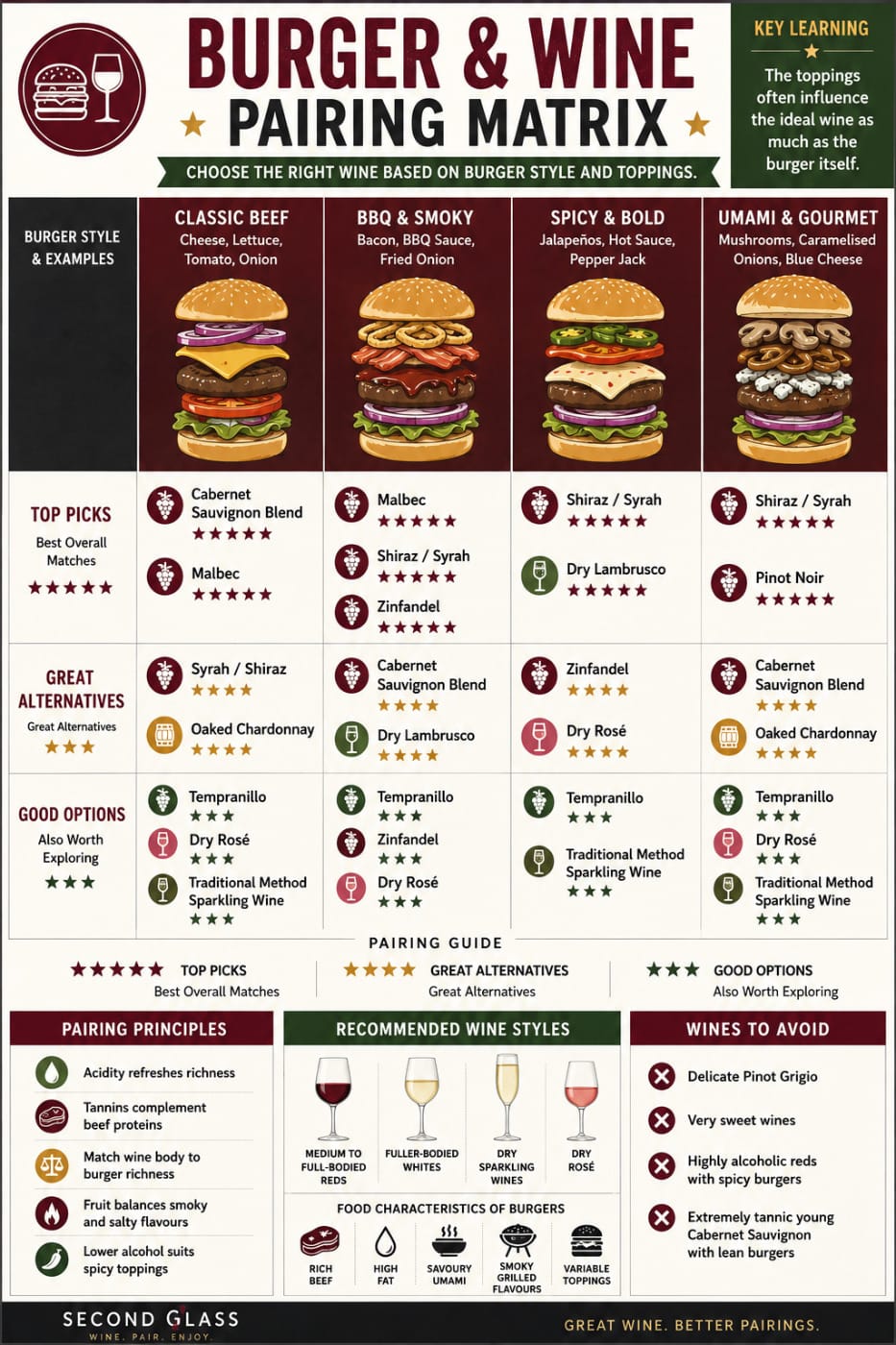
- The best pairing depends as much on toppings as the burger itself.
Best overall wines for Burger
Cabernet Sauvignon Blend
★★★★★
RegionsBordeaux, California, Coonawarra
Structured tannins, blackcurrant fruit and lively acidity complement rich grilled beef and classic cheeseburgers.
Malbec
★★★★★
RegionsMendoza, Cahors, Patagonia
Ripe plum fruit, moderate tannins and smoky spice pair naturally with grilled beef and melted cheese.
Syrah/Shiraz
★★★★☆
RegionsNorthern Rhône, Barossa Valley, McLaren Vale
Peppery spice and dark fruit echo chargrilled flavours and suit bacon or peppercorn toppings.
Oaked Chardonnay
★★★★☆
RegionsBurgundy, California, Margaret River
Rich texture and freshness complement chicken burgers, mushroom burgers and creamy sauces.
Why these wines work with Burger
Dominant strategy
Balance the burger's richness with lively acidity and match its intensity with medium- to full-bodied wines.
Supporting principles
- Use moderate tannins to complement beef proteins and richness.
- Match smoky, savoury flavours with peppery or fruit-driven wines while avoiding excessive alcohol with spicy toppings.
Understanding the Dish
A burger is far more complex than simply grilled meat. The cooking method creates caramelisation through grilling or pan-frying, producing savoury flavours that wine can complement.
The richness comes primarily from the beef fat, especially in burgers made with 20% fat mince. This richness calls for wines with enough brightness to refresh the palate after each bite.
Salt is introduced through seasoning, cheese, bacon and sauces, making fruit-forward wines taste even more vibrant.
Acidity varies depending on additions such as pickles, tomatoes or burger sauce. These ingredients make wines with a palate-cleansing character feel particularly harmonious.
Umami is high thanks to browned beef, mature cheese and mushrooms, while sweetness often appears in brioche buns, caramelised onions or barbecue sauce.
Texture also matters. Burgers combine crispy edges, juicy meat, melted cheese and soft bread. The ideal wine should have enough body to stand alongside these contrasting textures without becoming heavy.
Different toppings dramatically influence the final pairing. Blue cheese often benefits from wines with generous fruit and moderate tannins rather than simply more structure, spicy jalapeños favour softer reds, while creamy sauces may suit richer white wines.
Why These Wines Work
Successful burger pairings rely on balancing richness rather than matching flavours exactly.
Acidity acts like a squeeze of lemon over rich food, cleansing the palate between bites. This is why wines with lively acidity feel more refreshing alongside fatty burgers.
Tannins primarily interact with proteins in meat (and saliva), which softens their astringency and makes structured reds particularly effective with beef. However, excessively aggressive tannins can become drying if the burger is lean, spicy or lacks sufficient richness.
Body should broadly match the weight of the dish. Full-bodied burgers deserve medium- or full-bodied wines, while chicken or vegetarian burgers often work better with lighter styles.
Alcohol requires careful consideration. High alcohol can exaggerate chilli heat, making spicy burgers feel hotter. Lower-alcohol reds or fuller-bodied whites often perform better with spicy toppings.
Complementary flavours also play an important role. Smoky wines mirror grilled meat, peppery Syrah echoes seasoning, and oaky notes complement toasted buns and charred edges.
Contrasting flavours are equally valuable. Bright fruit lifts savoury richness, while crisp acidity prevents the meal from becoming overly heavy.
Classic Pairings
Red Wine
Cabernet Sauvignon blends, Malbec and Syrah remain the classic choices. Their structure complements beef while their fruit keeps the pairing lively.
White Wine
Oaked Chardonnay pairs exceptionally well with chicken burgers, mushroom burgers and creamy toppings. Its texture mirrors the richness of the food.
Rosé
Dry rosé is surprisingly versatile, especially with bacon cheeseburgers or burgers served during warm weather. Its freshness balances richness without overwhelming lighter toppings.
Sparkling Wine
Traditional-method sparkling wines work brilliantly because high acidity and bubbles cleanse the palate after every bite. They are particularly successful with fried chicken burgers.
Sweet Wine
Generally unnecessary for classic burgers, although lightly off-dry Riesling works well alongside spicy burgers by softening chilli heat.
Alternative Pairings
Côtes du Rhône blends provide juicy fruit and peppery spice without excessive tannin, making them ideal for gourmet burgers.
Zinfandel complements smoky barbecue burgers thanks to its ripe fruit and spicy character.
Tempranillo offers savoury complexity that pairs beautifully with Manchego-topped burgers or Spanish-inspired recipes.
Pinot Noir can work surprisingly well with lean burgers or mushroom burgers, especially when earthy flavours dominate.
Dry Lambrusco (look for quality, dry styles rather than sweet versions) combines juicy fruit, lively acidity and gentle bubbles that refresh the palate exceptionally well.
Best grapes for Burger
| Grape | Why it works | Flavour match |
|---|---|---|
| Cabernet Sauvignon | Firm tannins and blackcurrant fruit suit rich grilled beef. | Chargrilled beef, cheddar, smoky flavours. |
| Malbec | Juicy dark fruit balances salt and richness. | Cheeseburgers, caramelised onions. |
| Syrah | Peppery spice complements grilled meat. | Bacon burgers, peppercorn toppings. |
| Chardonnay | Fuller-bodied examples suit creamy toppings. | Chicken burgers, mushroom burgers. |
| Merlot | Softer tannins make it an approachable everyday option. | Classic cheeseburgers. |
| Tempranillo | Savoury character suits gourmet burgers. | Manchego, roasted peppers. |
| Zinfandel | Ripe fruit complements sweet barbecue sauces. | Smoky BBQ burgers. |
Best Regions
Bordeaux produces structured Cabernet blends that excel with premium beef burgers.
Mendoza offers rich, fruit-driven Malbec that complements grilled meat.
The Northern Rhône creates elegant Syrah with peppery complexity.
Barossa Valley produces richer Shiraz ideal for smoky barbecue burgers.
Rioja delivers Tempranillo with savoury maturity that pairs beautifully with gourmet burgers.
California offers generous Cabernet Sauvignon blends well suited to classic American-style burgers.
Traditional Pairings
American-style burgers are often enjoyed with Californian Cabernet Sauvignon or Zinfandel, reflecting regional food and wine traditions.
Argentinian burgers pair naturally with Mendoza Malbec thanks to Argentina's long association with grilled beef.
French bistro burgers are frequently served with Bordeaux blends or Rhône wines.
Spanish gourmet burgers are commonly paired with Rioja Tempranillo.
Burger Recipes Pairing
Classic Cheeseburger
A simple cheeseburger remains the easiest to pair thanks to its balance of juicy beef, melted cheese and soft bun. The richness of the meat and fat calls for wines with structure and freshness. Cabernet Sauvignon is a classic choice, offering firm tannins that bind with the protein and acidity that cuts through the fat. Malbec is equally reliable, with its ripe dark fruit and softer tannins making it especially approachable. Merlot can also work well for a smoother, rounder pairing.
Barbecue Burger
Barbecue burgers introduce sweet, smoky and sometimes tangy flavours from sauces and glazes. These elements require wines with generous fruit and a touch of sweetness in perception to balance the sauce. Zinfandel is an excellent match, with its ripe berry flavours and spice complementing smoky notes. Shiraz from warmer climates also works well, offering bold fruit and peppery character that enhances the grilled flavours.
Blue Cheese Burger
Blue cheese burgers are rich, salty and intensely flavoured, requiring wines that can stand up to their bold profile. Wines with ample fruit and moderate tannins help balance the cheese’s saltiness and pungency. Cabernet Sauvignon and Syrah are strong choices, as their structure and dark fruit provide contrast. For a more adventurous pairing, a slightly off-dry red can highlight the savoury-sweet interplay, although this is less conventional than classic table wine matches.
Mushroom Burger
Mushroom burgers, whether vegetarian or topped with sautéed mushrooms, bring earthy, umami-driven flavours. These pair beautifully with wines that echo those earthy notes. Pinot Noir is a natural match, offering subtle earthiness, bright acidity and red fruit that complements the mushrooms without overpowering them. Syrah can also work well, especially when the burger includes grilled or roasted elements that add depth.
Chicken Burger
Chicken burgers are lighter than beef and often feature creamy sauces or crispy coatings. They often pair well with white wines, although lighter reds can also work depending on the preparation. Chardonnay, particularly lightly oaked styles, complements the texture and richness of the chicken while maintaining freshness. For grilled chicken burgers, a fuller-bodied white or a light red like Pinot Noir can both provide a balanced pairing.
Spicy Burger
Spicy burgers, featuring chilli, jalapeños or hot sauces, require careful wine selection. High alcohol wines can amplify heat, so it is best to choose fruit-forward wines with restrained alcohol and good acidity. Off-dry styles or wines with a touch of sweetness can help soothe the spice. Options such as fruit-driven Grenache, dry Lambrusco or off-dry Riesling can provide balance and refreshment.
Plant-Based Burger
Plant-based burgers vary considerably in flavour and texture. Mushroom-based versions often resemble beef burgers and pair well with medium-bodied reds like Pinot Noir or Merlot. Vegetable-based patties, such as those made from beans or grains, tend to be lighter and benefit from wines with freshness and moderate body. In these cases, lighter reds or fuller-bodied whites like Chardonnay or Viognier can provide a harmonious match.
Pairings by Occasion
Everyday
Merlot or Malbec offer excellent value and broad appeal.
Dinner Party
Bordeaux blends provide elegance and versatility across different toppings.
Special Occasion
A mature Cabernet Sauvignon blend adds complexity without overshadowing the meal.
Summer
Dry rosé or lightly chilled Syrah offer freshness for outdoor dining.
Winter
Rich Shiraz and Malbec complement hearty burgers served with chips or roasted vegetables.
Wines To Avoid
Very delicate white wines such as Pinot Grigio often disappear beside rich beef.
Highly tannic young Cabernet Sauvignon can overwhelm burgers that are lean or lack sufficient richness, particularly if toppings do not provide balance.
Very sweet wines clash with savoury flavours unless the burger is exceptionally spicy.
High-alcohol reds can exaggerate chilli heat.
Delicate sparkling wines may lose their subtlety beneath smoky barbecue flavours.
Common Mistakes
Many people choose the biggest red available, but excessive tannin can dominate the meal.
Ignoring toppings is another common mistake. Blue cheese, mushrooms or barbecue sauce often influence the pairing more than the meat itself.
Serving reds too warm makes alcohol more noticeable.
Choosing wines with insufficient freshness leaves the palate feeling heavy after each bite.
Buying Guide
Budget (£10–£20 / $12–$25)
Excellent burger wines are widely available at modest prices. Budget Malbec, Merlot and Côtes du Rhône blends typically offer generous fruit, moderate tannins and enough brightness to handle classic burgers. These wines are designed for immediate drinking and usually provide excellent value. Spending carefully at this level often delivers satisfying everyday pairings without sacrificing flavour.
Mid-Range (£20–£40 / $25–$50)
Mid-range wines usually show greater balance, better fruit concentration and more refined tannins. Cabernet Sauvignon blends, Rioja Reserva and higher-quality Malbec often gain additional complexity from careful oak ageing. These wines are versatile enough to complement gourmet burgers with premium toppings. For most enthusiasts, this price point offers the best balance between quality and value.
Premium (£40+ / $50+)
Premium wines introduce greater depth, complexity and ageing potential. Top Bordeaux blends, Northern Rhône Syrah and exceptional Californian Cabernet Sauvignon display layered aromas, refined structure and remarkable persistence. While they can elevate a gourmet burger, the improvement becomes most noticeable with high-quality ingredients and carefully prepared beef. Spending more is worthwhile for special occasions or when the burger itself is equally exceptional.
How To Experiment
Try tasting the same burger with both Malbec and Cabernet Sauvignon to understand how tannins influence the pairing.
Experiment with different cheeses to see how they change the wine.
Compare grilled burgers with smashed burgers, noting how caramelisation affects flavour.
Finally, explore regional combinations, such as Argentinian Malbec with beef or Rioja with Spanish-inspired burgers.
Common Misconceptions
Only red wine works with burgers.
While red wine is a classic choice, it is far from the only option. Rich white wines such as oaked Chardonnay can complement the fat and texture of certain burgers, while sparkling wines offer brightness and bubbles that cut through richness and refresh the palate between bites.
Bigger wines are always better.
It might seem logical to match a hearty burger with the biggest, boldest wine available, but balance is far more important than sheer power. A wine that overwhelms the flavours of the burger can make the pairing feel heavy and one-dimensional, whereas a well-balanced wine enhances both the meat and any toppings.
Cheese makes no difference.
Cheese can significantly influence the ideal wine pairing. A sharp cheddar, creamy brie, or tangy blue cheese each brings different flavours and textures that interact with wine in unique ways, often shifting the best choice from one style to another.
Cheap wine cannot pair well with burgers.
Great pairings do not have to be expensive. Many affordable wines are crafted to be approachable, fruit-forward and versatile, making them perfect companions for everyday grilled foods like burgers.
FAQs
Can I drink white wine with beef burgers?
Yes. Richer white wines, particularly lightly oaked Chardonnay, can work in certain cases, especially with mushroom or creamy toppings. While red wine remains the classic choice, the burger's toppings often determine whether white wine becomes the better match.
Is Malbec better than Cabernet Sauvignon?
Neither is universally better. Malbec offers softer tannins and generous fruit, making it approachable and versatile. Cabernet Sauvignon provides greater structure and complexity, particularly with richer gourmet burgers.
Does barbecue sauce change the pairing?
Absolutely. Sweet barbecue sauce benefits from wines with ripe fruit, moderate tannins and lively acidity. Zinfandel, Shiraz and fruit-forward Malbec often outperform highly structured reds.
Can sparkling wine pair with burgers?
Yes. Traditional-method sparkling wines cleanse the palate beautifully thanks to their acidity and bubbles. They are especially successful with fried chicken burgers or cheeseburgers.
What wine works with spicy burgers?
Off-dry Riesling or fruit-forward reds with moderate alcohol usually provide the best balance. Avoid very alcoholic or heavily tannic wines, as they can intensify the perception of heat.
What is the best wine for cheeseburgers?
Cabernet Sauvignon blends remain one of the most consistently successful choices because they balance richness, salt and grilled flavours while offering enough structure to complement beef without dominating it.
Are vegetarian burgers harder to pair?
Not necessarily. Mushroom-based burgers often suit Pinot Noir or Syrah, while vegetable-based burgers work well with Chardonnay, rosé or lighter reds. Consider the dominant ingredients and toppings rather than assuming all vegetarian burgers need white wine.
Start with Malbec
If you are new to wine pairing, start with a fruit-forward Malbec alongside a classic beef cheeseburger. It combines ripe fruit, moderate tannins and lively acidity in a way that flatters almost every element of the dish without becoming overpowering. From there, compare it with a Cabernet Sauvignon blend to experience how additional structure changes the pairing. As your confidence grows, experiment with different toppings and cooking styles, remembering that the garnish can be just as influential as the burger itself.
Final Thoughts
Burgers are among the most versatile foods to pair with wine because their richness, savoury flavours and endless topping combinations offer many possibilities. Medium- to full-bodied reds such as Malbec, Cabernet Sauvignon blends and Syrah remain the classic choices, while Chardonnay, sparkling wine and rosé provide excellent alternatives for specific styles of burger. Focus on balancing richness with freshness, matching intensity and considering toppings, and you'll consistently find rewarding wine pairings.