
A Thanksgiving table, from savoury mains to sweet pies
Preparation in focus
The seven featured dishes: roast turkey, deep-fried turkey, glazed ham, vegetarian nut roast, pumpkin pie, pecan pie and sweet potato pie, with common sides considered alongside the mains.
Roasted or fried turkey, glazed ham or nut roast; baked pies; sides vary by table.

Richness
Lean turkey through rich pie

Fat
Roast meat through fried skin

Acidity
Cranberry sauce adds tartness

Sweetness
Savoury mains through sweet pies
Spice
Herbs, baking spice or chilli
Umami
Mushroom stuffing, gravy or ham

Saltiness
Seasoning, gravy and cured ham
Flavour intensity
Mild turkey through rich desserts
- Texture
- Crisp or roasted mains, hearty savoury sides and soft, custardy or syrup-rich pies.
Key Takeaways
- Dry Chenin Blanc is a flexible choice for roast turkey and savoury sides.
- Pinot Noir or Gamay offers a fresh red option; brut sparkling wine suits fried turkey.
- Match the wine’s sweetness to a glaze or pie, and check the wine with the sides.
- You don’t need seven wines: plan for the savoury meal and dessert.
Introduction
Thanksgiving tables vary from family to family, with roast or fried turkey, glazed ham, vegetarian mains and regional sides. This guide covers seven dishes, from the savoury centrepiece to the pies.
Why the pairing works for A Thanksgiving table, from roast or fried turkey to sweet pies
Choose wine for the main dish, then check it with the sides; serve a separate sweet wine with pie.
-
Gravy, butter and fried skin Fresh acidity
Freshness helps balance richness and refreshes the palate.
-
Turkey and savoury stuffing Moderate tannin
A lighter red is less likely to seem bitter beside umami-rich ingredients.
-
Sweet pie Sweetness
The wine should be at least as sweet as the dessert.
-
Chilli-seasoned turkey Moderate alcohol
High alcohol can make chilli heat feel sharper.

- Choose enough body and flavour for the dish.
Check stuffing, cranberry sauce and the other sides
The sides can shift how the wine tastes. Mushroom or sausage stuffing adds savoury depth, which can make firm tannins seem more bitter. Sweet cranberry sauce can make a very dry wine seem sharper, while buttery mash and gravy add richness that benefits from freshness. Try the main-course wine with the sides before serving it to the table.
Choose wine for your Thanksgiving dish
The main dish sets the direction; its glaze, seasoning and sides can shift the best match.
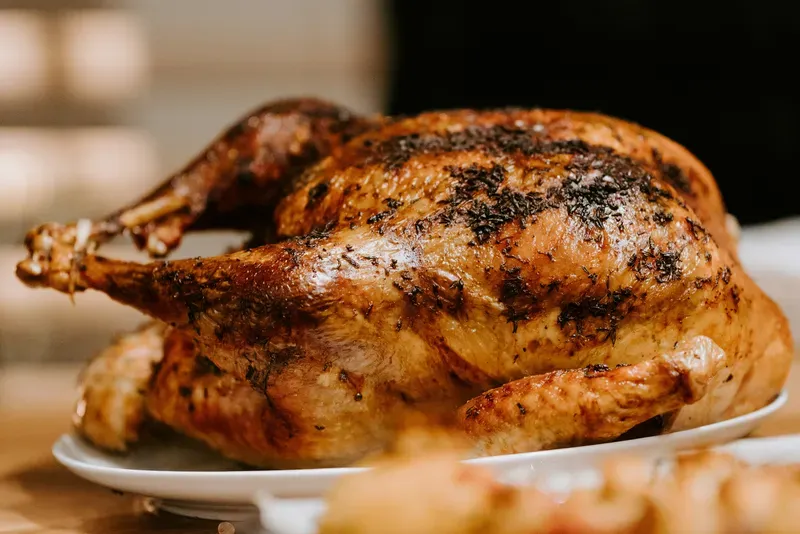
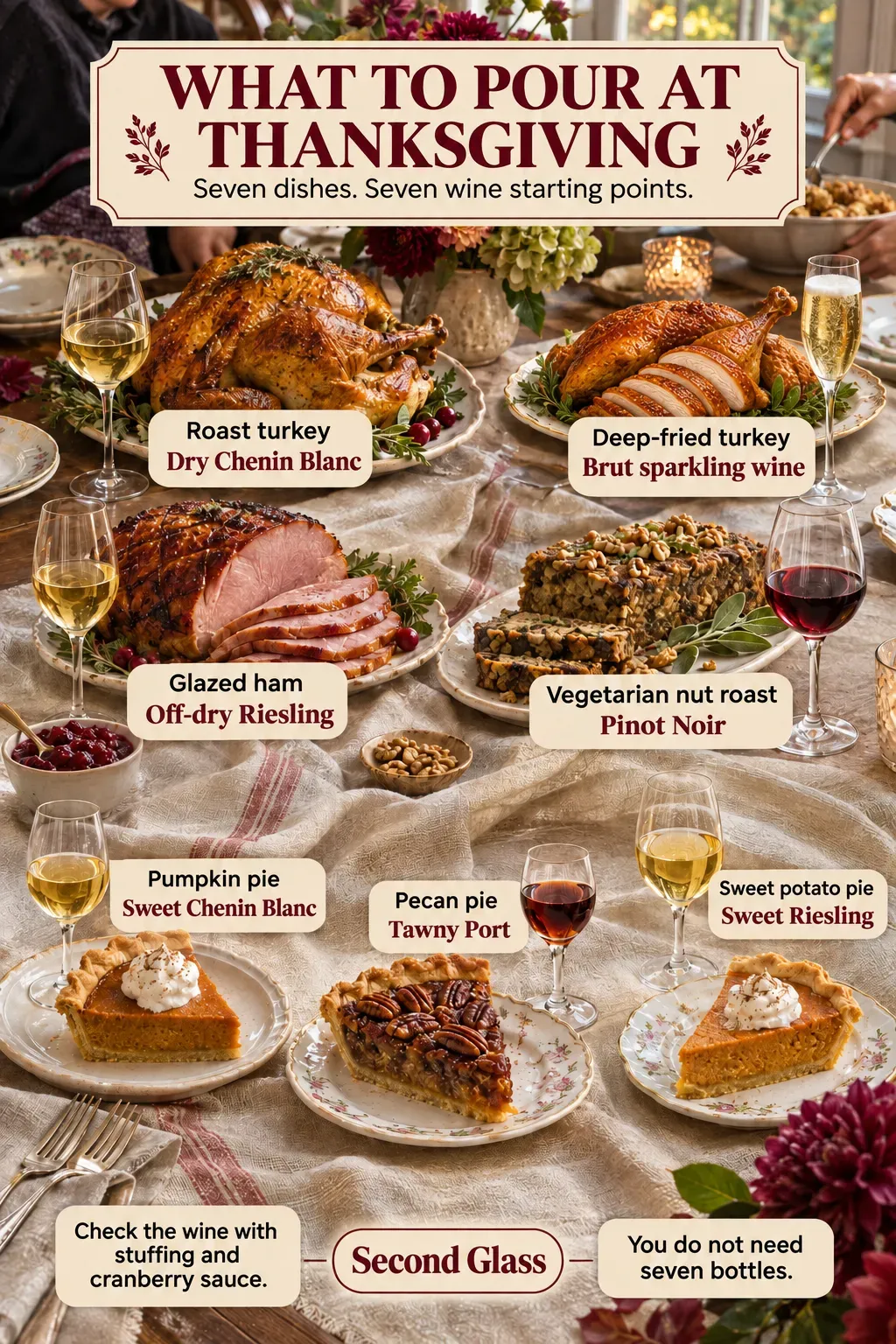
Pairing #1: Roast turkey <-> Dry Chenin Blanc
Dry Chenin Blanc is a versatile match for roast turkey and gravy. Its fresh acidity keeps a rich plate lively, while orchard-fruit flavours work well with roasted meat, herbs and savoury stuffing. Look for dry Vouvray or South African Chenin Blanc; check the description, as Chenin is made in a range of styles and sweetness levels.
If you prefer red, choose a light Pinot Noir or Gamay. A fresh, moderate-tannin style is a useful choice when cranberry sauce is on the plate.
Pairing #2: Deep-fried turkey <-> Brut Sparkling Wine
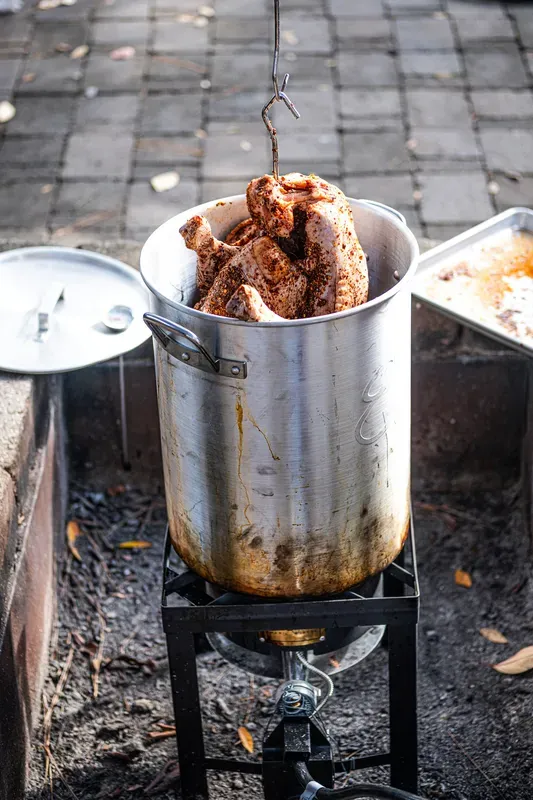
Brut sparkling wine brings acidity and bubbles to deep-fried turkey, refreshing the palate after its crisp, rich skin. For a savoury style with enough presence for the meal, look for traditional-method sparkling wine, such as Crémant, English sparkling wine or Champagne.
Dry rosé is a good still-wine alternative. If the turkey is seasoned with chilli, avoid a high-alcohol wine, which can make the heat feel stronger.
Pairing #3: Glazed ham <-> Off-dry Riesling
A touch of sweetness in the wine can meet a honey, fruit or brown-sugar glaze, while Riesling’s acidity keeps the pairing fresh alongside salty ham. Look for an off-dry Riesling and check the bottle description: the grape alone does not tell you how sweet the finished wine will be. German Riesling is a useful place to explore different sweetness levels.
For ham with only a light glaze, try Pinot Noir or dry rosé instead. A very sweet glaze may make a bone-dry wine taste lean.
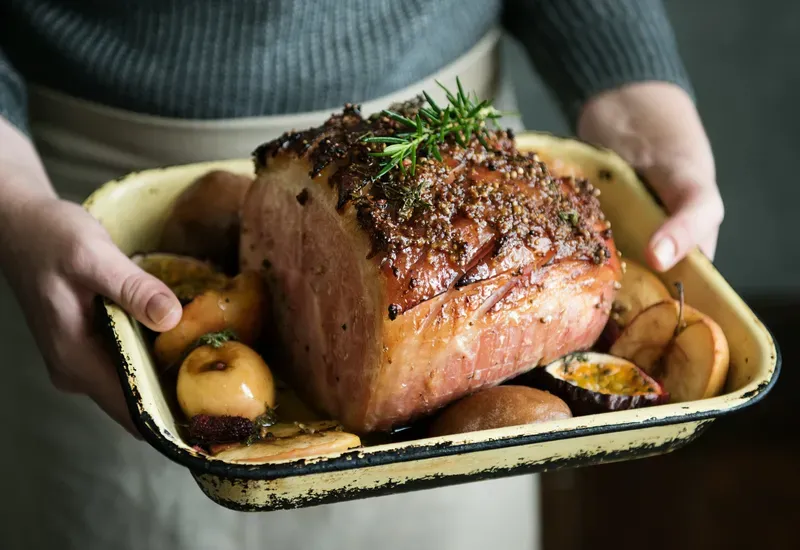
Pairing #4: Vegetarian nut roast <-> Pinot Noir
Fresh Pinot Noir is a good match for a savoury nut roast with mushrooms, lentils or herbs. Its red-fruit flavours complement roasted ingredients, while a lighter, moderate-tannin style is less likely to seem bitter beside umami-rich mushrooms. Look for Burgundy, Oregon or New Zealand Pinot Noir described as elegant or light to medium-bodied.
Gamay is another fresh, juicy red option. If the nut roast comes with a creamy sauce, dry Chenin Blanc can bring useful freshness. Beaujolais is another useful option for the Thanksgiving table.
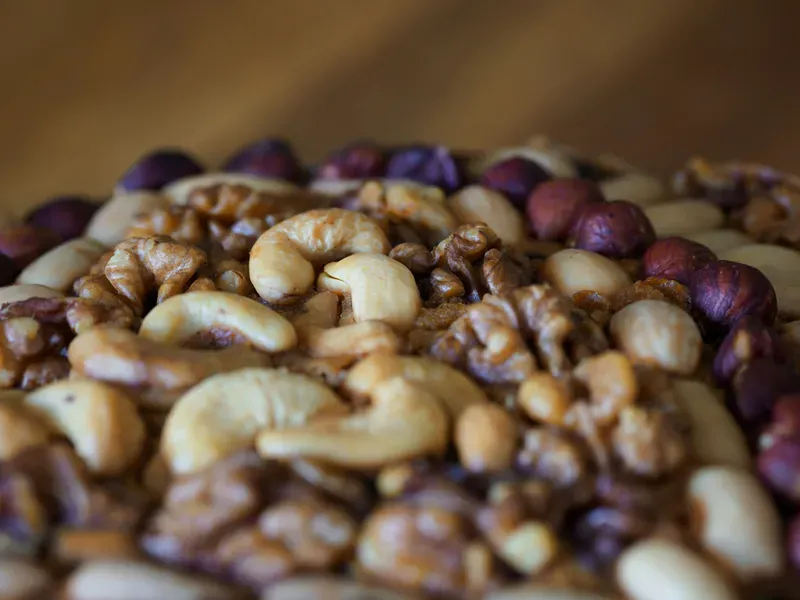
Pairing #5: Pumpkin pie <-> Sweet Chenin Blanc
Pumpkin pie’s custard and warm baking spices suit a sweet Chenin Blanc with enough acidity to keep the finish lively. Look for Vouvray moelleux or another clearly sweet Loire Chenin Blanc. The sweetness should meet or exceed the pie’s; otherwise, the wine may taste sharp beside it.
A clearly sweet late-harvest Riesling is another option. Check the bottle’s stated sweetness rather than relying on “late harvest” alone.
For more alternatives, explore our sweet pie pairing guide: try Moscato d’Asti from Piedmont, Muscat du Cap Corse, or a sweet Vin Santo from Tuscany, checking that the wine is sweet enough for your pie.
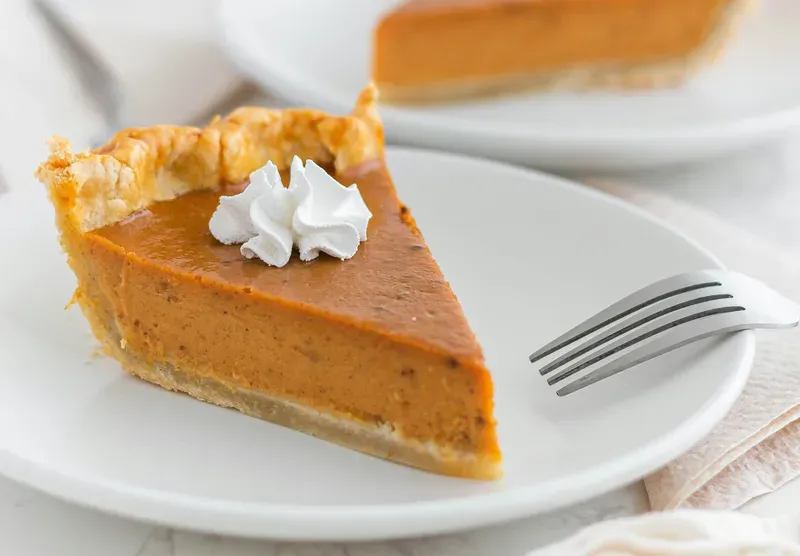
Pairing #6: Pecan pie <-> Tawny Port
Tawny Port is a natural starting point for pecan pie. Its sweetness and nutty, developed flavours complement the pie’s toasted pecans and caramel-like filling. Serve a modest pour: both the wine and dessert are rich.
Alternatively, choose a richly sweet dessert style of Chenin Blanc or Riesling. Pecan pie can be very sweet, so a merely off-dry wine may be overwhelmed.
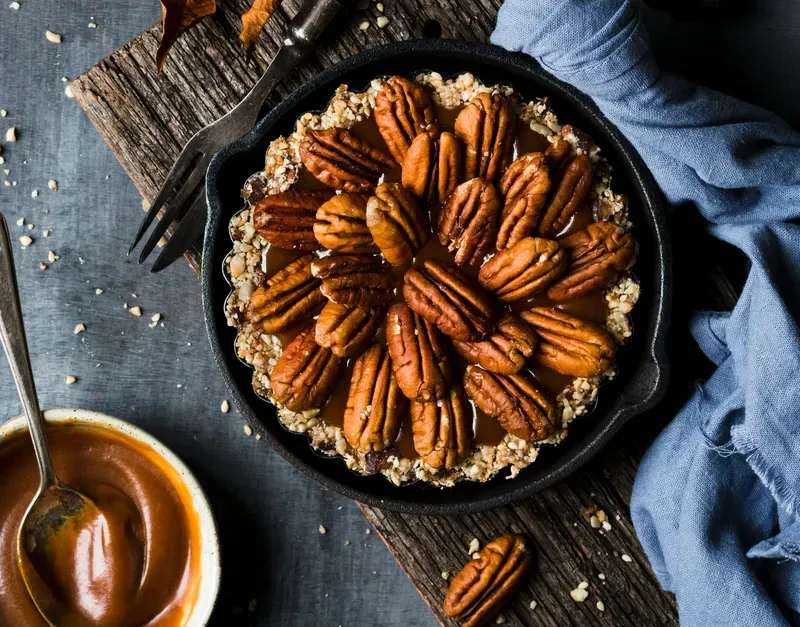
Pairing #7: Sweet potato pie <-> Sweet Riesling
Choose a sweet Riesling for sweet potato pie. Its fruit and acidity can complement the custardy filling and baking spices while keeping the pairing fresh. Check the bottle’s sweetness description; don’t assume every Riesling, or every German label term, means the same level of sweetness.
Clearly sweet Chenin Blanc is an alternative. Match the wine’s sweetness to the pie’s filling, including its sugar or syrup.
Buying guide
Price bands are approximate and refer to standard 750 ml bottles. Dessert wines are often sold in smaller formats, so compare prices by volume.
Budget (£8–£14 / $10–$18)
For the savoury meal, look for straightforward Chenin Blanc, Riesling, Gamay or Pinot Noir with fresh fruit. Choose by style and sweetness description rather than an impressive-sounding label. Most bottles in this range are intended to be enjoyed young. If buying wine for pie, a smaller bottle of clearly sweet wine can be a practical choice.
Mid-range (£14–£30 / $18–$38)
This range can offer more texture and regional character, including dry Vouvray, South African Chenin Blanc, Beaujolais and balanced Pinot Noir. For ham or dessert, check the stated sweetness carefully, especially with Riesling. Most bottles are ready to drink, though some may develop over a few years. Spending more makes sense when the wine will be a focus of the meal, not just one of several pours.
Premium (£30+ / $38+)
Consider this range for a special traditional-method sparkling wine, a distinctive Pinot Noir or a concentrated sweet wine. Look for balance and a style that suits the food; a higher price alone does not make a better pairing. Some wines can age, but there is no need to buy an age-worthy bottle for Thanksgiving dinner. If choosing dessert wine, compare the price and volume of smaller bottles before buying.
Try a simple Thanksgiving tasting
Start with the savoury dish that will dominate your plate. For roast turkey, dry Chenin Blanc is an easy starting point because its acidity refreshes rich gravy and its fruit suits herbs. If you prefer red, choose a fresh Pinot Noir or Gamay with moderate tannin. Taste your chosen wine with stuffing and cranberry sauce before settling on it for the meal. Save a clearly sweet wine for pie, matching its sweetness to the dessert.
How to experiment
- Step 1 — Pour small tastes of dry Chenin Blanc and Pinot Noir with turkey, gravy, stuffing and cranberry sauce.
- Step 2 — Try each wine with the sides, noticing whether it stays fresh or seems sharper, more bitter or less fruity.
- Step 3 — Taste a clearly sweet wine with the pie and check that the dessert does not make it seem dry or sour.
Common misconceptions
A fruity wine is necessarily sweet
Fruit flavours and sweetness are different things. A wine can smell and taste of ripe fruit while still being dry, so check the bottle description when sweetness matters.
An expensive bottle makes a better pairing
A wine’s suitability depends on its style and the food, not price alone. A fresh, well-chosen bottle at a modest price can work better than a more powerful or heavily oaked wine.
Thanksgiving requires a different wine for every dish
A versatile wine can work across much of the savoury meal. Choose another savoury style if you want to offer guests a choice, and a sweet wine if serving pie.
Questions about Thanksgiving wine pairing
What should I drink for Thanksgiving?
For the savoury meal, start with dry Chenin Blanc, light Pinot Noir or Gamay, or brut sparkling wine. Choose according to the main dish and your preference, then check the wine with the sides. If you are serving pie, a separate sweet wine is a better match for dessert.
Does red wine work with turkey?
Yes. Pinot Noir and Gamay are useful starting points because they offer fresh fruit without the heavy tannin of more powerful reds. Taste the wine with the sides too: sweet cranberry sauce or umami-rich stuffing can change the balance.
Can I keep Thanksgiving wine to one or two choices?
Yes. Choose one versatile wine for the savoury meal and one sweet wine for the pie. If you want to offer both red and white with dinner, that adds a third choice.
What if my Thanksgiving sides are sweet?
Try the wine with the sides before serving it. A very sweet cranberry sauce or glaze can make a bone-dry wine seem sharper, so a fruit-forward wine or one with some sweetness may feel more balanced. Look for freshness and avoid excessive alcohol.
Which wine suits deep-fried turkey?
Brut traditional-method sparkling wine is a good choice because its acidity and bubbles refresh the palate after crisp, rich skin. A dry, fresh Chenin Blanc is a still alternative.
How do I know whether a dessert wine is sweet enough?
Read the label or retailer description for a clear sweetness indication. This is especially useful with Riesling and late-harvest wines, as the grape or term alone may not tell you how sweet the finished wine is. For pie, choose a wine at least as sweet as the dessert.
Final thoughts: A simple bottle plan
You don’t need seven wines for seven dishes. For the savoury table, start with one dry Chenin Blanc and one light Pinot Noir or Gamay; they offer different options for roast turkey, nut roast and the sides. If deep-fried turkey is the centrepiece, consider brut sparkling wine in place of the red. If sweet-glazed ham is the centrepiece, choose off-dry Riesling in place of the dry Chenin. Choose a separate sweet wine for the pie, making sure its sweetness suits the filling.