Quick answer
What to know first
Sauvignon Blanc is the benchmark wine for fresh goat cheese, especially from Loire Valley. Dry Chenin Blanc suits firmer, mature or substantial preparations, while Vermentino and Albariño offer fresh alternatives. Brut sparkling wine is another interesting choice across several goat-cheese styles.
Introduction
Goat cheese is not one single pairing problem. Fresh chèvre, firm and mature cheeses, hard aged wheels, Brocciu and goat-milk ricotta differ in moisture, texture, saltiness and intensity. Preparation matters too: a plain cheese, baked tart, dressed salad or honeyed dish can each call for a different style of wine.
Freshness is the most useful starting point. Wines with good acidity generally stay balanced beside tangy cheese and help prevent creamy or rich textures from feeling heavy.
Key Takeaways
- Sauvignon Blanc is the benchmark for fresh goat cheese.
- Loire Sauvignon Blanc and goat cheese form a classic regional pairing.
- Dry Chenin Blanc suits firmer, mature or substantial preparations.
- Vermentino and Albariño are versatile fresh alternatives.
- Brut sparkling wine works across fresh, baked, mature and hard styles.
- Brocciu and goat-milk ricotta are delicate whey cheeses, not stages of chèvre.
- Light reds can work with grilled, mature or earthy preparations.
- The complete dish matters as much as the cheese.
What Goat Cheese brings to the glass
Understanding Goat Cheese
Fresh Chèvre
Fresh chèvre is soft, moist, creamy and tangy, with clean lactic flavours. Its delicate texture and noticeable acidity favour wines that are fresh rather than heavily tannic, alcoholic or oaked.
Firmer or Semi-Aged Goat Cheese
As goat cheese loses moisture, it becomes denser, saltier and more savoury. It can support slightly fuller wines while still benefiting from freshness.
Mature Small Goat Cheese
Mature small cheeses may become firm or crumbly, with stronger earthy, nutty and savoury flavours. Their concentration allows more structured wines, although age alone does not determine the pairing.
Hard Goat Cheese
Hard goat cheese is concentrated, salty and often nutty or savoury. It can support fuller whites, sparkling wine and restrained light reds, particularly when served with similarly savoury ingredients.
Brocciu
Brocciu is a Corsican whey cheese traditionally made from sheep’s milk, goat’s milk or a blend. It is soft, fresh and lightly sweet, with a gently tangy, lactic character. It should not be treated simply as a stage of chèvre.
Goat-Milk Ricotta
Goat-milk ricotta is also a whey cheese. It is soft, moist and delicate, sometimes with more tang than cow’s-milk ricotta. Its mild flavour generally calls for a fresh, restrained wine unless stronger ingredients are added.
Best overall wines for Goat Cheese
Sauvignon Blanc
★★★★★
RegionsSancerre, Loire Valley, France, Pouilly-Fumé, Loire Valley, France, Touraine, Loire Valley, France
High acidity matches the tang of fresh chèvre and refreshes its creamy texture, while citrus and herbal flavours complement fresh herbs, salads and simple goat-cheese dishes.
Dry Chenin Blanc
★★★★☆
RegionsVouvray, Loire Valley, France, Savennières, Loire Valley, France, South Africa
Dry Chenin Blanc retains the freshness goat cheese needs while adding greater texture and concentration, making it particularly useful with firm, mature, baked or substantial preparations.
Vermentino
★★★★☆
RegionsCorsica, France, Sardinia, Italy, Liguria and Tuscany, Italy
Fresh acidity with citrus, herbal and often lightly saline flavours makes Vermentino particularly effective with goat cheese served alongside olive oil, herbs, vegetables or seafood, as well as Brocciu and goat-milk ricotta.
Albariño
★★★★☆
RegionsRías Baixas, Spain
Choose Albariño when fresh goat cheese appears in a salad or seafood-led dish. Its citrus and stone-fruit character, moderate body and fresh finish make it a slightly rounder alternative to lean Sauvignon Blanc.
Dry Riesling
★★★★☆
RegionsGermany, Alsace, France, Austria
Choose dry Riesling for young, tangy cheese, especially with apple, pear, fresh herbs or lightly spiced accompaniments. Its precision and acidity keep the pairing light, while more concentrated examples can suit aged cheese.
Brut Sparkling Wine
★★★★☆
RegionsChampagne, France, England, Traditional-method sparkling wine regions
Acidity and bubbles refresh creamy textures and make sparkling wine unusually versatile across fresh, baked, mature and hard goat cheeses, particularly when bread, pastry or nuts are involved.
Why these wines work with Goat Cheese
Dominant strategy
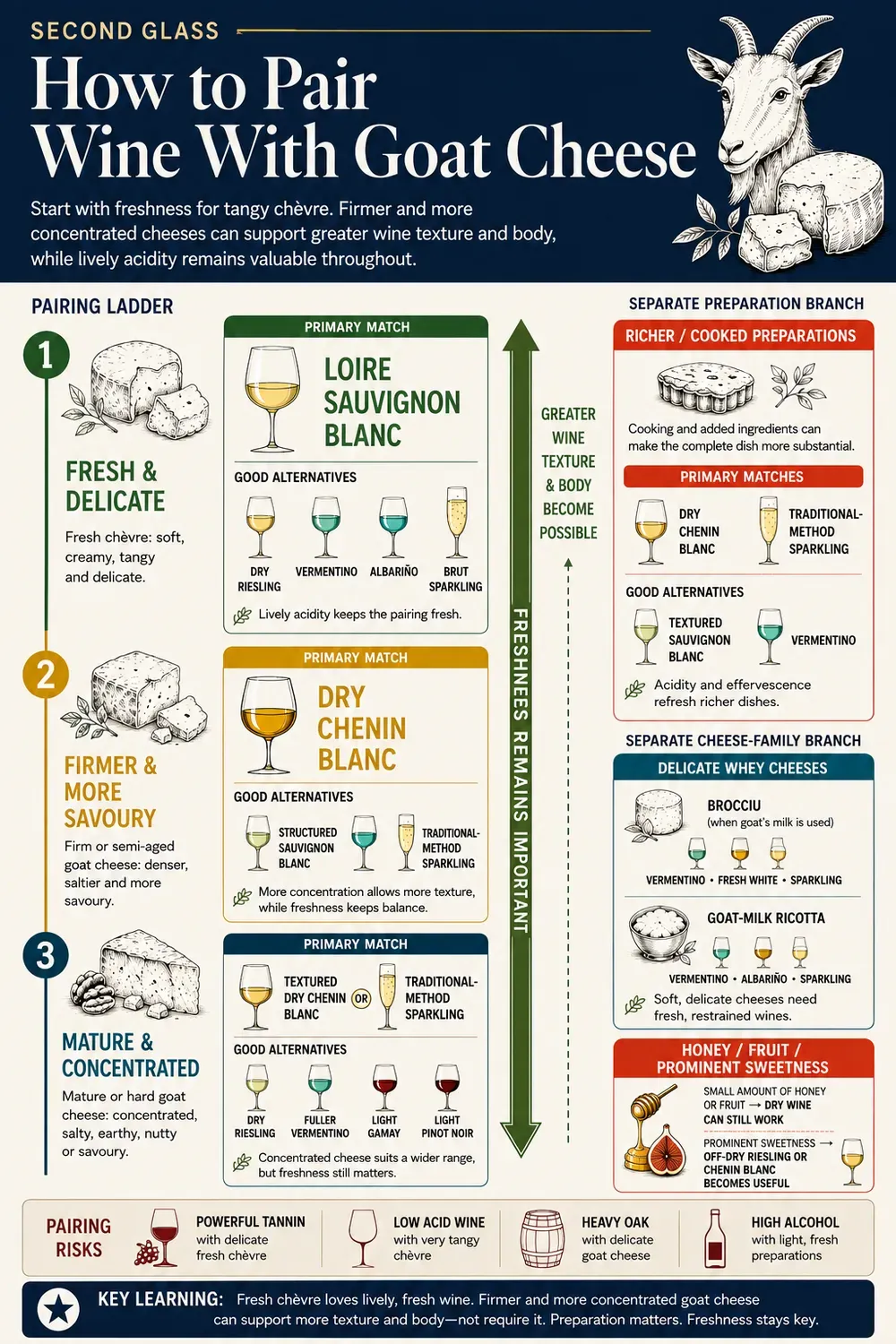
Match goat cheese's tang and creamy texture with fresh, high-acid wine, then increase wine body and complexity as the cheese or preparation becomes firmer, richer or more mature.
Supporting principles
- Use acidity to balance tang, creaminess, salt and rich accompaniments.
- Keep tannin restrained with fresh chèvre, using light reds mainly for grilled, mature or earthy preparations.
- Match wine body to cheese intensity and the richness added by pastry, oil, cream, eggs or cooking.
- Introduce residual sweetness when honey, fruit or other clearly sweet accompaniments dominate.
- Consider sauces, dressings, vegetables and cooking method alongside the cheese itself.
Why Wine Pairing With Goat Cheese Works
Acidity: Tangy goat cheese needs a wine that remains lively rather than seeming flat. Acidity also refreshes the palate after creamy textures.
Creaminess and fat: Freshness provides contrast and keeps rich cheese or pastry from feeling heavy.
Salt: Salt can make tannin seem more drying and aggressive. Crisp whites and sparkling wines usually handle salty cheese more comfortably.
Tannin: Powerful tannic reds can overwhelm delicate chèvre. Light, fresh reds are more suitable when the cheese or dish has enough savoury intensity.
Sweetness: Honey, fruit, chutneys and caramelised onions may call for a fruitier or lightly sweet wine. Plain goat cheese generally suits dry wine.
Body and intensity: Firmer or mature cheese can support more texture and concentration, but a salty or sharply tangy cheese may still prefer a fresh, lighter wine.
Cooking method: Baking adds richness through pastry, oil, cream, eggs or breadcrumbs. Grilling adds toasted and savoury flavours, making light reds more plausible.
Sauces and accompaniments: Vinaigrette, beetroot, herbs, nuts, vegetables, seafood and sweet garnishes can influence the pairing as much as the cheese itself.
Best grapes for Goat Cheese
| Grape | Why it works | Flavour match |
|---|---|---|
| Sauvignon Blanc | Its naturally high acidity provides the classic structural match for fresh, tangy chèvre. | Citrus, green fruit and herbal flavours complement fresh cheese, herbs and salad ingredients. |
| Chenin Blanc | High acidity combined with greater texture allows it to handle firm, mature and baked goat cheese without becoming heavy. | Apple, quince, citrus and savoury notes suit pastry, mature cheese and substantial preparations. |
| Vermentino | Freshness and moderate body suit delicate goat cheese while providing enough character for Mediterranean accompaniments. | Citrus, herbs and lightly mineral or saline flavours complement olive oil, tomatoes, vegetables and seafood. |
| Albariño | Bright acidity and moderate body make it an effective alternative for fresh cheese and lighter dishes. | Citrus, stone fruit and saline freshness work particularly well with salads, seafood and goat-milk ricotta. |
| Riesling | High acidity keeps young goat cheese fresh, while dry and off-dry expressions provide flexibility with savoury, sweet and lightly spiced dishes. | Citrus and orchard fruit complement fresh chèvre, apple, pear, honey and fruit garnishes. |
| Gamay | Its relatively light body and modest tannin make it one of the safest red grapes for goat cheese. | Juicy red fruit works with grilled cheese, beetroot, roasted vegetables and earthy flavours. |
| Pinot Noir | Light, restrained examples can match mature or hard goat cheese without the aggressive tannin of more powerful reds. | Red fruit and earthy flavours complement mature cheese, mushrooms and savoury accompaniments. |
Best Wine by Goat Cheese Style
Fresh Goat Cheese
Fresh chèvre is soft, creamy and tangy.
Best: Sauvignon Blanc
Also try: Dry Riesling, Albariño, Vermentino, brut sparkling wine or crisp dry rosé.
Firmer Goat Cheese
Firmer cheese is denser, saltier and more savoury.
Best: Dry Chenin Blanc
Also try: Structured Sauvignon Blanc, Vermentino, Albariño, dry Riesling, traditional-method sparkling wine or light Gamay and Pinot Noir.
Mature Goat Cheese
Mature small cheeses are concentrated, earthy and sometimes nutty.
Best: Mature dry Chenin Blanc
Also try: Structured Loire Sauvignon Blanc, mature dry Riesling, fuller Vermentino, traditional-method sparkling wine, light Pinot Noir or fresh Gamay.
Hard Goat Cheese
Hard goat cheese can support fuller wines, provided they retain freshness.
Best: Mature Chenin Blanc
Also try: Fuller Vermentino, mature Riesling, structured Sauvignon Blanc, sparkling wine or restrained Pinot Noir.
Brocciu
Brocciu is made of ewe’s milk, goat’s milk or a mixture. It is delicate, fresh and lightly sweet.
Best: Corsican or Sardinian Vermentino
Also try: Vermentino from Liguria, Sauvignon Blanc, Albariño, dry Riesling, dry rosé or brut sparkling wine.
For preparations with honey, figs or fruit, lightly sweet Riesling or Chenin Blanc can be more suitable.
Goat-Milk Ricotta
Goat-milk ricotta is soft, moist and mild.
Best: Vermentino
Also try: Sauvignon Blanc, Albariño, dry Riesling, brut sparkling wine, dry rosé or lightly sweet Chenin Blanc for sweet dishes.
Best White, Red, Rosé, Sparkling and Sweet Wine With Goat Cheese
White Wine
White wine is the most versatile category. Sauvignon Blanc suits fresh chèvre, Chenin Blanc suits firmer or richer preparations, and Vermentino or Albariño work well with Mediterranean, salad and seafood ingredients.
Red Wine
Red wine can work when the cheese is mature, grilled or paired with earthy ingredients. Gamay and light Pinot Noir are safer choices than powerful, tannic reds.
Rosé
Dry rosé suits fresh cheese, salads and Mediterranean dishes, especially with tomatoes, peppers, olives and herbs.
Sparkling Wine
Brut sparkling wine refreshes creamy cheese through acidity and bubbles. Traditional-method styles are particularly useful with baked, mature or hard cheese, pastry, bread and nuts.
Sweet Wine
Sweet or off-dry wine is most useful when honey, figs, fruit preserves or another sweet ingredient is prominent. Riesling and Chenin Blanc can provide sweetness while retaining freshness.
Goat Cheese Recipes Pairing
Goat Cheese Salad
The dressing matters as much as the cheese. A sharp vinaigrette favours a fresh wine, while sweet dressings or fruit call for more generous fruit character. Sauvignon Blanc, Vermentino, Albariño, Riesling and dry rosé can all work according to the vegetables, herbs and dressing.
Baked Goat Cheese
Baking changes the texture, while pastry, oil, cream, eggs or breadcrumbs often add richness. Dry Chenin Blanc can provide enough texture for the finished dish, and traditional-method sparkling wine offers a refreshing contrast. Vermentino suits versions with roasted vegetables and herbs.
Goat Cheese Tart
Pastry adds fat and structure, so choose a wine with both freshness and some body. Dry Chenin Blanc, textured Sauvignon Blanc or Vermentino can work, with the filling and seasoning determining the best fit.
Grilled Goat Cheese
Grilling adds toasted and savoury flavours. Gamay or light Pinot Noir can work when the cheese is firm and the dish includes earthy or roasted ingredients. Chenin Blanc and textured Sauvignon Blanc remain strong white options.
Goat Cheese With Honey
The amount of honey determines whether the wine should remain dry or include some sweetness. Dry wine works when honey is used sparingly; lightly sweet Riesling or Chenin Blanc is more suitable when the dish is clearly sweet.
Goat Cheese and Caramelised Onion
This combination needs a wine that can handle both sweetness and savoury depth. Chenin Blanc is a strong choice for substantial pastry dishes. Gamay or light Pinot Noir can work when the preparation is rich and savoury, while Vermentino suits versions led by herbs and roasted vegetables.
Find the Right Wine for Your Goat Cheese
Start with the cheese's texture and maturity, then consider cooking method, dressing and accompaniments to find a wine with the right freshness, body and structure.
If you're havingFresh chèvre
Explore
If you're havingFirm, mature or baked goat cheese
Explore
If you're havingMediterranean goat cheese dishes
Explore
If you're havingBrocciu or goat-milk ricotta
Explore
If you're havingGrilled or earthy goat cheese dishes
Explore
If you're havingGoat cheese with honey or fruit
Explore
Traditional and Regional Pairings
Loire Goat Cheese and Loire Sauvignon Blanc
The Loire provides the classic regional model: local goat cheese with local Sauvignon Blanc. The pairing works because the wine’s freshness and herbal-citrus character suit the cheese’s tang and creamy texture.
Crottin de Chavignol and Sancerre
Crottin de Chavignol with Sancerre is the best-known example. As the cheese becomes more savoury and concentrated, the wine’s freshness remains an important point of balance.
Corsican Brocciu and Vermentino
Brocciu with Corsican Vermentino is a natural regional pairing. It is especially memorable with herbs, olive oil, vegetables and seafood.
Wines and Pairing Mistakes to Avoid
Automatically choosing a powerful tannic red: Tannin can overwhelm delicate chèvre and feel drying beside salty, acidic cheese. Light reds are usually easier, though mature or grilled preparations can broaden the options.
Choosing a low-acid white for very tangy chèvre: The wine may seem flat and make the creamy texture feel heavier.
Using excessive oak or alcohol: Vanilla, toast and warmth can dominate delicate cheese, particularly in a light dish. Moderate oak or fuller alcohol can work better with substantial preparations.
Ignoring the dressing or accompaniments: Vinaigrette, honey, beetroot, pastry, roasted vegetables and sauces can change the pairing more than the cheese itself.
Treating all goat cheeses as interchangeable: Fresh chèvre, mature cheese, hard cheese, Brocciu and goat-milk ricotta differ in texture, production, saltiness and intensity.
Assuming mature cheese automatically requires a bigger wine: Maturity can justify more concentration, but salt, acidity and savoury flavour may still favour a fresh white or sparkling wine.
Choosing by price or prestige: A modest wine with suitable freshness, body and intensity can outperform an expensive bottle that is too tannic, alcoholic or oaked.
Buying Guide
Budget (£8–£15 / US$10–$20)
For fresh chèvre and salads, look for labels describing the wine as dry, fresh, crisp or unoaked. Loire Sauvignon Blanc, Touraine Sauvignon, regional Vermentino, Picpoul and dry rosé are useful value categories. Avoid high alcohol and obvious new-oak cues.
Mid-Range (£15–£30 / US$20–$40)
This range often provides more regional character, texture and length. Look for Sancerre or Pouilly-Fumé for classic Sauvignon Blanc, dry Vouvray for Chenin Blanc, Rías Baixas for Albariño, and traditional-method sparkling wines labelled brut.
Choose the style according to the dish: leaner wines for fresh cheese and salads, more textured bottles for baked or mature preparations.
Premium (£30+ / US$40+)
Spend more when the cheese or dish has enough complexity to show the wine’s additional concentration, texture and length. Look for mature dry Chenin Blanc, serious Riesling, fine Loire Sauvignon Blanc or high-quality traditional-method sparkling wine.
If you remember only three things:
1. Choose dry Sauvignon Blanc for fresh chèvre.
2. Choose dry Chenin Blanc when the cheese or dish is firmer, richer or more mature.
3. Match the wine to the complete dish, especially its dressing, sweetness, pastry, vegetables and cooking method.
You do not need an expensive bottle. Start with freshness, then adjust the wine’s body, sweetness or tannin to the food.
Common Misconceptions
Cheese always pairs best with red wine. Fresh goat cheese often works better with fresh, high-acid whites.
Sauvignon Blanc is the only correct wine. It is the benchmark for fresh chèvre, but Chenin Blanc, Vermentino, Albariño, Riesling, sparkling wine and light reds can all succeed.
All goat cheese has the same pairing needs. Fresh, firm, mature and hard cheeses differ considerably. Brocciu and goat-milk ricotta are separate whey-cheese categories.
Riesling is always sweet. Many Rieslings are completely dry. Off-dry examples are useful when the dish contains noticeable sweetness or spice.
More expensive wine automatically creates a better pairing. Suitability matters more than prestige. A well-balanced inexpensive wine can be the better choice.
How To Experiment
- Compare Sauvignon Blanc and Chenin Blanc with fresh goat cheese to contrast freshness and texture.
- Compare Sauvignon Blanc with Vermentino or Albariño alongside a salad or Mediterranean dish.
- Taste one wine with fresh, firm and mature cheese to observe changes in salt, texture and concentration.
- Compare Brocciu with goat-milk ricotta as two delicate whey cheeses.
- Try light Gamay beside a more tannic red with grilled or mature cheese.
- Keep the wine constant while changing the preparation from plain chèvre to baked cheese or cheese with honey.
Questions About Wine and Goat Cheese
What is the best wine with goat cheese?
Sauvignon Blanc is the best starting point for fresh goat cheese, particularly from the Loire Valley. Dry Chenin Blanc suits richer or more mature preparations, while brut sparkling wine is a versatile choice across several goat-cheese styles.
Does Sauvignon Blanc go with goat cheese?
Yes. Sauvignon Blanc is one of the classic wines to pair with fresh goat cheese. Its high acidity matches the cheese's tang and refreshes its creamy texture, while citrus and herbal flavours work particularly well with chèvre, salads and fresh herbs.
What wine goes with fresh goat cheese?
Choose Sauvignon Blanc, dry Riesling, Albariño, Vermentino, brut sparkling wine or crisp dry rosé. Freshness and acidity are the priorities because they match the cheese's tang and refresh its soft, creamy texture.
What wine goes with firmer goat cheese?
Dry Chenin Blanc, structured Sauvignon Blanc, Vermentino, Albariño and traditional-method sparkling wine all work well. Firmer cheese can support more wine texture and concentration, while light Gamay or Pinot Noir can suit grilled or earthy preparations.
What wine goes with mature goat cheese?
Try mature dry Chenin Blanc, structured Sauvignon Blanc, dry Riesling, fuller Vermentino or traditional-method sparkling wine. Restrained Pinot Noir can also work when earthy flavours are present, but powerful tannic reds are rarely necessary.
Does red wine go with goat cheese?
Yes. Gamay and light Pinot Noir are the most adaptable choices, particularly with grilled, mature or earthy goat-cheese dishes. Fresh chèvre generally works better with high-acid white or sparkling wine because strong tannin can overwhelm its delicate texture.
What wine goes with goat cheese salad?
Sauvignon Blanc is a dependable choice, especially with sharp vinaigrette and herbs. Vermentino suits Mediterranean vegetables and olive oil, Albariño works particularly well with seafood, and dry Riesling or rosé can suit fruitier or more aromatic salads.
What wine goes with baked goat cheese?
Dry Chenin Blanc works particularly well when baking is accompanied by pastry, cream, eggs, oil or breadcrumbs because it combines acidity with useful texture. Traditional-method sparkling wine is another strong option, while Vermentino suits vegetable- and herb-led versions.
Can sparkling wine pair with goat cheese?
Yes. Brut sparkling wine is one of the most versatile goat-cheese pairings because its acidity and bubbles refresh creamy textures. Traditional-method styles are particularly successful with baked, mature or hard goat cheese, especially when pastry, bread or nuts are involved.
Final Thoughts
Sauvignon Blanc with fresh chèvre is the benchmark pairing, especially from the Loire. Brut sparkling wine deserves equal consideration when you want a broadly useful, palate-cleansing option.
The goat cheese style and complete dish change the decision: mature cheese, pastry, grilling, dressings, vegetables and sweet accompaniments all matter.
Start with freshness and acidity, then adjust the wine’s body, sweetness and tannin to the food.