
Quick answer
What to know first
Fresh white wine describes a lively style, not one grape. Try Muscadet, Picpoul, Vermentino, Godello or dry Riesling for different expressions, from lean and citrusy to aromatic and textured.
Introduction
Fresh whites span a wide range: from lean, citrusy wines that feel brisk and subtle to aromatic, textured bottles with more breadth. Acidity, vivid fruit and a clean finish can all contribute to a fresh impression; the balance varies from wine to wine.
A crisp white usually gets its snap from noticeable acidity; dry tells you about sweetness, not acidity. Citrus-led wines often feel fresh, but a white can also be fresh through herbal aromas, vivid fruit or a clean finish.
The grape, growing conditions and winemaking shape those differences. This guide introduces ten styles, with a comparison table to help you find a starting point.
Key Takeaways
- Freshness can come from acidity, vivid fruit, aroma or a clean finish.
- Muscadet and Picpoul are good places to start if you want a lean, crisp white.
Sauvignon Blanc is usually more aromatic, while Pinot Grigio is often subtler.
- Vermentino can bring citrus and herbal character; Godello and Timorasso can offer more texture.
- Riesling ranges from dry to sweet, so check the label or ask about its style.
- Fresh whites can work with a range of food, from seafood to richer fish and poultry.
How Fresh White Wine usually feels
- Flavour notes
- Citrus, Apple and pear, Stone fruit, Flowers, Fresh herbs and Savoury or saline impressions
- Texture
- Some styles have more texture
Find a Fresh White to Try
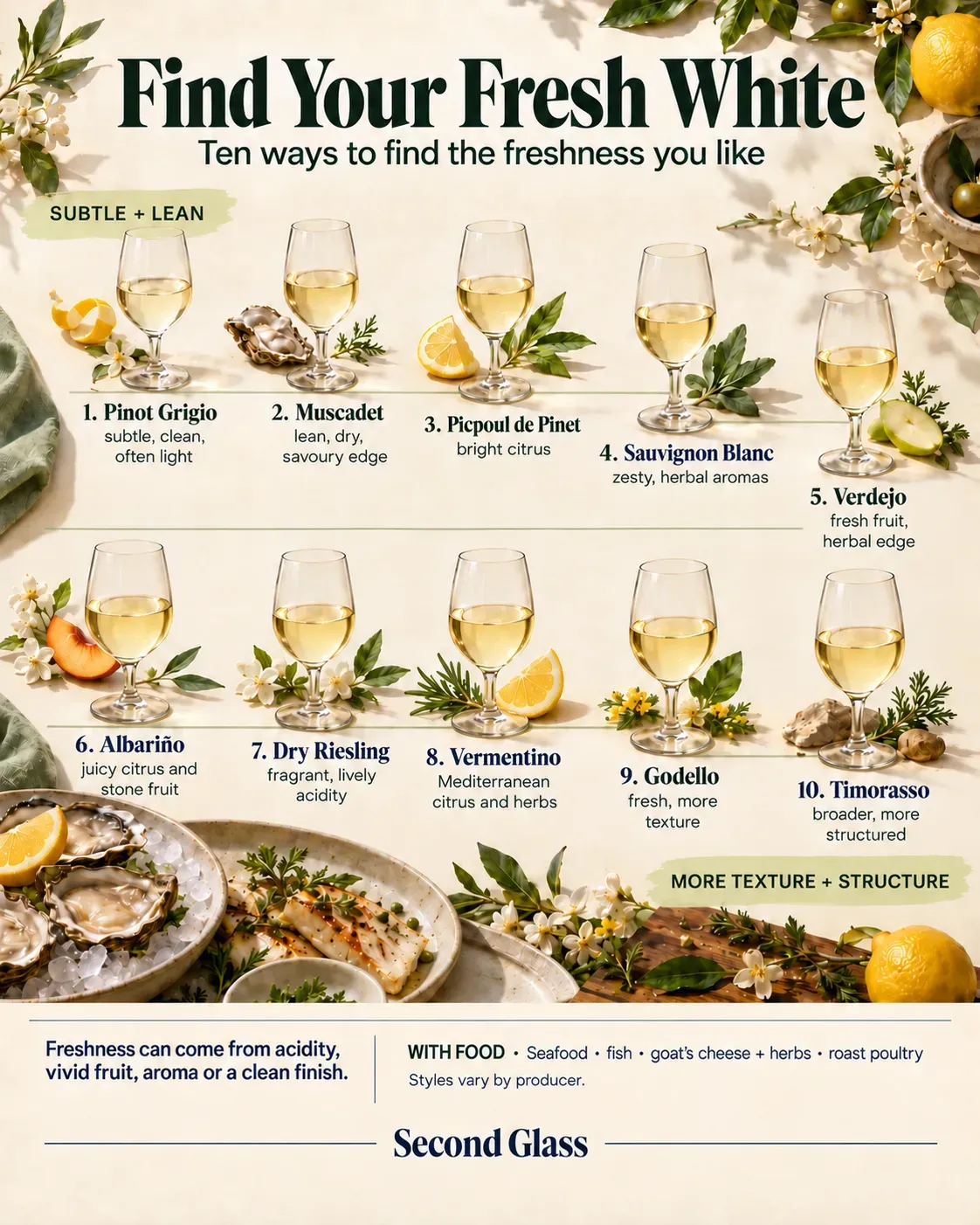
Choose the kind of freshness you enjoy: lean and crisp, citrus-led, herbal and aromatic, or fresh with more texture.
1. Pinot Grigio: Subtle and Easy-Drinking
Best for: a subtle, easy-drinking white
Pinot Grigio is a gentle starting point if you want a white that feels clean and understated. It is often light to medium in body, with fruit that stays on the quieter side.
You may find flavours of:
- Pear
- Apple
- Citrus
Some bottles are very light and simple; others have more flavour and texture. If you enjoy Pinot Grigio but want more detail, try comparing bottles from different regions or at different price points.
Try it with: grilled fish, light pasta, salads or an aperitif.
2. Muscadet: Lean and Savoury
Best for: a lean, dry white with a savoury edge
Muscadet is made from Melon de Bourgogne in the western Loire. It is often dry and light, with delicate fruit and a crisp finish that can seem saline.
Look for impressions of:
- Delicate fruit
- White flowers
- Salinity
Some Muscadet is aged on its lees, which can add texture while keeping the wine fresh. If you enjoy a lean white but want something with a little more breadth, a lees-aged bottle can be an interesting next step.
Try it with: oysters, mussels, prawns or simply cooked white fish.
3. Picpoul de Pinet: Citrusy and Bright
Best for: a bright, citrus-led white
Picpoul de Pinet comes from the Languedoc in southern France. It is a useful choice when you want a dry white with a lively citrus impression. Its sunny home does not prevent the finished wine from feeling crisp and refreshing.
You may find flavours of:
- Lemon
- Other citrus
- Fresh fruit
Picpoul is a good option if you want a direct, refreshing style to serve with food or pour as an aperitif.
Try it with: seafood, grilled fish, tomato salads or salty snacks.
4. Sauvignon Blanc: Zesty and Aromatic
Best for: a zesty white with aromatic character
Sauvignon Blanc is one of the most recognisable fresh white styles. Depending on its origin, it can range from restrained and precise to overtly aromatic.
Common impressions include:
- Lemon and grapefruit
- Green fruit
- Cut grass
- Fresh herbs
Loire examples can be restrained and precise, while New Zealand styles are often more overtly aromatic. Both regions vary, so the grape name alone cannot tell you exactly what will be in the glass.
Try it with: goat’s cheese, green vegetables, salads or fish with herbs.
5. Verdejo: Herbal and Broadly Appealing
Best for: fresh fruit with a herbal edge
Verdejo from Spain’s Rueda region often combines citrus and fresh fruit with herbal character. It can make a useful alternative if you enjoy Sauvignon Blanc but want to explore another grape.
You may find:
- Citrus
- Fresh fruit
- Herbal notes
Some examples feel light and brisk; others have more weight or a slightly rounded texture. Check the grape on the label or retailer listing if you are looking specifically for Verdejo.
Try it with: tapas, grilled vegetables, chicken or seafood.
6. Albariño: Juicy and Textured
Best for: juicy fruit with a little more breadth
Albariño is closely associated with Rías Baixas in north-west Spain. It can be broader and more generous than a very lean white, while still finishing with freshness.
You may find flavours and aromas such as:
- Citrus
- Stone fruit
- Flowers
- Gentle savoury notes
If you like crisp whites but want more fruit and texture, Albariño is a useful style to explore. Check for the grape name on the label or retailer listing; a regional name alone does not always guarantee it.
Try it with: prawns, squid, fish tacos or a seafood rice dish.
7. Dry Riesling: Fragrant and Precise
Best for: fragrance and lively acidity
Dry Riesling is a good choice when you want a white with more aroma. It can pair floral character with a lively impression, and the grape is made in a range of sweetness levels.
You may find notes of:
- Citrus
- Green apple
- Flowers
“Riesling” by itself does not tell you whether the wine is dry. Check the label or retailer listing for its sweetness information if you want a dry style.
Try it with: roast chicken, pork, aromatic herbs or gently spiced food.
8. Vermentino: Mediterranean and Herbal
Best for: Mediterranean citrus and herbal character
Vermentino is grown in several Mediterranean regions, including Sardinia and Liguria. It can combine citrus and white flowers with herbs, sometimes alongside a savoury or saline impression.
Look for:
- Citrus
- White flowers
- Herbs
- A savoury or saline note
The style changes with its origin, so a Sardinian Vermentino may not taste exactly like one from Liguria. It is a good option if you want freshness with a distinctly herbal character.
Try it with: grilled fish, seafood pasta, courgettes or herb-led dishes.
9. Godello: Freshness with More Texture
Best for: freshness, floral notes and more texture
Godello is strongly associated with Galicia in north-west Spain, particularly Valdeorras. Alongside its freshness and texture, Valdeorras examples can show floral notes and fruit such as apple or pear. The exact balance varies by bottle.
You may find:
- Apple or pear
- Floral notes
- A broader, more structured feel than a very light white
Godello is worth exploring if you want a lively wine that still feels substantial at the table. Check for the grape name on the label or retailer listing; a regional name alone does not always guarantee it.
Try it with: roast chicken, grilled fish, creamy vegetable dishes or richer seafood.
10. Timorasso: Structured and More Complex
Best for: structure, breadth and more depth
Timorasso comes from Piedmont’s Colli Tortonesi, where wines may also be labelled Derthona. Depending on the bottle and its age, aromas can include citrus, tree or tropical fruit, flowers and, with development, honeyed or nutty notes. A lively, savoury impression can accompany its broader texture.
You may find:
- Citrus or tree fruit
- Floral notes
- A savoury, mineral impression
- Honeyed or nutty notes in some developed examples
Choose Timorasso when you want freshness alongside more depth, rather than a simple, light aperitif wine. Derthona is a useful label cue, but check the grape name or retailer listing to confirm the wine.
Try it with: roast poultry, richer fish, mushrooms or aged hard cheese.
Why Do Fresh White Wines Differ?
Acidity is one of the main reasons a white wine feels lively: it gives the mouth a mouth-watering sensation. But acidity is only part of the picture. Fruit character, aroma, alcohol, texture and the finish also shape whether a wine seems fresh.
Grape variety influences the flavours a wine can develop. Sauvignon Blanc may show citrus and herbal notes; Pinot Grigio is often more restrained; Riesling can combine acidity with floral or citrus aromas. These are tendencies, not guarantees.
Climate, Winemaking and Ageing
Cooler growing conditions often help grapes retain acidity, while warmer conditions can bring riper fruit and a broader impression. Vineyard site, harvest timing and winemaking also shape the result.
Fermentation in stainless steel is often used to preserve clean fruit character, while lees ageing can add texture. Oak may make a wine feel broader or add savoury flavours, but oak does not automatically remove freshness.
Many fresh whites are made to be enjoyed young, when their fruit and lively character are prominent. Some can develop with bottle age, gaining more complex aromas and softer edges. Freshness alone does not tell you how long a wine will improve, so follow the style, producer guidance and vintage rather than assuming every crisp white is for immediate drinking.
How to serve Fresh White Wine
White
Pinot Grigio
7–10°C 45–50°F
Serve chilled to keep its light citrus and pear character fresh. Let a very cold glass warm slightly if the aromas seem muted.
White
Muscadet
7–10°C 45–50°F
Serve chilled to emphasise its light body, acidity and saline freshness.
White
Picpoul de Pinet
7–10°C 45–50°F
Serve chilled to foreground its lemony acidity and saline, seafood-friendly freshness.
White
Sauvignon Blanc
8–10°C 46–50°F
Serve chilled to retain its acidity, then allow a little warmth for its citrus and herbaceous aromas.
White
Verdejo
8–10°C 46–50°F
Serve chilled to keep its citrus, herb and lightly bitter finish crisp.
White
Albariño
8–10°C 46–50°F
Serve chilled to keep its acidity bright, but avoid over-chilling or its peach and citrus aromas can become muted.
White
Dry Riesling
8–10°C 46–50°F
Serve chilled, then let it warm gently in the glass. This preserves freshness without hiding Riesling's aromatic detail.
White
Vermentino
8–11°C 46–52°F
Serve chilled, not frozen-cold, to retain its citrus, herbal and saline Mediterranean character.
White
Godello
9–12°C 48–54°F
Serve cool, allowing richer examples to warm slightly so their texture and mineral character can show.
White
Timorasso
10–12°C 50–54°F
Serve cool rather than ice-cold. Let the glass warm gently so the wine's fruit, structure and savoury complexity can emerge.
Match the wine to the dish’s weight and seasoning
Lighter dishes
- Oysters and mussels
- Simply cooked white fish
- Salads and grilled vegetables
Delicate fish, shellfish and lighter preparations tend to suit leaner whites.
Richer and more aromatic dishes
- Richer fish and seafood
- Roast poultry
- Herb-led dishes
More texture can suit richer food, while aromatic wines can complement herbs and tangy flavours. A fragrant off-dry Riesling may feel more comfortable with noticeable spice than a very dry white.
Pairings to approach carefully
Intensely flavoured sauces or strongly smoked food can overwhelm a delicate wine. Pronounced sweetness can make a very dry wine seem sharper. Preparation and personal taste can change the match.
Buying Guide
Prices vary by retailer, region, vintage and promotions. These ranges are practical guideposts for a 75cl bottle rather than fixed quality thresholds.
Budget (£8–£14 / $10–$18)
This range can offer enjoyable, straightforward wines for weeknight drinking. Look for clean fruit and a style you already know you like, such as Pinot Grigio, Muscadet or Sauvignon Blanc. The wines are generally intended for drinking young and are not usually bought for long-term ageing. Spending a little more may bring greater detail, texture or a more distinctive regional character.
Mid-Range (£15–£25 / $19–$32)
This is a useful range for exploring regional character and more carefully made examples. You may find greater concentration, a longer finish or added texture from lees ageing. Some bottles can develop for a few years, but check the style and producer’s advice rather than assuming they will improve. Spend more when you want a particular region, a more expressive style or more depth at the table.
Premium (£26+ / $33+)
Premium fresh whites can show greater complexity, concentration and site character while retaining lively acidity. They may come from particularly regarded sites or use more detailed vineyard and cellar work. Some can age well, although many are still enjoyable young. Pay more for complexity and a clear sense of place, not simply for a more intense label or a famous name.
More fresh whites to explore
| Entity | Shared thread | How it differs |
|---|---|---|
| Chenin Blanc | Can be crisp and dry. | Also ranges into richer, off-dry and sparkling styles. |
| Grüner Veltliner | Often fresh and herbal. | Can have a distinctive savoury or peppery edge. |
| Assyrtiko | Can be dry and high in acidity. | Often has a firmer, more mineral impression. |
| Garganega | Can make a fresh, delicate white. | Soave often has a softer fruit profile than the most citrus-led wines here. |
| Chardonnay | Can be crisp and unoaked. | Can also be richer and oak-influenced. |
| Fiano | Can offer citrus and herbal character. | Usually has more body than a very lean white. |
And the clearest expression of that crisp unoaked Chardonnay is Chablis: If you associate Chardonnay with rich, oaky wines, try it out. Many examples are dry and lively, with citrus and green-fruit character; some have more texture, and oak use varies by producer and level. Also have a look at our side by side Comparison : Chablis vs Chardonnay: What's the Difference?.
Beginner Guidance
A side-by-side tasting is a simple way to find out which style you prefer.
How To Experiment
- Step 1 — Choose a Sauvignon Blanc and a Pinot Grigio at a similar price.
- Step 2 — Serve them at the same cool temperature in similar glasses.
- Step 3 — Taste each on its own and note the fruit, aroma, body and finish.
- Step 4 — Try both with the same food, such as grilled fish or a green salad.
- Step 5 — Decide whether you prefer the more aromatic wine or the subtler one, then use that preference to choose your next bottle.
Common Misconceptions
Fresh white wine always tastes of lemon
Citrus is common, but fresh whites can also show pear, apple, peach, flowers or herbs.
Fresh means low in alcohol
Freshness does not tell you the alcohol level; check the bottle if that matters to you.
Fresh whites are always unoaked
Oak can add breadth or savoury flavours without necessarily removing a wine’s lively character.
Fresh means simple
Some fresh whites, including Timorasso, can have more structure, depth and ageing potential.
A fresh white must be served icy cold
Very cold serving can mute aroma and flavour; cool is usually more useful than icy.
Questions about fresh white wine
Is fresh white wine the same as crisp white wine?
They’re related, but not identical. “Fresh” describes an overall lively impression, while “crisp” often suggests lively acidity and a clean finish.
Is crisp white wine always dry or citrusy?
No. “Dry” describes sweetness, and “citrusy” describes flavour and aroma. A wine can be crisp without being especially citrus-led, so check the label or retailer description for its sweetness and flavour style.
What does “sur lie” mean on a Muscadet?
It means the wine has been aged on its lees, the spent yeast cells left after fermentation. This can add texture to the wine.
Is Derthona a grape?
No. Derthona is a name associated with Timorasso wines from Colli Tortonesi in Piedmont.
What does “off-dry” mean?
It describes a wine with a slight impression of sweetness. Riesling is made in both dry and off-dry styles, so check the bottle details if you have a preference.
Can a fresh white wine be aged?
Some can. Ageing potential depends on the grape, region, vintage and winemaking, so follow guidance for the specific bottle.
Can an oak-aged white still taste fresh?
Yes. Oak can add breadth or savoury flavours without necessarily removing a wine’s lively character.
What temperature should I serve these fresh white wines?
Serve the lighter styles, such as Pinot Grigio, Muscadet and Picpoul de Pinet, well chilled at about 7–10°C. More textured Godello and Timorasso show better a little warmer, around 9–12°C and 10–12°C respectively. If a wine tastes muted straight from the fridge, let it warm gently in the glass.
Final Thoughts
Fresh white wine ranges from subtle Pinot Grigio and lean Muscadet to aromatic Sauvignon Blanc, textured Godello and structured Timorasso. Start with the style you already enjoy, then use its grape and region to find your next bottle.