
Choose Champagne for the dish
The preparation can change the best match: cream calls for more roundness, truffle for development and body, and dessert for enough sweetness.
Introduction
Champagne suits more than a toast. Here are eight food pairings, with styles chosen for the dish’s richness, flavour and sweetness.
Why these dishes work with Champagne
Match Champagne's sweetness, body and development to the dish, using acidity and bubbles to refresh the palate.
- Acidity and bubbles refresh after fat, salt and fried textures.
- A fuller or more developed Champagne can meet truffle and robust cheese.
- Rosé can complement roast duck, especially with red-fruit sauce.
- Choose Champagne that tastes sweet enough to accompany dessert.
- Preparation matters: cream, sauce, lemon, salt and spice can shift the match.
Classic Pairings: 8 Dishes to Try
1. Oysters with Brut Nature
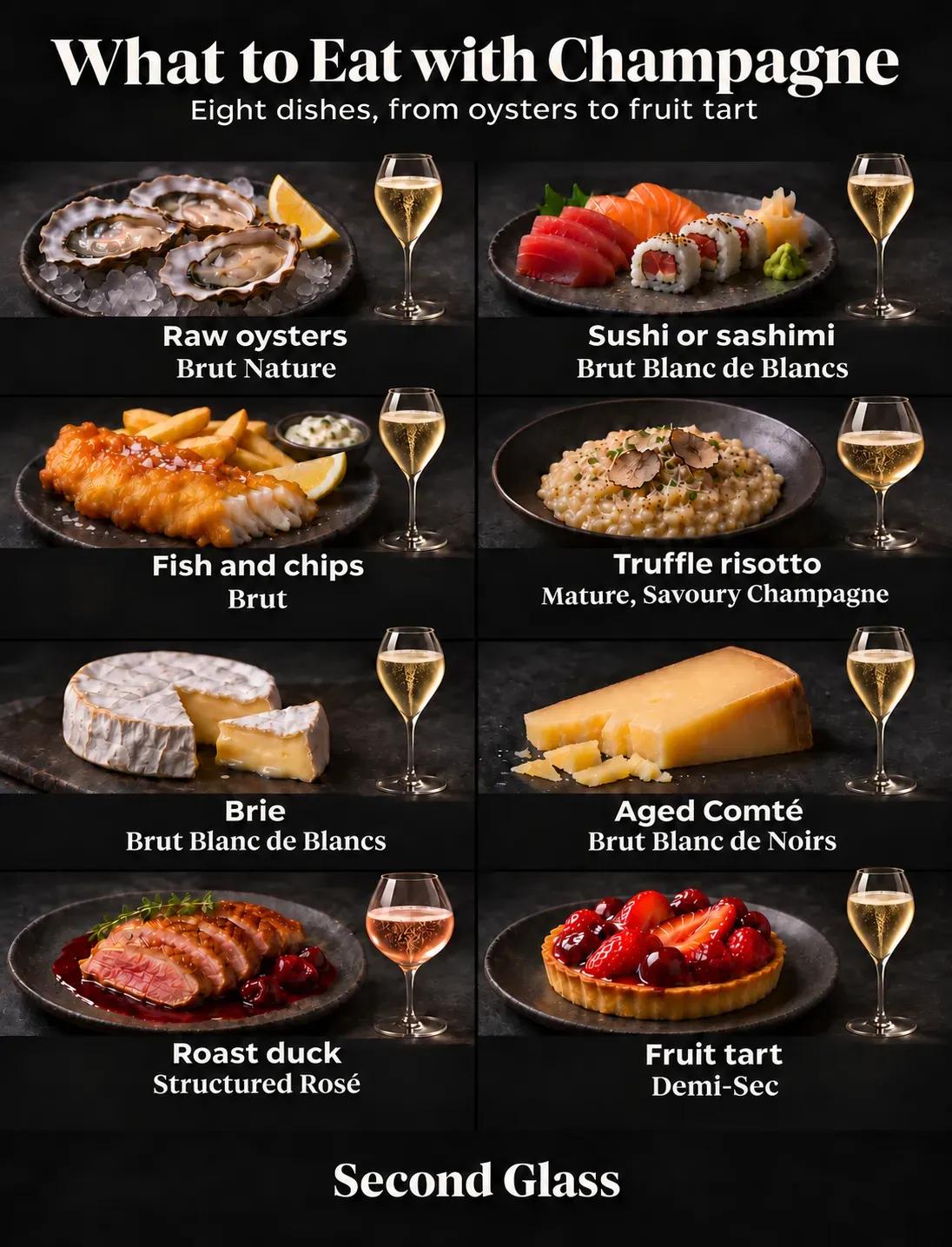
For raw oysters, try a Chardonnay-led Brut Nature or a dry Blanc de Blancs. The wine’s crispness and bubbles bring a clean contrast to the oyster’s soft, briny texture. Add lemon sparingly: a very acidic dressing can make a dry Champagne seem sharper. If the oysters are warm and served with cream, choose a rounder Brut instead. See our Seafood Pairing Guide.
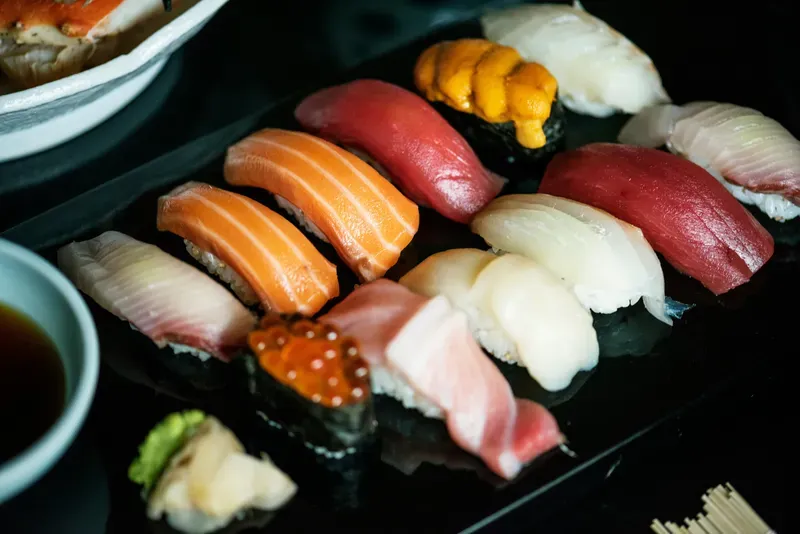
2. Sushi or Sashimi with Blanc de Blancs
A Brut Blanc de Blancs is a good partner for salmon or tuna sushi, sashimi and other simply seasoned fish. Its freshness suits the clean flavour of the fish, while the bubbles offer a light contrast to salmon’s oiliness. Keep soy sauce measured and avoid piling on wasabi; strong salt and heat can dominate delicate Champagne. For richer fish or a creamy sauce, choose a fuller Brut. See our Salmon Pairing Guide.
3. Tempura or Fish and Chips with Brut
A lively non-vintage Brut is a versatile match for tempura, fried fish or chips. Acidity and bubbles refresh the palate after the crisp batter and oil, while the wine has enough flavour to avoid disappearing beside the crunch. Choose a straightforward Brut rather than a very delicate, low-intensity bottle. Salt the food moderately and serve sauces on the side so they do not bury the wine.
4. Truffle Risotto with Developed, Savoury Champagne
Truffle calls for developed, savoury flavours and enough body. Try a mature Pinot Noir-led vintage or a longer-aged non-vintage Blanc de Noirs cuvée alongside a restrained truffle risotto. Developed, toasted and mushroom-like notes can sit more comfortably with truffle than a young, fruit-led wine. Keep the dish focused: butter, Parmesan and rice are welcome, but a heavy pour of truffle oil can overwhelm both food and wine. See our Mushroom Pairing Guide.
5. Creamy Cheese with Blanc de Blancs
Brie, Chaource or another soft, creamy cheese can work with a fresh Brut Blanc de Blancs. Its acidity cuts through the rich texture, while the cheese softens the wine’s crisp edge. Let the cheese come towards room temperature and choose a Champagne with enough body to meet its creaminess. Very ripe, ammoniated cheese may overwhelm a delicate bottle. See our Cheese Pairing Guide.
6. Comté or a More Robust Cheese with Blanc de Noirs
For aged Comté, Gruyère or a savoury, full-flavoured cheese, try a more vinous Brut Blanc de Noirs. Pinot Noir and Meunier can give the wine more body, which helps it hold its own beside concentrated, nutty or savoury flavours. Blue cheese is more difficult: its salt and intensity can swamp dry Champagne. Try Demi-Sec Rosé with a small piece first. See our Cheese Pairing Guide.
7. Roast Duck with Rosé Champagne
Rosé Champagne can bridge roast duck’s browned skin and savoury meat, especially when the dish includes cherries, redcurrants or a gentle spice. Choose a structured rosé for duck breast or a richer preparation; a lighter rosé suits simpler poultry. Keep sweet sauces balanced rather than syrupy. If you are serving plain roast chicken instead, a Brut Blanc de Noirs is another good route. See our Roast Chicken Pairing Guide.
8. Fruit Tart or Pistachio Dessert with Demi-Sec
Choose a white or rosé Demi-Sec with fruit tart, pistachio pastry, fruit crumble or a creamy dessert. Its sweetness is better placed beside pudding than a dry Brut, which can taste austere by comparison. Match the dessert’s sweetness: if the pudding is very sweet, choose a Champagne that tastes sweet enough to stand beside it. Chocolate-heavy desserts are harder; try Demi-Sec only if the chocolate is gentle and the wine has enough richness. See our Sweet Pies Pairing Guide.
How to Choose Champagne for Food
Champagne labels describe more than one feature. Brut, Brut Nature and Demi-Sec tell you about sweetness; Blanc de Blancs, Blanc de Noirs and rosé describe grape or colour style. The terms can appear together, as in Brut Blanc de Blancs or Demi-Sec Rosé. Brut Nature means under 3 g/L of sugar, with no sugar added after the second fermentation. Demi-Sec is sweeter than Brut.
For the match, balance the dish’s weight and flavour with the Champagne’s intensity. Acidity and bubbles refresh the palate after fat and salt; a fuller, developed wine can stand beside truffle or robust cheese; and a Champagne should taste sweet enough for dessert. These are starting points: producer, ageing, dosage and preparation all affect the result.
Alternative Pairings
- Scallops or simply cooked white fish: try Blanc de Blancs for its freshness; use a richer Brut if the dish has butter or cream.
- Charcuterie and cured ham: rosé or a fuller Brut can meet the savoury flavour and salt. Choose by the meat’s richness.
- A fruity, mildly spicy dish: rosé or Demi-Sec may work better than a very dry Champagne, particularly where the sauce is sweet-sour.
- Fried chicken: Its crispy, golden coating and a richer profile pair well with Blanc de Blancs Champagne, even better with a side of caviar. See our Roast Chicken Pairing Guide.
Champagne Pairings by Occasion
- Aperitif: non-vintage Brut or Blanc de Blancs with lightly salted snacks or nuts.
- Dinner: one Brut can carry several courses; switch styles when a particular dish or dessert calls for it.
- Christmas and New Year: smoked salmon blinis, canapés, turkey and a cheese board all work with Blanc de Blancs or a non-vintage Brut. Switch to Demi-Sec for Christmas pudding.
Buying Guide
Budget
£24–£45 per 75cl bottle. Start with non-vintage Brut for flexibility, or choose by the dish: Blanc de Blancs for seafood and creamy cheese, rosé for duck, or Demi-Sec for dessert.
Mid-Range
£45–£90 per 75cl bottle. Look for a distinctive grape-led style, such as Blanc de Noirs or rosé, or a longer-aged cuvée. Check the merchant’s notes for body and developed savoury flavours if you are buying for truffle.
Premium
£90–£250+ per 75cl bottle. Mature vintage and prestige cuvées become more common here, but price alone does not guarantee a better match. For truffle, favour a developed, savoury Champagne with enough body; for duck, choose a structured rosé; for dessert, buy Demi-Sec, or Sec for a lightly sweet pudding.
Shopping by dish: For truffle, look for mature or longer-aged Champagne with savoury flavour and body or a Blanc de Noirs. For duck, choose a structured rosé. For dessert, choose Demi-Sec, or Sec for a lightly sweet pudding.
Try it yourself: a two-bottle dinner
For one bottle across several courses, start with non-vintage Brut. For a more focused match, choose Brut Nature or Blanc de Blancs with shellfish, Blanc de Noirs or a mature Pinot Noir-led Champagne with truffle or robust cheese, rosé with duck, and Demi-Sec with fruit dessert.
How To Experiment
- Step 1 — Choose one food, such as Brie, Comté, a plain oyster or a small piece of fruit tart, and keep its preparation simple.
- Step 2 — Pour two Champagnes side by side: compare Blanc de Blancs with Blanc de Noirs for cheese, or Brut with Demi-Sec for dessert.
- Step 3 — Taste each wine on its own, then with the food. Notice whether it feels sharper, softer, fuller or less aromatic after the bite.
- Step 4 — Repeat with a small change, such as a touch of lemon on the oyster or a little honey with the cheese. Note which detail changes the pairing most.
Common Misconceptions
Champagne is only for celebrations
Its acidity, bubbles and range of styles make it useful with a meal, not just as a toast.
Brut means sugar-free
Brut is a sweetness category under 12 g/L; Brut Nature is a separate, much drier category.
All Champagne is light and delicate
Blanc de Noirs, rosé and mature vintage Champagne can be fuller and more structured.
Champagne cannot work with dessert
A suitably sweet Demi-Sec can pair well with fruit, cream and pastry desserts.
Questions about Champagne food pairing
Does Champagne pair with cheese?
Yes. Try Blanc de Blancs with soft, creamy cheeses and a fuller Blanc de Noirs with aged Comté or another savoury cheese. For blue cheese, try Demi-Sec Rosé with a small piece first.
What Champagne goes with truffle?
Look for developed, savoury flavours and enough body. A mature Pinot Noir-led vintage or a longer-aged non-vintage cuvée can both work. Keep the dish simple enough for both food and wine to show.
Is Brut Nature good with oysters?
It can be. A Chardonnay-led Brut Nature or Brut Blanc de Blancs suits raw oysters. If oysters are served warm with cream, choose a rounder Brut.
What Champagne should I serve with dessert?
Demi-Sec is a good starting point for fruit, cream, pastry or pistachio desserts. Sec can suit a lightly sweet pudding. Choose Champagne that tastes at least as sweet as the dish.
What Champagne goes with roast duck?
Rosé Champagne is a good place to start, especially with duck breast or a berry sauce. Choose a style with enough body for the richness of the meat and sauce.
What Champagne goes with tempura?
A lively non-vintage Brut is a good starting point. Its acidity and bubbles refresh the palate after crisp batter and oil; serve sauces on the side and salt moderately.
Can I serve one Champagne with a whole meal?
A non-vintage Brut is the most flexible starting point across savoury courses. If dessert is part of the meal, a dry Brut may taste sharper beside it, so consider changing to Demi-Sec or Sec to match the pudding's sweetness.
Final Thoughts
Start with the food, then choose the Champagne style: dry for shellfish, developed and savoury for truffle, rosé for duck and Demi-Sec for dessert.