
Blanc de Noirs Champagne at a glance
Ripe fruit and a rounded, lively palate, with toastier notes in some aged examples.
Non-vintage Brut Blanc de Noirs Champagne; it often has more body than blends containing white grapes, while grape balance, site and age shape the style.
Look
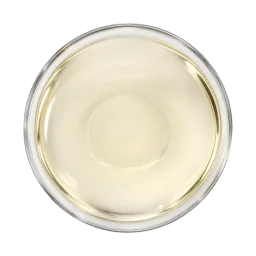
Pale straw
Pale
Young examples may be pale straw; some deepen towards yellow gold with age.
Palate
-
Body
Medium to full
Can feel rounded and broad, with freshness giving lift.
-
Acidity
Medium-high to high
Freshness is prominent, though its intensity varies.
-
Tannin
Very low
Usually little noticeable tannic grip in this white sparkling style.
-
Sweetness
Dry
This is the dry Brut example; other sweetness categories are possible.
-
Alcohol
Medium
Alcohol impression is medium in this representative profile.
Texture
Fine, lively mousse; the palate may feel rounded or vinous.
Recognisable aromas
Typically
-
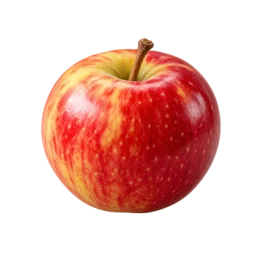 Apple
-
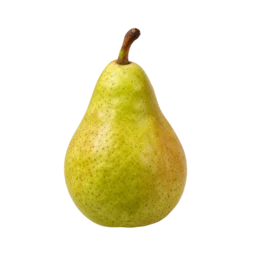 Pear
-
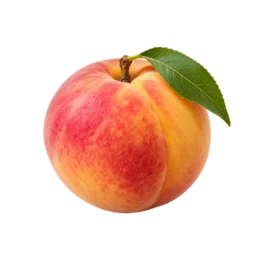 Peach
Ripe orchard and stone fruits are possible cues.
Also: red fruit, citrus and floral notes
With age
-
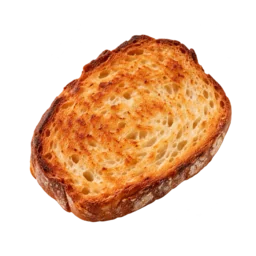 Toast
-
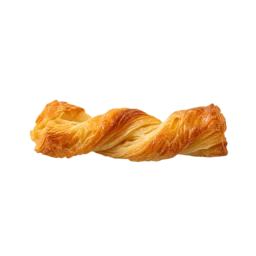 Pastry
-
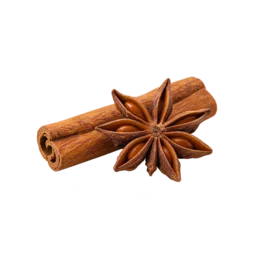 Spice
With more time on the lees or in bottle, some examples show toast, pastry and spice.
Also: savoury notes
Key Takeaways
- Blanc de Noirs means “white from black”: the Champagne is made only from black-skinned grapes.
- In Champagne, those grapes are Pinot Noir, Pinot Meunier or a blend of the two.
- Pressing limits skin contact, so the juice can make a white wine rather than a red one.
- Blanc de Noirs does not specify sweetness, vintage status or quality.
- A fuller, ripe-fruited style can work especially well with roast poultry, creamy dishes and fried food.
Introduction
Champagne made from black grapes can be a useful choice when you want bubbles with a little more weight at the table. The name tells you which colour of grapes were used; it does not tell you whether the wine is dry, rich, vintage-dated or made from one grape rather than two.
This guide focuses on Champagne. Blanc de Noirs also appears on sparkling wines from other regions, where the local grape rules may be different. For the white-grape counterpart, see Blanc de Blancs Champagne.
What Is Blanc de Noirs Champagne?
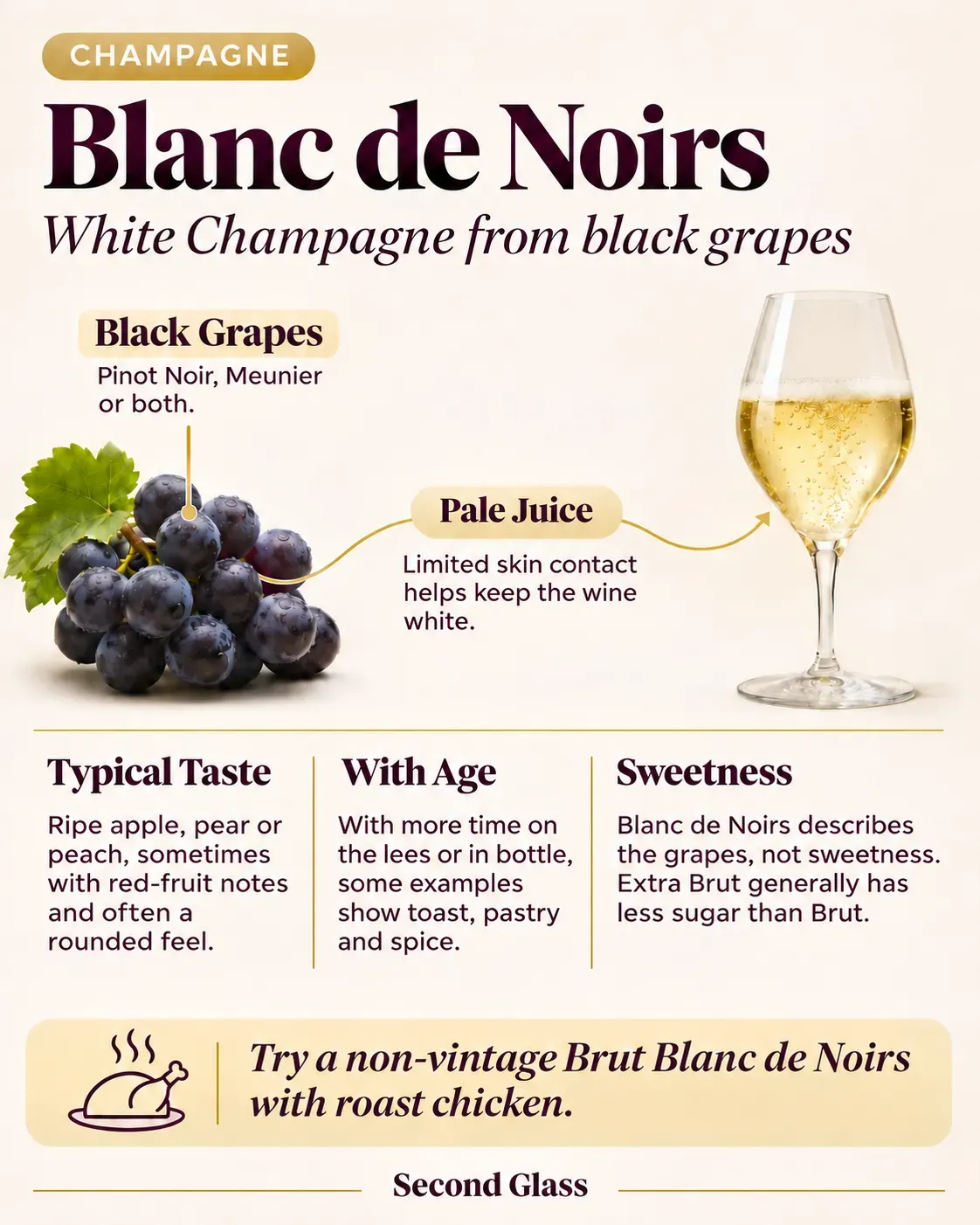
Blanc de Noirs means “white from black”. In Champagne, the term identifies a white wine made exclusively from black-skinned grape varieties: Pinot Noir, Meunier or both. The grapes’ flesh and juice are pale; colour comes mainly from contact with the skins. Pressing is managed to limit that contact and keep the wine white. (Champagne.fr; Champagne.fr on grape varieties)
The term describes grape composition, not a single recipe. A Champagne Blanc de Noirs may use one of the two grapes or both; it may be non-vintage or vintage-dated, and its sweetness depends on the dosage and label category. Outside Champagne, the words can describe sparkling wines made under different regional rules.
Important grapes in Blanc de Noirs Champagne
-
Pinot Noir
- Style
- May be used alone or alongside Meunier in Champagne Blanc de Noirs.
- Flavour profile
- Can bring ripe apple, peach and red-fruit notes; the finished wine varies with site and production choices.
- Structure
- Often associated with more body and structure, but does not determine the finished wine on its own.
- Food pairings
- A fuller Blanc de Noirs expression can suit roast chicken, mushrooms or creamy risotto.
-
Pinot Meunier
- Style
- May be used alone or alongside Pinot Noir in Champagne Blanc de Noirs.
- Flavour profile
- Can bring a rounded impression and fruit such as apple, pear and other ripe fruit.
- Structure
- Can contribute a softer, more generous feel; the result depends on the whole wine.
- Food pairings
- A fruit-forward expression can suit roast pork, savoury pastries or fried food.
What Does Blanc de Noirs Champagne Taste Like?
Look for ripe fruit, such as apple, pear or peach, alongside possible red-fruit notes. Some bottles show citrus or floral touches; others lean towards toast, pastry or spice, especially with more time on the lees or in bottle. These are possible cues, not a checklist every bottle should match. (Champagne.fr)
The name alone cannot tell you whether the wine will taste brisk and citrus-led or rounded and powerful. The grape balance, growing site, vintage, cellar choices and dosage all matter. A fruity impression also does not necessarily mean the Champagne is sweet: use its sweetness term, such as Brut or Extra Brut, as a more useful clue.
Why Does It Taste Like This?
Pinot Noir and Meunier bring different tendencies, but neither dictates a fixed flavour. The Champagne region describes Pinot Noir as contributing body and punch, while Meunier is associated with roundness and an indulgent texture. The finished wine still reflects the producer’s choices and the fruit from the sites used. (Champagne.fr)
As with other Champagnes, lees ageing and bottle development can add savoury, toasted notes over time. Dosage—the addition of wine and sugar after disgorgement and before final corking—helps determine the sweetness category. It is separate from whether the wine is Blanc de Noirs or Blanc de Blancs. (Champagne.fr)
Styles and Regional Expressions
Champagne Blanc de Noirs can be made from Pinot Noir, Meunier or both. A bottle made entirely from Pinot Noir may present a different balance from one made entirely from Meunier or from a blend, but the label term alone does not tell you the proportions.
The Côte des Bar in the south of Champagne is particularly associated with Pinot Noir, while Meunier is widely grown in the Marne Valley. These are useful regional clues, not guarantees: a producer can use grapes from more than one area, and the label may not give you the full blend details.
How To Read the Label
- Blanc de Noirs: The wine is made exclusively from black-skinned grapes. In Champagne, that means Pinot Noir, Meunier or both.
- Brut, Extra Brut or another sweetness category: This tells you more about sweetness than Blanc de Noirs does. Brut and Extra Brut are both dry categories, with Extra Brut generally lower in sugar.
- NV or non-vintage: No vintage year is declared on the label. These wines usually blend more than one harvest. NV does not mean the Champagne lacks age or complexity.
- Vintage or millésimé: The wine is made from a declared harvest year. The word alone does not guarantee that it will be richer or better suited to ageing.
- Pinot Noir or Meunier on the label: This can tell you which grape or grapes were used when the producer provides that detail, but the blend proportions may still be unstated.
Neither a Grand Cru or Premier Cru designation nor a higher price guarantees that you will prefer the wine. Use grape details, sweetness category and a trusted merchant’s description to narrow your choice.
How to serve Blanc de Noirs Champagne
Sparkling
Blanc de Noirs Champagne
8–11°C 46–52°F
Serve chilled, then let it warm briefly in a tulip-shaped sparkling glass or small white-wine glass so its aromas can show.
What to eat with Blanc de Noirs Champagne
Ideal pairings
- Roast chicken or turkey: the wine's body and bubbles work well with savoury roasted skin and juicy meat.
- Creamy mushroom risotto: a richer expression can meet the dish's weight, while acidity helps keep each bite from feeling too heavy.
- Pâté en croûte or savoury pastry: freshness lifts buttery pastry, and the fruit can suit the filling.
- Crispy fried chicken: bubbles and acidity refresh the palate between crisp, salty bites.
Everyday pairings
- Salted crisps or potato chips: salt and crunch make an easy match for a dry, fresh bottle.
- Mature cheddar or Comté: a rounded style can suit savoury cheese, though very salty or sharp cheese may make a lean Champagne seem sharper.
- Smoked salmon on toast: bubbles and freshness suit the salt and richness, particularly in a less powerful style.
Pairings to approach carefully
Very sweet desserts can make a dry Champagne taste lean and sharp; choose a sweeter Champagne with dessert. Hot chilli can emphasise alcohol and make the wine feel less refreshing, so keep the heat moderate or choose a gentler preparation.
Champagne and sparkling wines to compare
| Shared thread | How it differs | |
|---|---|---|
| Blanc de Blancs ChampagneChampagne, France | Like Blanc de Noirs, it is white Champagne named for its grape composition. | It is made only from white grapes and is often more citrus-led and taut. |
| White-and-black-grape Champagne blendChampagne, France | It shares Champagne's traditional-method bubbles and can include black grapes. | It combines white and black grapes rather than using black grapes exclusively. |
| Rosé ChampagneChampagne, France | It shares Champagne's sparkling-wine production and may use black grapes. | It is pink; Blanc de Noirs specifically describes a white Champagne. |
| Crémant de Bourgogne Blanc de NoirsBurgundy, France | It is another white sparkling wine labelled Blanc de Noirs. | It follows Burgundy's rules, which allow black grapes such as Pinot Noir and Gamay. |
Buying Guide
Prices below are indicative for 750 ml bottles, based on UK and US retail listings checked in November 2026. Prices, stock and local taxes vary; promotions are excluded where identifiable.
Budget (£20–30 / $45–65)
At this level, look for a non-vintage Brut with Blanc de Noirs clearly stated on the label. It can be a straightforward introduction to the style, often with ripe fruit and a simple, fresh finish. Check the sweetness category and any grape details rather than assuming the wine is sweet or made from one grape. Current UK listings include bottles around £25, while US listings start in the mid-$50s.
Mid-Range (£30–60 / $65–100)
This range gives you more choice among single-grape and blended examples, different sweetness categories and more specific vineyard or village descriptions. Look for clear information about grape composition, harvest year or disgorgement if those details matter to you. Spending more may bring extra complexity or a particular expression, but it does not guarantee a better match for your taste. UK examples can be found around £45–55, and US listings include bottles around $70.
Premium (£60–150+/$100–200+)
At this level, you are more likely to encounter vintage-dated or more distinctive cuvées, including wines from specific villages or with longer ageing. Read the technical details and producer notes to understand what makes the bottle different, rather than relying on the price alone. Consider this tier when you already know you enjoy the style or want a more individual bottle for a meal or celebration. Retail listings extend above £60 in the UK and $100 in the US, with some prestige bottles priced higher.
A first Blanc de Noirs to try
Start with a non-vintage Brut Blanc de Noirs Champagne. Notice whether the fruit seems more like apple and pear or red berries, then pay attention to how the bubbles and body feel alongside the fruit.
Try it side by side
- Step 1 — Choose a Blanc de Noirs and a Blanc de Blancs at a similar price, sweetness category and maturity, if you can.
- Step 2 — Chill both to the same temperature and pour them into similar tulip-shaped glasses.
- Step 3 — Compare the fruit, acidity, body and finish. Note which wine feels more rounded and which feels more citrus-led or taut.
- Step 4 — Try each with the same food, such as salted crisps or roast chicken, and see which you prefer at the table.
The comparison can highlight differences between the bottles, but it cannot isolate grape variety by itself: vineyard, vintage and winemaking also shape each wine.
Common Misconceptions
Blanc de Noirs is red Champagne
No. The term describes white Champagne made from black-skinned grapes; careful pressing limits colour from the skins.
It must contain both Pinot Noir and Meunier
No. It can use either grape alone or a blend of both.
Blanc de Noirs means dry
No. The term describes grape colour, not sweetness. Check the dosage category on the label.
It will always taste of red berries
No. Fruit and structure vary with the grapes, vineyard, vintage and production choices.
Questions about Blanc de Noirs Champagne
Is Blanc de Noirs always Champagne?
No. The term is also used for sparkling wines made outside Champagne. The grape varieties and rules depend on the wine's region; in Champagne, Blanc de Noirs uses Pinot Noir, Meunier or both.
How should I store Blanc de Noirs Champagne after opening?
Seal the bottle with an airtight stopper made for sparkling wine and keep it in the fridge. Champagne's regional body says an opened bottle can keep for one or two days when promptly recorked with a suitable stopper. (Champagne.fr)
Does Blanc de Noirs Champagne need decanting?
Usually not. Pour it into a tulip-shaped or small white-wine glass to give it room to open. Decant only if you have a particular reason for that bottle and can pour gently; decanting can reduce its bubbles.
Should I choose Pinot Noir or Meunier?
Use grape information as a clue rather than a promise. Pinot Noir is often associated with more body and structure; Meunier can contribute roundness and fruit. Producer choices and growing sites also shape the result.
Does Blanc de Noirs Champagne go with seafood?
It can. A lighter, fresher example can suit grilled scallops or lobster. A fuller style may be better with roast poultry, mushrooms or creamy dishes.
Can I age Blanc de Noirs Champagne?
Some vintage or prestige examples can develop further, but the name alone does not tell you whether a bottle will improve with age. Many non-vintage bottles are intended to be enjoyed when bought.
Final Thoughts
If you enjoy Champagne with ripe fruit and a little more weight at the table, try a non-vintage Brut Blanc de Noirs. Compare it with a Blanc de Blancs at a similar sweetness and price, then choose the style you most enjoy with food.