
Blanc de Blancs Champagne at a glance
Fresh, citrusy and fine when young; toastier and creamier with age.
A typical young, non-vintage Brut Blanc de Blancs. Taste and texture vary with vineyard origin, producer and age.
Look
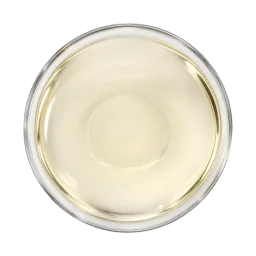
Pale straw
Pale
May be pale straw for young wine; some bottles show deeper gold, with maturity.
Palate
-
Body
Light to medium
Light and fine, with some examples showing more breadth.
-
Acidity
Medium to high
Freshness usually prominent, though its intensity varies.
-
Tannin
Very low
Tannin is very low and is not usually a prominent sensation.
-
Sweetness
Dry
Brut example; sweetness depends on dosage.
-
Alcohol
Medium
Alcohol presence is balanced in this style.
Texture
Fine bubbles; crisp when young in some examples, with a softer, creamier feel possible with maturity.
Recognisable aromas
In a young bottle
-
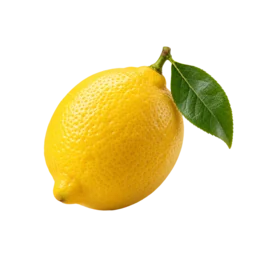 Lemon
-
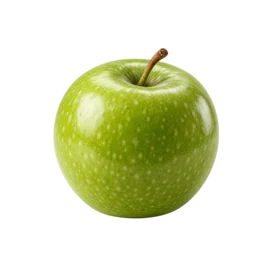 Green apple
Look first for fresh citrus, apple and a fine, lively feel.
Also: grapefruit, pear and white flowers; sometimes saline, chalky or flinty impressions
With age
-
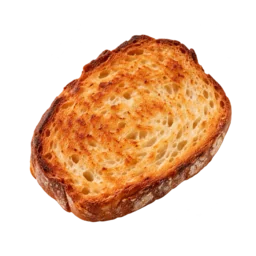 Toast
-
 Honey
Some examples become softer and show toast, nuts or honey; these are possibilities, not guarantees.
Also: biscuit, hazelnut and ripe apple; honeyed notes are possible as some examples mature
Introduction
If you like lively, fresh Champagne, Blanc de Blancs is a useful style to explore. Its name tells you something about the grapes, but not exactly how dry, light or mature the wine will taste.
This guide explains what the label means, what the style can taste like, and how to choose a bottle for an aperitif or a meal.
Key Takeaways
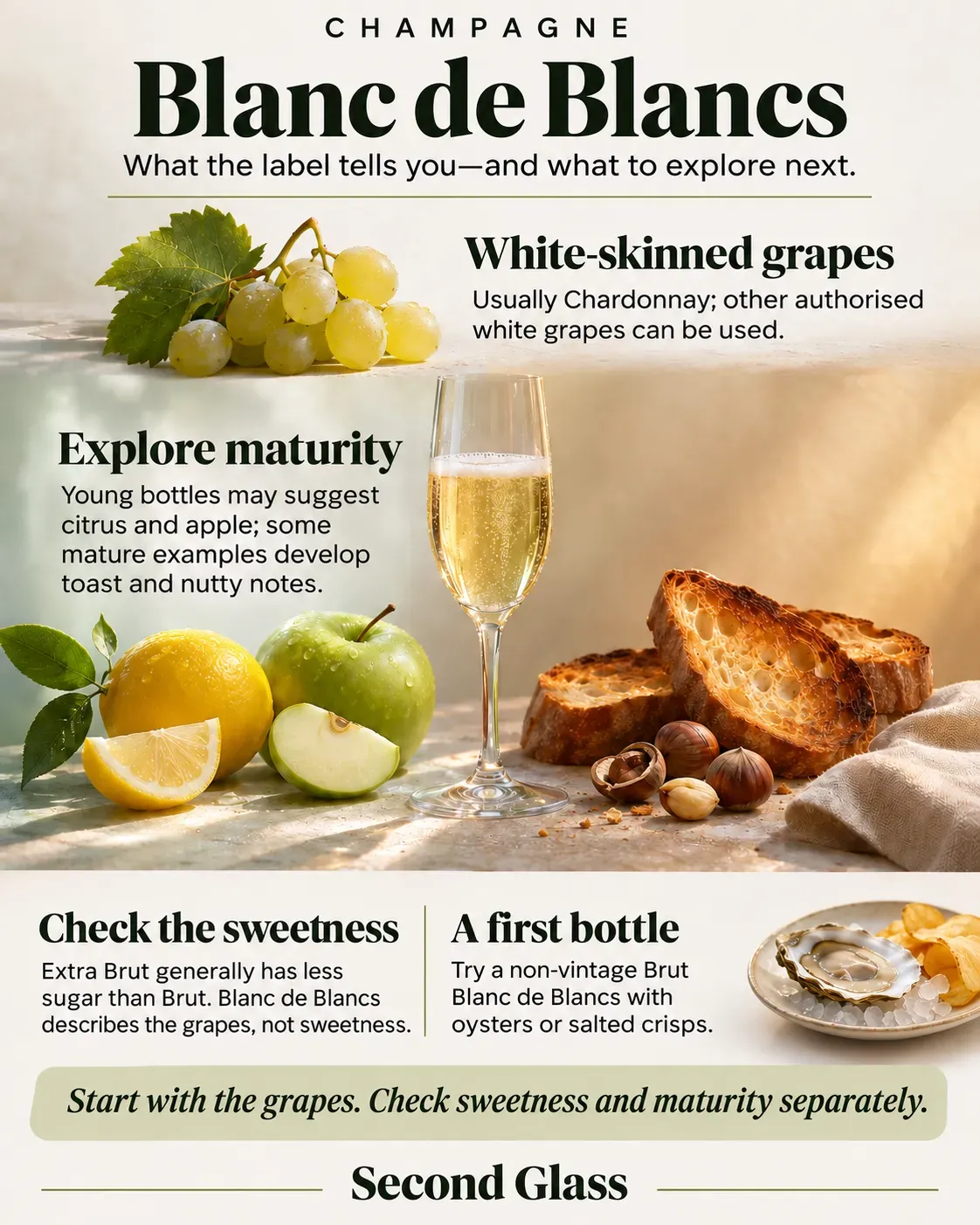
- Blanc de Blancs means the Champagne is made exclusively from white-skinned grape varieties.
- Chardonnay is the variety most commonly used, though other permitted white grapes can appear.
- Fresh citrus and apple are common cues; some bottles develop savoury, creamy or toasty notes with age.
- Check the sweetness category separately from Blanc de Blancs: the two terms describe different things.
- Champagne should be chilled, but serving it very cold can mute its aromas.
What Is Blanc de Blancs Champagne?
Blanc de Blancs means “white from whites”. On Champagne, it identifies a wine made exclusively from white-skinned grape varieties. Chardonnay is the principal grape in most examples; other white varieties authorised for Champagne can also be used, though they are much less common. Champagne’s BdB definition
Champagne itself is a protected regional name. A Blanc de Blancs from another region may use the same phrase for a sparkling wine made from white grapes, but it is not Champagne.
The term describes grape colour, not the whole recipe or production method. It does not tell you whether the wine is vintage, its sweetness category or how long it spent ageing on its lees.
Important grapes in Blanc de Blancs Champagne
-
Chardonnay
- Style
- The usual principal grape in Blanc de Blancs Champagne; some examples are made entirely from Chardonnay.
- Flavour profile
- Young examples may show citrus, apple and white flowers; some mature examples develop nutty, honeyed or pastry-like notes.
- Structure
- Often contributes freshness and a fine, lively impression; site, ripeness and winemaking shape the finished wine.
- Food pairings
- Blanc de Blancs can suit oysters, simply cooked seafood, scallops and roast chicken; richer or more mature examples can work with aged hard cheese.
What Does Blanc de Blancs Champagne Taste Like?
A young, fresh example may suggest lemon, grapefruit, green apple or pear, with white-flower aromas. Some wines also leave a saline impression or a flavour reminiscent of chalk or flint. “Mineral” is a broad tasting word: here, it may mean a stony aroma or a combination of freshness and salinity rather than literal chalk in the wine.
With more time ageing in the cellar or bottle, some examples develop notes of biscuit, toast, hazelnut, honey or ripe apple, and a softer, creamier feel. These are possible developments, not guaranteed traits of every Blanc de Blancs. Champagne’s style description
Why Does It Taste Like This?
Chardonnay is the usual starting point, but grape variety alone does not determine the taste. Where the grapes grow, how ripe they are when picked, the producer’s choices and the wine’s age all matter.
Champagne gains its bubbles through a second fermentation in the bottle. It then rests on its lees—the spent yeast cells left after fermentation. Lees ageing can contribute pastry-like flavours and texture. Production ageing on lees is separate from the time a bottle spends ageing after release. Champagne’s lees-ageing process
Some Champagne receives a dosage liqueur before corking; the producer can also choose to add no sugar. This choice affects the wine’s final sweetness, while the grapes determine whether it is Blanc de Blancs. A ripe or fruity aroma does not, by itself, mean the wine is sweet. Champagne on dosage
Styles and Regional Expressions
The Côte des Blancs is Champagne’s best-known Chardonnay-growing area. Villages including Avize, Cramant, Oger and Le Mesnil-sur-Oger are useful origin clues to look for on a label. Chardonnay is also grown in the Côte de Sézanne and elsewhere in Champagne. Champagne’s Chardonnay-growing areas
These place names can help you explore wines from different origins, but they do not promise a fixed flavour. Producer choices, vineyard conditions, harvest and ageing also shape what is in the glass.
How To Read the Label
- Blanc de Blancs identifies Champagne made only from white-skinned grapes. It does not necessarily mean 100% Chardonnay.
- Sweetness category: Brut and Extra Brut describe sugar levels, with Extra Brut generally drier than Brut. Extra Dry is sweeter than Brut. These categories are separate from Blanc de Blancs. Champagne’s label guide
- A declared vintage is the harvest year stated on the label. A disgorgement date records when the lees were removed; it is not a harvest year. A base-year reference on a non-vintage blend may identify its principal harvest, but it is not a declared vintage. Champagne’s label guide · Decanter on base-year references
- Grand Cru or Premier Cru refers to the classification of the village or villages associated with the grapes. It does not guarantee that a bottle will suit your taste.
How to serve Blanc de Blancs Champagne
Sparkling
Blanc de Blancs Champagne
8–11°C 46–52°F
Serve chilled rather than ice-cold so its citrus, chalk and lees-aged detail remain clear.
What to eat with Blanc de Blancs Champagne
Ideal pairings
- Oysters or simply dressed shellfish: freshness and bubbles complement the briny flavours.
- Scallops: lightly seared scallops with a restrained butter sauce suit a rounder style.
- Grilled or poached white fish: lemon, herbs and a light sauce echo a fresh, citrus-led wine.
- Sushi: acidity and bubbles can refresh the palate; avoid very hot chilli or heavily sweet sauces.
- Aged hard cheese, such as Comté: a mature example with savoury or nutty notes can work alongside the cheese.
Everyday pairings
- Roast chicken: particularly suited to a fuller or more mature bottle.
- Fish and chips: bubbles and acidity can cut through the crisp coating; keep extra vinegar modest.
- Creamy mushroom pasta: choose a rounder example, especially with butter or cream.
- Salted crisps or savoury pastry: an easy match for a fresh Brut style.
Pairings to approach carefully
Very sweet desserts can make a dry Brut taste sharp; choose a sweeter Champagne or serve the wine before dessert. Strong chilli heat can make alcohol feel hotter and acidity more pronounced, while vinegar-heavy dressings can make the wine seem less fresh. Keep chilli gentle and dress salads lightly.
Other sparkling wines to explore
| Shared thread | How it differs | |
|---|---|---|
| Blanc de Noirs ChampagneChampagne, France | Like Blanc de Blancs, it identifies Champagne by the colour of the grapes used. | It is made from black-skinned grapes and can feel more vinous or broad, though producer and site matter. |
| White-and-black-grape Champagne blendsChampagne, France | These are Champagne wines whose grape composition can be explored on the label or through producer information. | They combine white- and black-skinned grape varieties in varying proportions; sweetness category remains a separate choice. |
| Crémant de Bourgogne Blanc de BlancsBurgundy, France | It is a white-grape sparkling wine. | It comes from Burgundy and is not Champagne. |
| English sparkling Blanc de BlancsEngland | It is another sparkling wine made with white grapes. | It comes from England and cannot be called Champagne. |
Buying Guide
Prices below are approximate guidance for a 750 ml bottle; they vary by retailer, location and availability.
Budget
UK: about £25–£50 · US: about $50–$90
A bottle in this range is a good way to discover the style and see whether you enjoy it as an aperitif. Look for a clear sweetness category; information about the grape blend or origin is a useful extra.
Mid-Range
UK: about £50–£100 · US: about $90–$170
This range gives you room to explore a declared vintage, a named village or additional ageing information. Choose the detail that interests you and use it to compare styles.
Premium
UK: about £100 and above · US: about $170 and above
Choose this range to explore a more distinctive site, vintage or ageing approach, or to find a bottle for a special occasion. Producer information can help explain what makes a cuvée distinctive.
A first Blanc de Blancs tasting
Start with a non-vintage Brut Blanc de Blancs and notice its citrus, apple and texture.
Try it side by side
- Step 1 — Choose a Blanc de Blancs and a Blanc de Noirs at a similar price, sweetness category and maturity, where practical.
- Step 2 — Serve both at the same temperature and notice their aromas, freshness and texture.
- Step 3 — Compare which one you prefer with a simple dish, such as seafood or roast chicken.
The comparison can show how the wines differ, but it cannot isolate grape variety: producer, site, vintage and winemaking also shape each bottle.
Common Misconceptions
Blanc de Blancs means 100% Chardonnay
Chardonnay is usual, but the term allows other white-skinned varieties.
Blanc de Blancs tells me how sweet the wine is
Check the separate sweetness category on the label. Our Champagne Guide has a practical guidance on Champagne Wine Styles.
A named village guarantees a particular taste
It gives an origin clue; the wine’s profile also depends on producer choices, vineyard conditions, harvest and ageing.
Questions about Blanc de Blancs Champagne
Can Blanc de Blancs Champagne be vintage or non-vintage?
Either. Blanc de Blancs describes the grape colour; vintage status describes whether the bottle declares a harvest year.
How should I store Blanc de Blancs Champagne after opening?
Seal the bottle straight away with an airtight sparkling-wine stopper and keep it cool. Aim to drink it within one or two days.
Is Blanc de Blancs a good aperitif?
A fresh, non-vintage Brut can be a good aperitif choice. If you prefer a richer wine, look for more detail about the village, ageing or style.
Does Blanc de Blancs Champagne need decanting?
Usually not. Pour it into a tulip-shaped glass and give it a few minutes to open. Decanting can suit some powerful, young vintage Champagnes, but it softens the bubbles; older bottles can be more delicate.
What should I compare when choosing between two bottles?
Start with the sweetness category, then compare vintage status, origin and any producer notes about ageing. These clues help you choose a style, though they do not guarantee an exact taste.
Final Thoughts
If you enjoy fresh, lively sparkling wine, start with a Brut Blanc de Blancs and explore the label’s origin and vintage details. Then compare it with a Blanc de Noirs of similar price, sweetness and maturity.