
Quick answer
What to know first
Choose a fresh, medium-bodied red for steak and ale pie, textured Chardonnay for creamy chicken and mushroom, and dry sparkling wine or fresh Chardonnay for fish pie. For blue cheese, try Sauternes or sweet Chenin Blanc.
Introduction
The pastry gives a pie its buttery, flaky frame; the filling determines most of the wine match. Rich beef gravy, cream, delicate fish, earthy vegetables and salty cheese each call for a different balance of body, freshness and flavour.
Use these seven pairings as starting points. If the sauce, seasoning or a single ingredient stands out, let that guide your choice.
Key Takeaways
- Choose the wine for the filling and sauce first. Pastry adds richness, but gravy, cream, fish, mushrooms and cheese usually have the strongest influence on the match.
- Use freshness to balance richness. Acidity helps refresh the palate after buttery pastry, cream and gravy.
- Match body to intensity. Delicate fish needs a lighter, fresher wine, while beef gravy and smoked fish can support more breadth.
- Be cautious with tannin and umami. Mushrooms, gravy and other savoury ingredients can make firm tannins seem more bitter, so moderate-tannin reds are usually safer.
- Let sweetness balance salt. Sweet Chenin Blanc or Sauternes can soften the intensity of blue cheese.
- Adjust for standout flavours. Mustard, tomato, smoke, lemon, herbs or a rich cream sauce may shift the best pairing within the broader style.
Find a wine for your pie
The filling and sauce determine the best route: creamy pies call for freshness and texture, savoury meat pies can suit a medium-bodied red, and blue cheese benefits from sweetness.
7 Wine Pairings for Savoury Pies
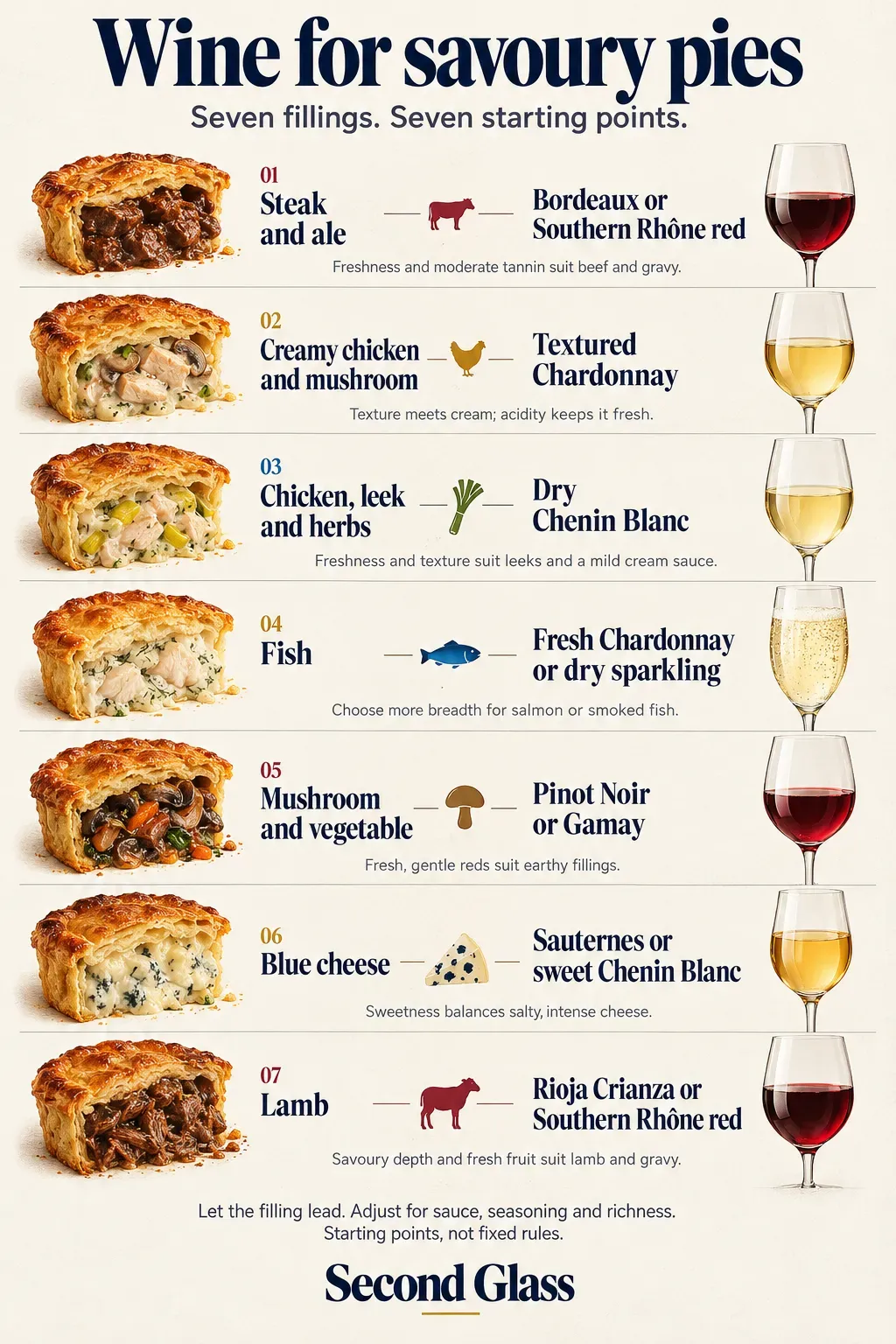
Pairing #1 - Steak and ale pie: fresh, medium-bodied red
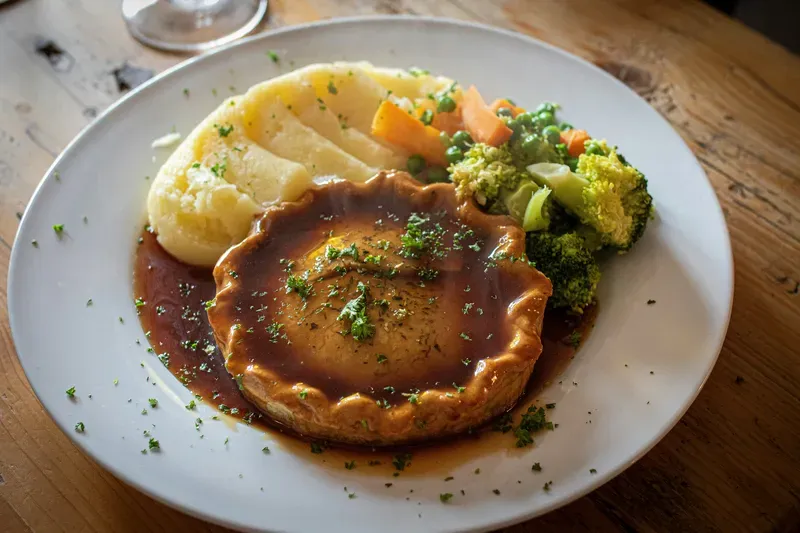
A Bordeaux blend or Southern Rhône red is a strong match for beef cooked with ale and gravy. Choose a fresh, savoury style with moderate tannin: it has enough flavour for the beef, while its acidity helps keep the rich filling from feeling heavy.
The gravy’s umami can make bitterness more noticeable and fruit less vivid, so avoid very tannic or austere reds. If the ale brings pronounced roasted or bitter notes, choose a supple, fruit-led wine. A lighter Gamay can work with a less concentrated filling.
Pairing #2 - Creamy chicken and mushroom pie: textured Chardonnay
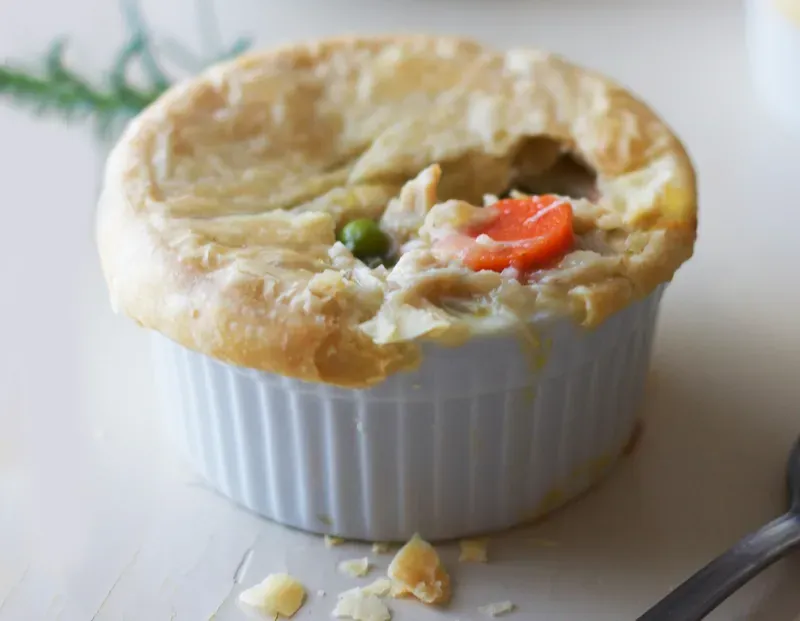
Choose a dry Chardonnay from the Mâconnais or another region known for balanced, textured styles. Its rounded feel suits cream and buttery pastry; fresh acidity keeps the pairing lively, and restrained savoury or nutty notes can complement the mushrooms.
The wine need not be heavily oaked to match the sauce. For a lighter pie, try dry Chenin Blanc. Pinot Noir is a red alternative when the mushrooms and herbs are prominent and the cream is not too rich.
Pairing #3 - Chicken, leek and herb pie: dry Chenin Blanc
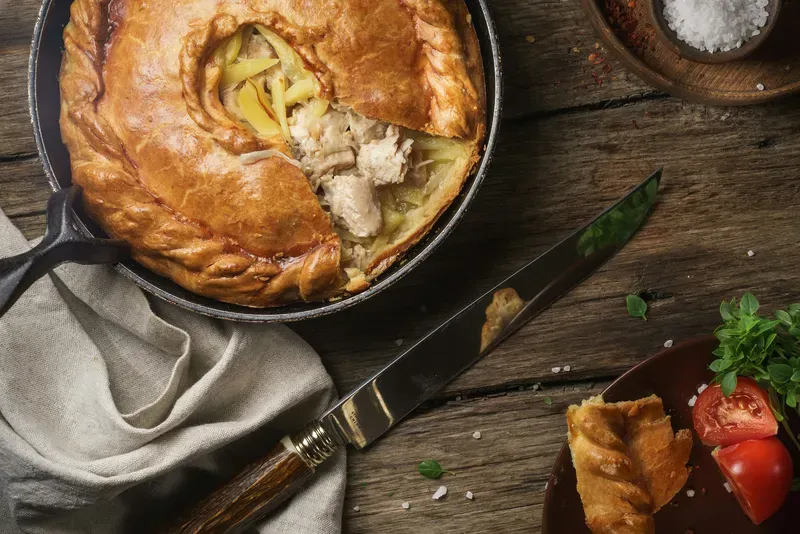
Dry Chenin Blanc from Vouvray or Saumur brings freshness to tender leeks and a mild cream sauce, with enough texture to sit comfortably alongside pastry. Its fruit can complement the leeks without masking chicken or gentle herbs.
For a lighter, herb-led filling, try an unoaked Chardonnay or dry rosé. If mustard or tarragon is prominent, choose a wine with a little more flavour and body so it does not disappear beside the seasoning.
Pairing #4 - Fish pie: fresh Chardonnay or dry sparkling wine

For fish pie with a creamy sauce, fresh Chardonnay offers enough texture for the sauce while keeping the fish in focus, so think Chablis. Dry traditional-method sparkling wine is another good choice: its acidity refreshes the palate after the rich sauce, and its savoury, bready notes can echo a browned crust.
Choose the lighter, fresher style for delicate white fish; salmon or smoked fish can take a wine with more breadth. Lemon, mustard or strong herbs may also make a more flavourful white a better fit than a very delicate wine.
Pairing #5 - Mushroom and vegetable pie: Pinot Noir or Gamay
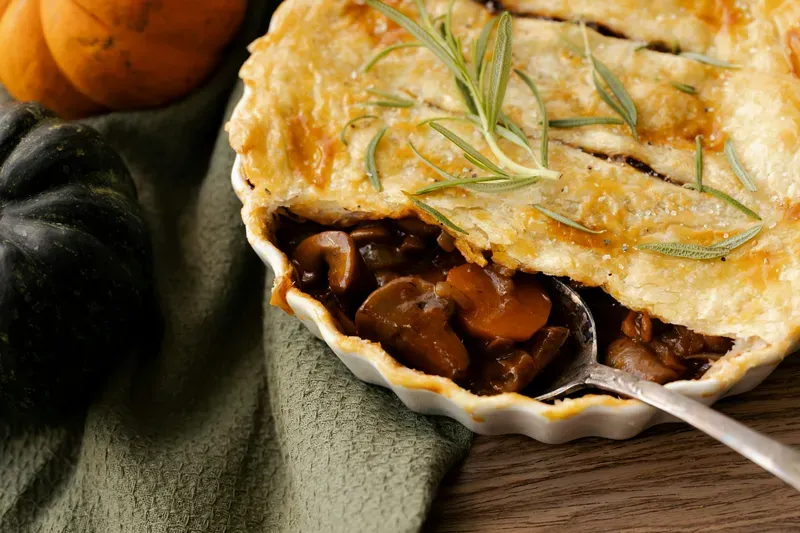
Earthy mushrooms, lentils and root vegetables can pair well with Pinot Noir or Gamay. Both can bring freshness and red-fruit flavour without the firm tannins of a more powerful red, which might make the wine seem more bitter alongside the savoury, umami-rich filling.
Choose Gamay for a juicy, direct style or Pinot Noir for more savoury detail. If the pie has a rich cream sauce, move to Chardonnay or dry Chenin Blanc; if tomato is prominent, favour a wine with enough acidity to stay lively.
Pairing #6 - Blue cheese pie: Sauternes or sweet Chenin Blanc
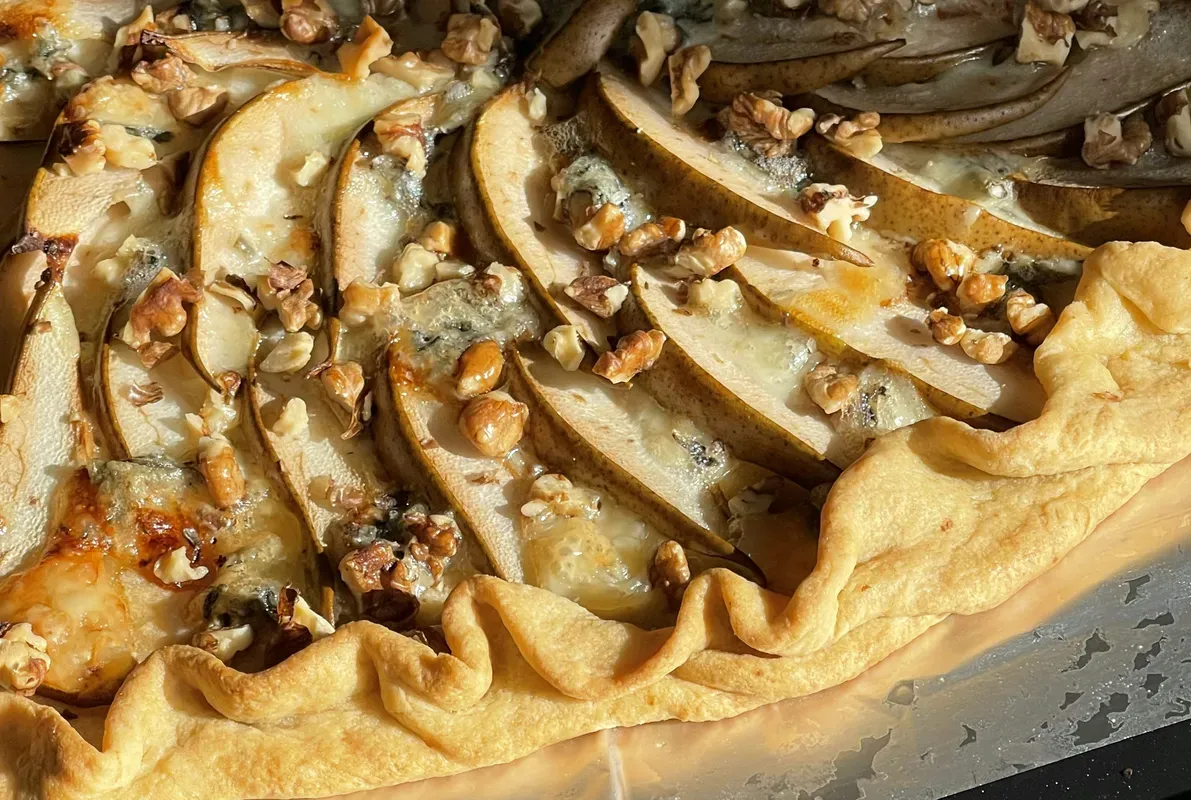
A sweet wine can balance the salt and intensity of blue cheese. Try Sauternes or sweet Chenin Blanc, serving a modest glass so the wine complements rather than overwhelms the pie.
Pear or caramelised onion can bring a gentle sweetness that links the cheese and wine. If the filling is mild or the cheese is not especially salty, choose a less sweet style so the wine does not dominate.
Pairing #7 - Lamb pie: Rioja or Southern Rhône red
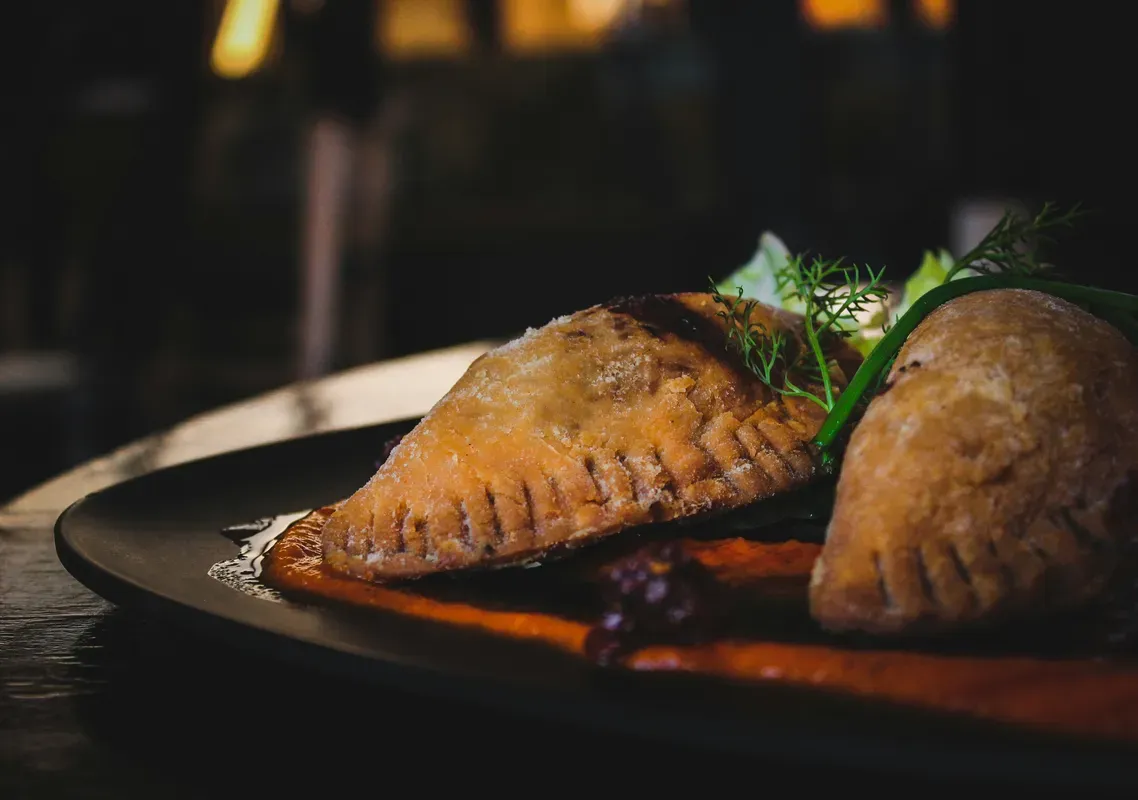
Lamb pie suits a fresh, medium-bodied red with moderate tannin and savoury depth. Rioja, particularly a balanced Crianza, can echo the lamb's savoury flavour with red fruit, spice and gentle oak, while a Southern Rhône blend offers ripe fruit, herbs and enough freshness for a rich gravy.
Choose a fresher style if the pie contains rosemary, mint or vegetables, and avoid very heavy or highly tannic reds unless the filling is especially concentrated. If the lamb is cooked with tomato, garlic or Mediterranean herbs, a Rhône red is a particularly natural match.
Best grapes for Savoury Pie
Start hereChardonnay
Its range of body and texture suits creamy fillings, and fresher styles also work with fish pie.
Also tryChenin Blanc
Dry Chenin brings freshness and texture to chicken, leek and herb fillings; sweeter styles can balance blue cheese.
Also tryPinot Noir
Its lighter body and gentle tannin suit savoury mushroom and vegetable fillings.
Also tryGamay
Its fresh fruit and lighter structure work with vegetable and mushroom pies.
Also trySyrah
In a fresh, balanced Southern Rhône blend, Syrah can contribute savoury depth and spice for beef or lamb and rich gravy. Choose moderate tannin so the wine does not overwhelm the filling.
Also tryTempranillo
A balanced Rioja Crianza offers moderate tannin, freshness and savoury depth for lamb and rich gravy. Choose a fresher style with gentle oak rather than a very heavy or highly tannic red.
Also tryGrenache
A fresh, medium-bodied Grenache-led Southern Rhône blend brings ripe fruit and enough savoury depth for lamb and gravy, with moderate tannin to keep the pairing balanced.
Buying and Serving Guide
Budget
£8–15 / $10–20 can buy an enjoyable, straightforward wine for an everyday pie. Look for fruit-led reds for beef or a fresh, unoaked white for chicken and fish. Expect simple fruit and limited complexity, with most bottles intended to be enjoyed young. This is a sensible range when the wine is accompanying a relaxed meal.
Mid-Range
£15–30 / $20–40 can bring more balance, detail and regional character. Look for Loire Chenin Blanc, Mâconnais Chardonnay, Beaujolais or a balanced Southern Rhône red. Some bottles may develop over a few years, though many are best enjoyed young. Spend more here when the wine will be a feature of the meal as well as a match for it.
Premium
£30+ / $40+ can offer greater complexity and concentration, particularly from specific appellations or traditional-method sparkling wines. Choose a style that still suits the filling rather than buying power for its own sake. Some examples can age, but higher price does not mean a wine needs cellaring. Spending more makes most sense for a special meal or a bottle you also want to enjoy on its own.
Serve reds slightly cool rather than warm; keep whites and sparkling wines chilled but not icy. A little warmth in the glass helps fuller whites show their texture, while very cold temperatures can mute a wine’s aromas.
Choose wine for the filling
How To Experiment
- Step 1 — Choose the pie's main filling and note whether the sauce is creamy, gravy-rich or light.
- Step 2 — Pour two small samples in the suggested style, such as Chardonnay and dry sparkling with fish pie.
- Step 3 — Taste each with a bite of pie and compare how the wine's freshness, body and flavour feel alongside the filling.
- Step 4 — Repeat with a more intense version of the pie, such as one with smoked fish or extra-rich gravy, and adjust the wine style.
Common Misconceptions
Fish pie must always go with white wine
White wine is a classic choice, but it is not the only option. A light, fresh red served slightly cool can work with a fish pie, especially when the filling includes smoked fish, salmon or earthy seasonings. Choose a wine that suits the richness, sauce and dominant flavours of the pie rather than following a strict colour rule.
The wine used in the filling is automatically the best one to serve
Cooking changes and concentrates flavours. Choose the bottle you drink with the finished pie for how it matches the filling, sauce and seasoning.
Creamy pie needs heavily oaked Chardonnay
Creamy pies do not require strongly oaked Chardonnay. Texture and freshness matter more: a Chardonnay with lively acidity and restrained oak can complement a rich, creamy filling without making the pairing feel heavy.
Questions about savoury pie wine pairing
What wine works with most savoury pies?
There is no single best wine for every pie. Choose by the filling: a fresh medium-bodied red for steak and ale, textured Chardonnay for creamy chicken and mushrooms, and fresh Chardonnay or dry sparkling wine for fish.
How should I choose wine for a creamy pie?
Look for freshness as well as enough body for the sauce. Textured Chardonnay is a strong starting point for creamy chicken and mushroom pie; dry Chenin Blanc can also work, especially with herbs or leek.
Can I serve red wine with chicken pie?
Yes. A light Pinot Noir can suit chicken and mushroom pie, particularly when mushrooms and herbs lead. Choose gentle tannin and restrained oak.
Is sparkling wine a good match for fish pie?
Yes. Dry sparkling wine brings freshness and bubbles that can refresh the palate alongside a creamy sauce and browned topping. Fresh Chardonnay is another useful choice, particularly for a delicate fish filling.
What should I serve with smoked fish pie?
Choose a wine with enough freshness and flavour to hold its own against the smoke and salt. A fuller fresh Chardonnay or a dry traditional-method sparkling wine is a good starting point; the exact match depends on how smoky and rich the filling is.
Why pair sweet wine with blue cheese pie?
Sweetness can balance the salt and pungency of blue cheese. Sweet Chenin Blanc or Sauternes offers a contrasting match; keep the pour modest so the wine does not overwhelm the dish.
Final Thoughts
Let the filling set the direction: fresh red for savoury beef, textured white for creamy poultry, freshness for fish and sweetness for salty blue cheese. Choose one of these seven routes, then adjust for the sauce or seasoning that stands out most in your pie.