
Key Takeaways
- Chilling can make light, fresh reds feel more refreshing.
- Use the wine’s body as a starting clue: lighter reds generally suit cooler serving temperatures than fuller ones.
- A short spell in the fridge can help; avoid serving a red so cold that its aroma and flavour seem closed.
- Taste, then adjust. Wine warms in the glass, and personal preference matters.
Introduction
“Serve red wine at room temperature” is familiar advice, but room temperature varies. A warm, heated room can leave a red tasting heavy, while a bottle straight from a cold fridge may seem muted or firm. The useful question is not whether red wine should ever be chilled, but how cool to serve this particular style.
What Does Chilling Do to Red Wine?
Temperature changes how wine feels and smells. Cooler wine can seem firmer and less aromatic; warmer wine can release more aroma, but excessive warmth may make alcohol seem more prominent and the wine feel less fresh. These are broad effects, not guarantees: grape, acidity, tannin, winemaking and the room all influence what you notice.
Think of serving temperature as a range. A little cooling can sharpen the refreshing side of a light red. A fuller or more tannic red usually benefits from being warmer than that, so its aromas and texture are easier to enjoy.
How Cool Should You Serve It?
Use these as starting points, not rules. The style matters more than the grape name alone.
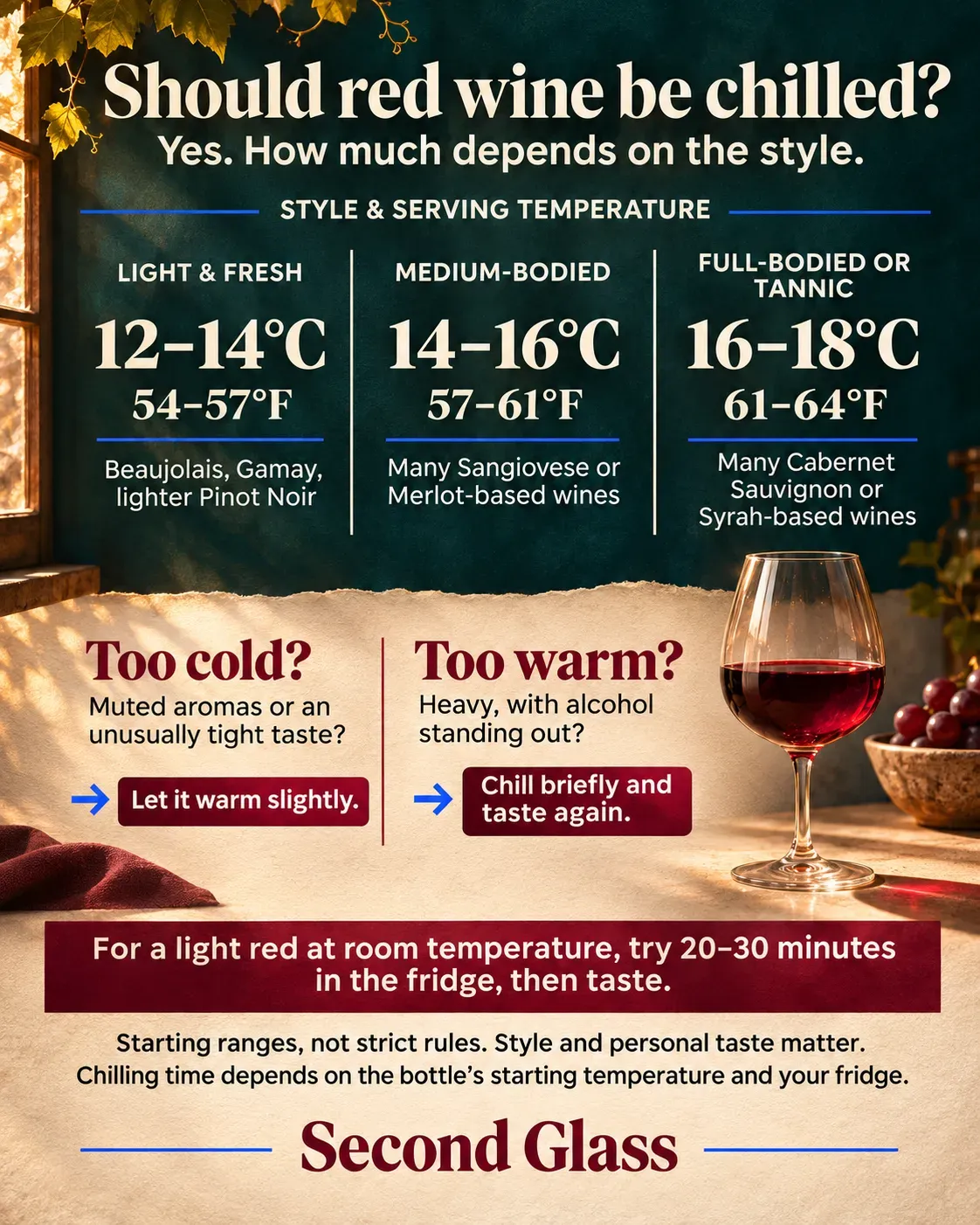
| Style | Starting temperature | Examples to look for |
|---|---|---|
| Light-bodied, fresh reds | About 12–14°C (54–57°F) | Beaujolais, Gamay, lighter Pinot Noir |
| Medium-bodied reds | About 14–16°C (57–61°F) | Many Sangiovese or Merlot-based wines |
| Full-bodied or tannic reds | About 16–18°C (61–64°F) | Many Cabernet Sauvignon or Syrah-based wines |
For a starting point based on your wine’s grape, region or style, try the Second Glass Wine Serving Temperature tool. Search by wine, grape or region to see a suggested range and practical chilling guidance.

The boundaries overlap, and different sources give slightly different ranges, especially for lighter reds. If you do not have a thermometer, think “cool cellar” for a light red and “cool room” for a fuller one. In a warm home, most reds benefit from a little cooling before serving.
A simple way to chill a bottle
For a light red at ordinary room temperature, try around 20–30 minutes in the fridge, then pour a small taste. A warmer bottle may need longer; one already stored somewhere cool may need less. If it seems quiet or overly firm, give it a few minutes in the glass. If it still feels warm and heavy, chill the bottle a little longer. A wine thermometer can help, but tasting is enough to make a practical adjustment.
For a medium or full-bodied red, start with a shorter chill if the room is warm, or serve it from a cool place rather than a heated kitchen. Avoid warming a bottle quickly beside a radiator or in hot water; gradual warming in the room or glass is easier to control.
How to Tell If It Is Too Cold or Too Warm
A red may be too cold if its aromas are hard to notice and the taste seems unusually tight or thin. Let it warm in the glass for a few minutes and try again.
It may be too warm if it smells strongly of alcohol, tastes heavy, or seems short on freshness. Cool the bottle briefly and reassess. These are clues, not diagnostic tests: the wine’s style and your own preference affect the result.
Grapes to try
| Grape | Description |
|---|---|
| Gamay | Often light and fruity, Gamay is a useful red to try slightly chilled; start around 12–14°C (54-57°F). See Gamay serving temperatures. |
| Pinot Noir | Lighter Pinot Noir can be refreshing slightly chilled, while a more structured bottle may need less cooling. See Pinot Noir serving temperatures. |
| Sangiovese | Try a medium-bodied Sangiovese cool rather than fridge-cold, and let it warm if its aromas seem muted. See Sangiovese serving temperatures. |
| Merlot | A medium-bodied Merlot can benefit from a short chill, especially when the room is warm. See Merlot serving temperatures. |
| Cabernet Sauvignon | Full-bodied Cabernet Sauvignon usually needs less cooling; serve it cool and adjust if it feels too firm or too warm. See Cabernet Sauvignon serving temperatures. |
| Syrah | Syrah ranges from fresh to full-bodied, so use the bottle’s style to decide how much to chill it. See Syrah serving temperatures. |
Taste the same red at two temperatures
What you need
- A bottle of red wine you already have
- Two matching glasses
Try it
- Step 1 — Pour a small glass at the temperature you would normally serve the wine.
- Step 2 — Put the bottle in the fridge for about 20 minutes.
- Step 3 — Pour a second small glass and compare aroma, fruit, freshness and how firm or soft the wine feels.
- Step 4 — Let the cooler sample sit for a few minutes, then taste it again as it warms.
Notice which temperature you prefer and what changes as the wine warms.
This informal comparison explores how temperature affects that bottle; it does not show that every wine made from the same grape should be served the same way.
Common Misconceptions
Room temperature is always right
The phrase is imprecise. A centrally heated room may be warmer than a red’s useful serving range.
The grape alone tells you the temperature
Pinot Noir, for example, ranges from delicate to more structured. Use the wine’s style and your taste as well as its grape name.
Questions about chilling red wine
Can I put red wine in the fridge?
Yes. A short time in the fridge is a practical way to cool a red, especially a light-bodied style or a bottle in a warm room. Taste it as you go so it does not become too cold for your preference.
How long should I chill red wine before serving?
For a light red at ordinary room temperature, try around 20–30 minutes as a starting point; a fuller style may need less. Warmer bottles may need longer, and bottles already stored somewhere cool may need less. Your fridge also affects the result, so taste before serving.
Should Pinot Noir be chilled?
Many lighter, fresher Pinot Noirs are enjoyable slightly chilled. More structured or oak-influenced examples may need less cooling. Start cool and let the wine guide you.
Should full-bodied red wine be chilled?
It can benefit from a brief chill if the room is warm, but it is usually served warmer than a light red. If it tastes heavy or strongly alcoholic, cool it a little and try again.
Does chilling red wine change the alcohol in it?
No. Chilling does not remove alcohol. Temperature can change how prominent the alcohol seems when you smell and taste the wine.
What if I serve red wine too cold?
Let it sit in the glass or bottle for a few minutes and taste again. Its aromas and flavours may become easier to notice as it warms.
Final Thoughts
Next time, try a light red slightly chilled and taste it again as it warms. That small comparison will help you find the serving temperature you enjoy.