
Quick answer
What to know first
Marlborough is New Zealand's largest and most internationally recognised wine region, located at the top of the South Island. It's famous for vibrant Sauvignon Blanc with citrus, passion fruit and fresh herb flavours, alongside excellent Pinot Noir and Chardonnay.
Key Takeaways
- New Zealand's largest and most famous wine region.
- Internationally renowned for expressive Sauvignon Blanc.
- Cool climate preserves freshness and vibrant acidity.
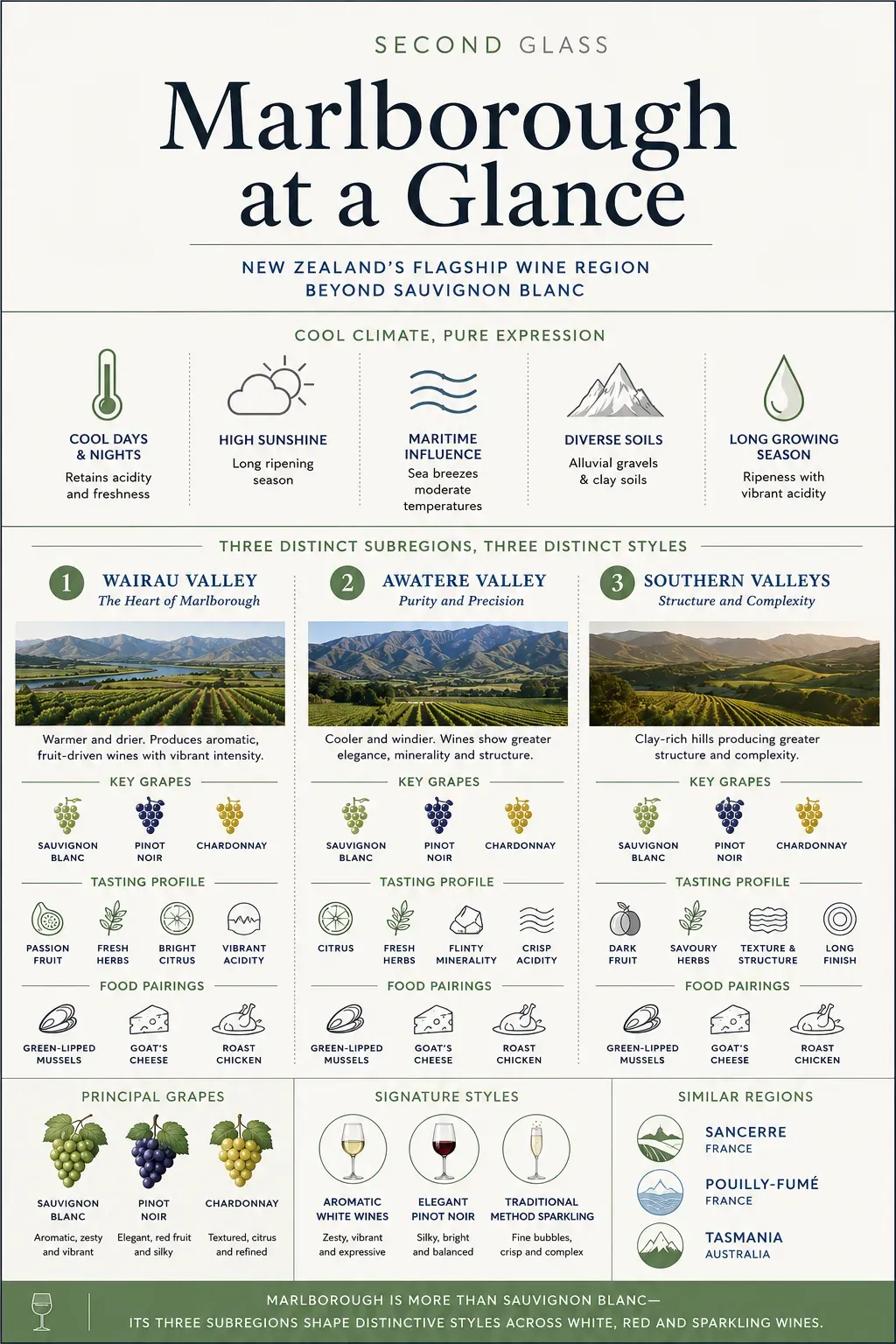
- Three main subregions each produce distinctive styles.
- Pinot Noir, Chardonnay and aromatic whites are increasingly important.
- Excellent value exists across a wide range of price points.
- An ideal region for comparing terroir within a single appellation.
How Marlborough usually feels
Where is the Marlborough Wine Region in New Zealand?
Marlborough sits at the north-eastern tip of New Zealand's South Island. Sheltered by surrounding mountain ranges and bordered by the Pacific Ocean, it enjoys one of the country's sunniest climates while remaining relatively cool.
The region centres around the Wairau and Awatere Valleys, with vineyards extending across broad river plains and gently sloping foothills. These varied landscapes create numerous vineyard sites with distinct growing conditions.
Marlborough accounts for the majority of New Zealand's wine production and has become one of the world's most recognisable wine regions, largely thanks to its Sauvignon Blanc.
Why Marlborough, NZ is Famous for Sauvignon Blanc?
Although viticulture is relatively recent compared with Europe's classic regions, Marlborough rose to international prominence during the 1980s when pioneering producers demonstrated the region’s potential for Sauvignon Blanc.
Winemakers discovered that the combination of abundant sunshine, cool nights and free-draining soils could produce wines with remarkable aromatic intensity. The resulting style—often showing passion fruit, grapefruit and fresh herbs—became instantly recognisable.
Today, Marlborough continues to innovate while broadening its reputation through premium Chardonnay, elegant Pinot Noir, Riesling, Pinot Gris and traditional method sparkling wines.
Climate and Terroir
Climate
Marlborough has a cool maritime climate with abundant sunshine, relatively low rainfall during the growing season and significant day-to-night temperature variation.
These conditions allow grapes to ripen fully while retaining naturally high acidity and aromatic freshness.
Soils
Much of the region consists of ancient river gravels over alluvial deposits.
Clay-rich soils also appear in parts of the Southern Valleys, helping retain moisture and producing fuller, more structured wines.
Elevation and Topography
Most vineyards lie on flat valley floors, typically at lower elevations, although some sites extend up to around 200 metres above sea level. Hillside vineyards provide cooler conditions and increased complexity.
Mountain ranges shelter vineyards from excessive rainfall while allowing cooling sea breezes to moderate temperatures.
How Terroir Shapes Wine Style
Warm growing conditions help grapes ripen and develop expressive fruit flavours, while cool evenings preserve freshness and vibrant aromatics.
Gravel soils encourage excellent drainage, which can moderate vine vigour and support balanced ripening, while clay soils tend to produce wines with greater texture and richness. Coastal influences in Awatere often contribute pronounced herbal character and a fresh, sometimes mineral-like impression.
Important grapes in Marlborough
| Grape | Style | Flavour profile | Structure | Food pairings |
|---|---|---|---|---|
| Sauvignon Blanc | Dry white. | Passion fruit, grapefruit, lime, gooseberry and fresh herbs. | Light to medium-bodied with high acidity and pronounced aromatics. | Goat's cheese, oysters and mussels. |
| Pinot Noir | Elegant red. | Cherry, raspberry, plum, subtle spice and violet. | Medium-bodied with silky tannins and bright acidity. | Duck and roast chicken. |
| Chardonnay | Still white. | Citrus, peach, nectarine and hazelnut, with subtle oak in some examples. | Medium to full-bodied with balanced acidity. | Roast chicken and lobster. |
| Pinot Gris | Dry to off-dry white. | Pear, apple, white peach and spice. | Medium-bodied with soft texture. | Pork and Asian cuisine. |
| Riesling | Dry to medium-sweet white. | Lime, green apple, blossom and flinty notes. | High acidity with excellent ageing potential. | Spicy dishes and seafood. |
Wine Styles of Marlborough
Red
Elegant Pinot Noir with fresh red fruit, floral aromas and refined tannins.
White
Aromatic Sauvignon Blanc dominates, while Chardonnay, Pinot Gris and Riesling provide a diverse range of styles.
Rosé
Fresh, dry rosés, typically made from Pinot Noir, showing strawberry and raspberry fruit.
Sparkling
Traditional method sparkling wines with crisp acidity and citrus-driven freshness, with premium examples also developing brioche and toasty complexity through lees ageing.
Sweet
Small quantities of late-harvest Sauvignon Blanc, Riesling and botrytised wines are produced in suitable vintages.
What Do Wines From Marlborough Taste Like?
Fruit Characteristics
Passion fruit, grapefruit, gooseberry, lime, peach, nectarine, cherry, raspberry and plum.
Floral Characteristics
Elderflower, citrus blossom, jasmine and violet.
Herbal and Savoury Characteristics
Fresh-cut grass, basil, tomato leaf, fennel, flint and light stony or mineral-like notes.
Structural Characteristics
Bright acidity, moderate alcohol, expressive aromatics and excellent purity of fruit.
Ageing Characteristics
Most Sauvignon Blanc is best enjoyed within a few years of release, although premium examples can develop complexity. Chardonnay, Riesling and Pinot Noir often age gracefully for five to ten years or longer.
Vintage Variation
The maritime climate helps moderate extremes, but vintage conditions still play an important role. Factors such as frost, rainfall during flowering or harvest, and overall heat accumulation can significantly influence style and quality from year to year.
The Marlborough names worth recognising
Wairau Valley
Memory hook: The heart of classic Marlborough Sauvignon Blanc.
Known for: Tropical fruit and citrus-driven wines with vivid aromatic intensity.
Why it matters: Wairau Valley produces the benchmark regional style that made Marlborough famous.
Awatere Valley
Memory hook: Cool coastal vineyards.
Known for: Herbal, vibrant Sauvignon Blanc with cooler-climate tension and freshness.
Why it matters: Awatere Valley shows Marlborough's cooler, more savoury expression.
Southern Valleys
Memory hook: Clay-rich rolling hills.
Known for: Premium Pinot Noir and Chardonnay with more texture, structure and depth.
Why it matters: The Southern Valleys show that Marlborough can produce more structured and age-worthy wines beyond Sauvignon Blanc.
What to eat with Marlborough
Regional specialities
Green-lipped mussels are a classic Marlborough match, especially with Sauvignon Blanc whose high acidity and citrus fruit lift the shellfish's briny sweetness.
Goat's cheese works naturally with Marlborough Sauvignon Blanc because the wine's herbal freshness mirrors the cheese's tang.
Grilled seafood suits the region's crisp whites, while richer Marlborough Chardonnay can handle lobster or roast chicken.
Everyday local pairings
- Roast chicken
- Fish and chips
- Sushi
- Oysters
- Mussels
- Duck with Pinot Noir
Pairings to approach carefully
Heavily smoked dishes can overwhelm Marlborough's bright fruit and herbal aromatics. Very sweet desserts can make dry Sauvignon Blanc, Chardonnay or Pinot Noir taste sharper, although late-harvest Sauvignon Blanc or Riesling can work with sweeter courses.
Similar wine regions to explore
| Region | Similar | Difference |
|---|---|---|
| Sancerre | Cool-climate Sauvignon Blanc. | More restrained with stronger mineral character. |
| Pouilly-Fumé | Sauvignon Blanc. | Typically smokier and more flinty. |
| Casablanca Valley | Cool-climate white wines. | Generally softer and less intensely aromatic. |
| Sonoma Coast | Excellent Chardonnay and Pinot Noir. | Richer wines with greater oak influence. |
| Tasmania | Cool-climate Pinot Noir and sparkling wine. | Less emphasis on Sauvignon Blanc. |
| Elgin | Elegant cool-climate wines. | More restrained fruit expression. |
Buying Wines From the Region
Budget (£9–15)
At this level, Marlborough offers some of the most reliable and expressive value wines in the world. Sauvignon Blanc dominates, typically sourced from larger vineyard sites across the Wairau Valley and blended for consistency. Expect bright, punchy aromatics with passion fruit, lime, grapefruit and fresh-cut grass, supported by crisp acidity and a clean, refreshing finish.
Winemaking at this tier often focuses on stainless steel fermentation to preserve primary fruit character, with minimal oak influence. While these wines are generally intended for early drinking, they still showcase the region’s hallmark vibrancy and purity.
You may also find entry-level Pinot Gris and rosé, offering approachable fruit and soft textures. These wines are ideal for casual occasions, warm-weather drinking and pairing with simple dishes such as salads, seafood and light pasta.
Mid-Range (£15–30)
This category introduces greater site expression, more careful vineyard selection and increased winemaking precision. Sauvignon Blanc at this level often comes from specific subregions or named vineyard parcels, allowing for more nuanced flavour profiles—ranging from tropical and citrus-driven styles to more restrained, mineral or herbal expressions.
Winemakers may experiment with techniques such as partial barrel fermentation, extended lees ageing or wild yeast fermentation to add texture and complexity. Chardonnay becomes more prominent here, often showing a balance of ripe stone fruit, citrus and subtle oak, with improved structure and ageing potential.
Pinot Noir also gains depth and refinement, with better integration of tannins, more defined red fruit character and hints of spice or earth. These wines are suitable for short to medium-term ageing and offer a more layered, food-friendly experience.
Premium (£30–70+)
At the premium level, Marlborough wines reflect meticulous vineyard management, low yields and a strong focus on terroir. Single-vineyard bottlings are common, often highlighting specific soil types, elevations or microclimates within subregions such as the Southern Valleys or Awatere Valley.
Sauvignon Blanc at this tier can be markedly different from entry-level styles, showing greater restraint, texture and complexity. Techniques such as barrel fermentation, extended lees contact and minimal intervention winemaking contribute to wines with layered flavours, savoury depth and some capacity to age.
Chardonnay and Pinot Noir reach their highest expression here. Chardonnay may display refined oak integration, creamy texture and complex notes of citrus, stone fruit, nuts and flint. Pinot Noir often shows concentrated red and dark fruit, floral aromatics, fine tannins and a long, structured finish.
These wines are often suitable for ageing, particularly Chardonnay, Riesling and Pinot Noir, and can evolve over five to ten years or more depending on the style and producer. They are best suited to more serious collectors or those seeking a deeper understanding of Marlborough’s potential beyond its classic Sauvignon Blanc style.
Common Misconceptions
Marlborough Only Produces Sauvignon Blanc
While Sauvignon Blanc dominates production, Marlborough also produces high-quality Pinot Noir, Chardonnay, Riesling and Pinot Gris. These wines are increasingly recognised for their complexity and ageing potential.
All Marlborough Sauvignon Blanc Tastes the Same
Different subregions, vineyard sites and winemaking approaches create noticeable variation. Wines from Awatere Valley tend to be more herbal and structured, while Wairau Valley examples are often more tropical and fruit-driven.
Marlborough Wines Are Always Simple and Meant for Immediate Drinking
Although many wines are designed for freshness, premium bottlings—especially Chardonnay, Riesling and Pinot Noir—can develop complexity over several years.
Questions about Marlborough
Why is Marlborough Sauvignon Blanc so famous?
Marlborough's climate and soils create wines with intense aromatics and vibrant acidity. This distinctive style, featuring passion fruit, citrus and herbal notes, helped redefine Sauvignon Blanc globally, particularly through influential early producers in the 1980s.
What grapes grow best in Marlborough?
The region excels with Sauvignon Blanc, Pinot Noir, Chardonnay, Pinot Gris and Riesling, all benefiting from the cool climate and long growing season.
Can Marlborough wines age?
Yes. While many are enjoyed young, higher-quality Chardonnay, Riesling and Pinot Noir can age well and gain complexity over time.
What food pairs best with Marlborough wines?
Seafood, particularly shellfish and grilled fish, pairs exceptionally well. The wines also complement goat's cheese and herb-based dishes.
Is Marlborough good value?
Marlborough offers strong value across all price levels, from accessible everyday wines to premium single-vineyard expressions.
Why does Marlborough Sauvignon Blanc taste like passion fruit?
Because of thiols—aroma compounds that thrive in Marlborough’s cool, sunny climate. Slow ripening builds these flavours, while winemaking techniques preserve them, resulting in those signature punchy passion fruit notes.
If you are new to Marlborough
Begin with a classic Marlborough Sauvignon Blanc before comparing Wairau Valley and Awatere Valley styles, then explore Pinot Noir and Chardonnay to understand the region's diversity.
Final Thoughts
Marlborough remains one of the world's benchmark cool-climate wine regions. While Sauvignon Blanc made its reputation, its increasingly diverse portfolio of Pinot Noir, Chardonnay and aromatic whites makes it one of the most rewarding regions for both newcomers and experienced wine lovers.