
Quick answer
What to know first
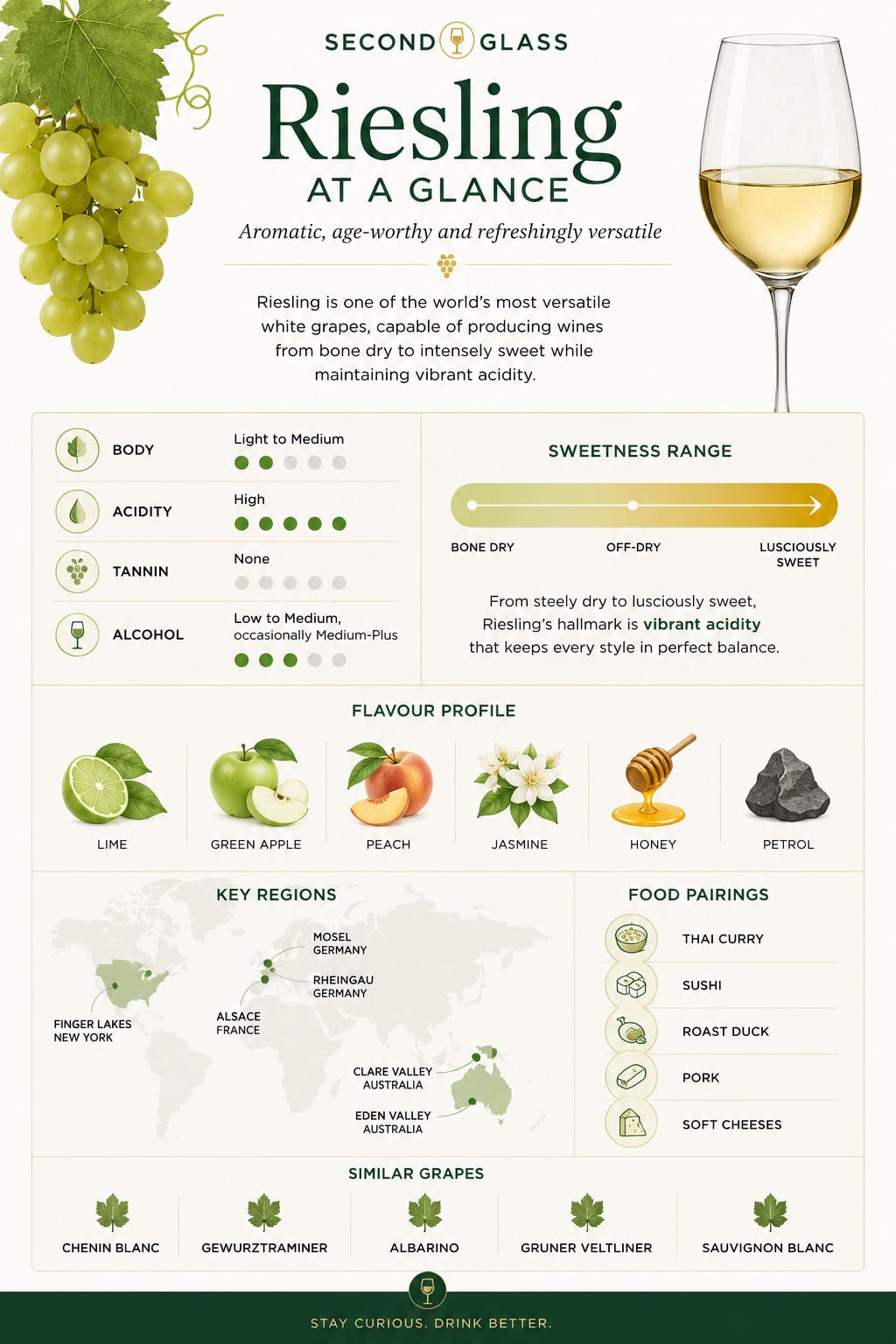
Riesling is an aromatic white grape known for its high acidity and flavours of lime, green apple, peach and flowers. It is famous in Germany, but also thrives in Australia, and France. Riesling is loved for its ability to make wines ranging from bone dry to very sweet while still fresh and vibrant.
How Riesling usually feels
Key Takeaways
- One of the world's most aromatic white grapes
- Usually high in acidity regardless of sweetness level
- Produces styles from dry to intensely sweet
- Famous for exceptional ageing potential
- Particularly associated with Germany's cooler regions
- Often one of the best wines for spicy food
- Can develop distinctive honeyed and petrol aromas with age
What Is Riesling?
Riesling is an ancient white grape variety originating in Germany, where records date back to the fifteenth century. It is considered one of the world's great noble grapes because it expresses climate and site exceptionally well and can produce wines in an extraordinary range of styles.
Today, Riesling is grown across Europe, Australia, North America and New Zealand, producing wines that vary dramatically according to climate and winemaking choices.
What Does Riesling Taste Like?
Fruit Flavours
- Lime
- Lemon
- Green apple
- Peach
- Apricot
- Mandarin
Floral Notes
- Jasmine
- Orange blossom
- Honeysuckle
- White flowers
Herbal and Spice Notes
- Wet stone
- Ginger
- Fresh herbs
- Mineral notes
Ageing Characteristics
Bottle-aged Riesling often develops honey, beeswax and a distinctive petrol aroma, alongside notes of dried citrus and savoury complexity.
Climate Influence
Cool climates emphasise citrus, green apple and mineral notes. Warmer sites produce riper peach, apricot and tropical fruit characteristics.
Why Does It Taste Like This?
Riesling's naturally high acidity is its defining feature. Even sweeter examples feel fresh because acidity balances the residual sugar.
Riesling wines contain virtually no tannin because white wines are generally fermented with little or no skin contact. This preserves freshness and purity of fruit while creating a wine that feels light and elegant rather than grippy. Riesling naturally contains high concentrations of aroma compounds and precursors, which contribute to its pronounced floral and fruit-driven aromas.
Winemaking also plays a major role. Many producers avoid new oak to preserve purity of fruit. Decisions about harvest timing and fermentation determine whether the wine becomes dry, off-dry or sweet.
How Ageing Changes Riesling
Bottle Ageing
Excellent examples can age for decades, developing honey, beeswax, dried citrus and complex savoury notes. The very finest wines can remain vibrant and continue evolving for many decades.
Oak Ageing
Most Rieslings see little or no new oak because producers generally prefer freshness and aromatic purity.
Lees Ageing
Some producers use extended lees contact to add texture and complexity, although it is rarely the dominant influence.
Micro-Oxygenation
Rarely used. Riesling usually relies on natural bottle development rather than techniques designed to soften structure.
Ageing Potential
Quality Rieslings can age exceptionally well. Fine examples may evolve gracefully for twenty years or longer, and the greatest examples can continue developing for many decades.
Is Riesling Dry or Sweet?
Both.
Riesling is unusual because it excels across the entire sweetness spectrum. Dry examples are crisp and mineral, off-dry styles balance fruit with freshness, and sweet versions can be among the world's greatest dessert wines.
Sweetness in Riesling should not be confused with poor quality. Some of the finest examples are intentionally sweet.
Body, Acidity and Tannin
Riesling generally has a light to medium body and virtually no tannin. Its hallmark is bright, mouth-watering acidity that gives the wine energy and precision.
Where Is Riesling Grown?
Classic Regions
Mosel, Germany
Steep, cool vineyards produce light-bodied wines with citrus, slate and floral aromas.
Rheingau, Germany
Often produces richer, fuller examples with peach and stone-fruit flavours.
Alsace, France
Typically makes dry, concentrated Rieslings with citrus and mineral intensity.
New World Regions
Clare Valley, Australia
Known for intensely aromatic, lime-driven dry Rieslings.
Eden Valley, Australia
Produces elegant wines with citrus and floral complexity.
Finger Lakes, New York
Cool conditions create vibrant, mineral examples.
Emerging Regions
- New Zealand
- Canada
- England
- Washington State
Famous Wines Made From Riesling
- German dry Riesling
- German off-dry styles
- German noble sweet wines
- Dry Alsace Riesling
- Australian Clare Valley Riesling
- Australian Eden Valley Riesling
Sparkling Wines Made From Riesling
Riesling can produce excellent sparkling wines, although it is less common than varieties such as Chardonnay and Pinot Noir.
Sparkling Riesling usually displays citrus, green apple and floral aromas alongside vibrant acidity and refreshing texture.
What to eat with Riesling
Ideal pairings
- Thai curry
- Sushi
- Pork
- Roast duck
Riesling's high acidity and aromatic intensity make it particularly effective with spicy cuisine and richer dishes. Off-dry styles can also pair beautifully with sushi, especially preparations featuring richer fish or a touch of spice, although sweeter examples may overwhelm more delicate styles.
Everyday pairings
- Roast chicken
- Grilled prawns
- Salads
- Soft cheeses
Pairings to approach carefully
- Heavily smoked dishes
- Strongly bitter vegetable dishes
These pairings can sometimes overshadow Riesling's aromatic detail, although its high acidity and occasional residual sugar make it more adaptable with bitter flavours than many other white wines.
Similar grapes to try
| Grape | Similar | Difference |
|---|---|---|
| Chenin Blanc | High acidity and excellent ageing potential. | Usually richer and more textured. |
| Gewürztraminer | Intensely aromatic character. | Lower acidity and more exotic spice. |
| Albariño | Fresh citrus and stone-fruit flavours. | Less variation in sweetness levels. |
| Grüner Veltliner | Mineral and highly food-friendly style. | More savoury and peppery in profile. |
| Sauvignon Blanc | Bright acidity and freshness. | More herbaceous and generally less age-worthy. |
Buying Guide
Budget (£10-£20)
At this price point, look for young Rieslings from Germany, Australia or the Finger Lakes. Expect bright citrus flavours such as lime, lemon and green apple, with high acidity and a refreshing finish.
What to expect:
- Fresh, fruit-driven wines
- Light body and crisp acidity
- Usually intended for drinking within a few years
- Excellent value and food-friendly
Good regions to explore:
- Mosel, Germany
- Clare Valley, Australia
- Finger Lakes, New York
Mid-Range (£20-£40)
This is often the sweet spot for quality Riesling. Wines become more concentrated and expressive, with greater texture and complexity. Regional differences become more apparent, and many examples can improve with several years of bottle age.
What to expect:
- More intense citrus and stone-fruit flavours
- Greater mineral character and length
- Better balance and complexity
- Potential to age for five to ten years
Good regions to explore:
- Rheingau, Germany
- Alsace, France
- Eden Valley, Australia
Premium (£40+)
Premium Rieslings can be among the world's greatest white wines. These bottles often come from exceptional vineyard sites and may have significant ageing potential. With time, they develop layers of honey, beeswax, dried citrus and savoury complexity while retaining remarkable freshness.
What to expect:
- Exceptional concentration and precision
- Distinctive expression of vineyard and region
- Complex aromas that evolve in the glass
- Ageing potential of ten to thirty years or more, with the finest examples capable of lasting much longer
What to look for:
- Single-vineyard bottlings
- Top German estates and classified sites
- Mature vintages with some bottle age
- Noble sweet wines from outstanding years
Buying Tips
- Don't assume Riesling is sweet. Check the label or producer notes, as styles range from bone dry to intensely sweet.
- If you're new to Riesling, start with dry Australian examples or off-dry German wines.
- For food pairing versatility, off-dry Riesling is one of the safest choices.
- If buying for cellaring, prioritise wines with high acidity from reputable producers and cooler regions.
- Older bottles can offer extraordinary complexity, but proper storage conditions are essential.
Common Misconceptions
Riesling Is Always Sweet.
This is perhaps the most common myth about Riesling. While many famous examples contain some residual sugar, Riesling can also be completely dry. Regions such as Alsace and Australia's Clare Valley are particularly well known for producing crisp, dry styles.
Petrol Aromas Mean the Wine Is Faulty.
The petrol note that can develop in aged Riesling is usually not a fault. It is a recognised aroma that develops naturally over time and is appreciated by some enthusiasts as part of the grape's complexity, while others prefer fresher fruit expressions.
Riesling Cannot Age.
Riesling is actually one of the world's greatest age-worthy white wines. Its naturally high acidity allows top examples to evolve for decades, developing layers of honey, dried citrus and savoury character.
Riesling Only Comes From Germany.
Germany may be Riesling's historic home, but the grape is grown successfully around the world. Australia, France, New Zealand, the United States and Canada all produce distinctive and highly regarded Rieslings.
Sweet Riesling Is Inferior.
Sweetness does not determine quality. Some of the world's most celebrated and expensive Rieslings are intentionally sweet, with their sugar balanced by vibrant acidity that keeps the wines fresh and elegant.
FAQs
Is Riesling always sweet?
No. Riesling can be completely dry, slightly off-dry or intensely sweet.
Why does Riesling smell like petrol?
Ageing can create compounds that resemble petrol aromas. Some enthusiasts regard this as a sign of complexity rather than a fault, while others prefer younger, fruitier expressions.
Does Riesling age well?
Yes. Fine Rieslings are among the world's longest-lived white wines and can develop for decades.
Is Riesling good with spicy food?
Yes. Off-dry Riesling is one of the most versatile wines for spicy dishes because sweetness and acidity provide balance.
Is Riesling usually oaked?
No. Most producers avoid new oak to preserve freshness and aromatic purity.
Can Riesling make sparkling wine?
Yes. Its high acidity makes it an excellent grape for sparkling wine production.
If you are new to Riesling
If you're new to Riesling, start with a dry Australian example and then compare it with an off-dry German Riesling to discover how acidity and sweetness interact.
Final Thoughts
Riesling is one of the wine world's most versatile grapes. Whether dry, off-dry or sweet, its combination of aromatic intensity, vibrant acidity and remarkable ageing potential makes it endlessly rewarding to explore.